HNF 150 Exam 2 Questions & Answers Already Graded A +
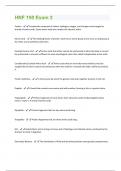
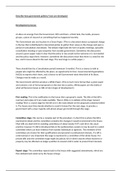
Protein - Compounds composed of carbon, hydrogen, oxygen, and nitrogen and arranged as strands of amino acids. Some amino acids also contain the element sulfur. Amino Acid - The building blocks of protein. Each has an amine group at one end, an acid group at the other, and a distinctive side chain. Essential Amino Acid - Amino acids that either cannot be synthesized at all by the body or cannot be synthesized in amounts sufficient to meet physiological need. Also called indispensable amino acids. Conditionally Essential Amino Acid - Amino acids that are normally nonessential by must be supplied by the diet in special circumstances when the need for it exceeds the body's ability to produce it. Protein Synthesis - Is the process by which the genetic code puts together proteins in the cell. Peptide - A bond that connects one amino acid with another, forming a link in a protein chain. Polypeptide - Protein fragments of many (more than 10) amino acids bonded together (poly means "many"). A strand of amino acids. Dipeptide - Protein fragments that are two amino acids long. Tripeptide - Protein fragments that are three amino acids long. HCI - Hydrochloric acid a strong corrosive acid of hydrogen and chloride atoms, produced by the stomach to assist in digestion. Electrolyte Balance - The distribution of fluid and dissolved particles among body compartments.Enzyme - Proteins that facilitate chemical reactions without being changed in the process; protein catalyst. Edema - Swelling of body tissue caused by leakage of fluid from the blood vessels; seen in protein deficiency (among other conditions). Protein Quality - Refers to how well the essential amino acid (EAA) profile of a protein matches the requirements of the body Limiting Amino Acid - An essential amino acid that is present in dietary protein in an insufficient amount, thereby limiting the body's ability to build protein. High-Quality Protein - Dietary proteins containing all the essential amino acids in relatively the same amounts that human beings require. They may also contain nonessential amino acids. Complementary Proteins - Two or more proteins whose amino acid assortments complement each other in such a way that the essential amino acids missing from one are supplied by the other. Mutual Supplementation - The process of combining two incomplete protein sources to make a complete protein. Nitrogen Balance - The amount of nitrogen consumed compared with the amount excreted in a given time period. Nitrogen Equilibrium - The amount of nitrogen consumed compared with the amount excreted in a given time period. Vegetarian (lacto-ovo, lacto, ovo) - People who exclude from their diets animal flesh and possible other animal products such as milk, cheese, and eggs.
Written for
- Institution
- HNF 150
- Course
- HNF 150
Document information
- Uploaded on
- May 18, 2024
- Number of pages
- 9
- Written in
- 2023/2024
- Type
- Exam (elaborations)
- Contains
- Questions & answers
Subjects

Also available in package deal