HNF 150 Exam 1 Graded A+
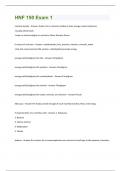
nutrient density - Answer--foods rich in nutrients relative to their energy content (calories). -Usually whole foods -Lower in calories+Higher in nutrients= More Nutrient Dense 6 classes of nutrients - Answer--carbohydrates, fats, proteins, vitamins, minerals, water -Only the macronutrients (fat, protein, carbohydrate) provide energy energy yield (kcal/gram) for fats - Answer-9 kcal/gram energy yield (kcal/gram) for proteins - Answer-4 kcal/gram energy yield (kcal/gram) for carbohydrates - Answer-4 kcal/gram energy yield (kcal/gram) for alcohol - Answer-7kcal/gram energy yield (kcal/gram) for water, minerals, and vitamins - Answer-0 kcals Adecuacy - Answer-the foods provide enough of each essential nutrient, fiber, and energy. 5 characteristics of a nutritious diet - Answer-1. Adequacy 2. Balance 3. Calorie Control 4. Moderation 5. Variety balance - Answer-the choices do not overemphasize one nutrient or food type at the expense of ie control - Answer-the foods provide the amount of energy you need to maintain appropriate weight—not more, not less. moderation - Answer-the foods do not provide excess fat, salt, sugar, or other unwanted "empty calorie" constituents. Not eating far too much or far too little. variety - Answer-the foods chosen differ from one day to the next Steps of the Scientific Method - Answer-Identify problem, Form Hypothesis, Collect Data (experiment), Analyze Data, Form Conclusions 5 characteristics scientists evaluate when weighing the totality of evidence about a specific nutrition question - Answer--Consistent -Strong correlations -Specific -Dose-dependent -Biologically plausible case studies - Answer--Studies individuals; no comparison group -Offers starting point for further research -Does not establish cause and effect, observation may be by chance Epidemiological Studies - Answer--Studies of populations -Usually reveal association (A is associated with B), not causation -often used in nutrition to search for correlations between dietary habits and disease incidence; a first step in seeking nutrition-related causes of diseases. Types: -Cross-sectional- measuring disease/condition at one time point between two or more groups-Case-control- identifying cases (those with disease/condition) and comparing to controls (those without disease/condition) -Cohort- following healthy population to see how many develop disease/condition, (is used to search for correlations between dietary habits and disease incidence) Interventional Studies (Controlled/Clinical Trial) - Answer-Researchers actively intervene in one group of the population (experimental group) and compare to a group that does not receive the intervention (control group) Laboratory Studies - Answer-studies performed under tightly controlled situations; often involve animals or tissue List the health properties of garlic, and which compounds are responsible for the health benefits and odor - Answer--Contains sulfur compounds that are released when garlic is crushed or cut. -- >Responsible for odor and healing properties. -Garlic is antimicrobial, antifungal, and anti-thrombic (prevents blood clots). -Rich in calcium, phosphorus, iron, thiamin and Vitamin C. -Garlic and onions enhance the absorption of iron and zinc bound up by phytate in whole grains. -Used as protection during the French plague: "Vinegar of the Four Thieves".
Written for
- Institution
- HNF 150
- Course
- HNF 150
Document information
- Uploaded on
- May 18, 2024
- Number of pages
- 34
- Written in
- 2023/2024
- Type
- Exam (elaborations)
- Contains
- Questions & answers
Subjects

Also available in package deal