STK110 TUT 5 Preparation sheet memo 2023
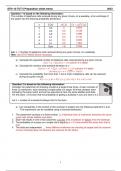
Question 1 is based on the following information:
The number of telephone calls received during any given minute, on a weekday, at an exchange of
the airport has the following probability distribution:
𝑥 𝑓(𝑥) 𝑥𝑓(𝑥) (𝑥 − 𝜇)2 𝑓(𝑥)
0 0.3 0 0.972
1 0.2 0.2 0.128
2 0.2 0.4 0.008
3 0.1 0.3 0.144
4 0.1 0.4 0.484
5 0.1 0.5 1.024
Sum 1.8 2.760
Let: 𝑥 = Number of telephone calls received during any given minute, on a weekday
Hint: Use STAT MODE where necessary
a) Calculate the expected number of telephone calls received during any given minute.
𝐸(𝑥) = 𝜇 = ∑ 𝑥𝑓(𝑥) = 1.8 (column 3 in table)
b) Calculate the variance and standard deviation of 𝑥
𝑉𝑎𝑟(𝑥) = 𝜎 2 = ∑(𝑥 − 𝜇)2 𝑓(𝑥) = 2.76 (column 4 in table)
𝑆𝑡𝑑 𝑑𝑒𝑣(𝑥) = 𝜎 = √2.76 = 1.6613
c) Calculate the probability that more than 1 but at most 4 telephone calls can be received
during any given minute.
𝑃(1 < 𝑥 ≤ 4) = 𝑃(2 ≤ 𝑥 ≤ 4) = 0.2 + 0.1 + 0.1 = 0.4
Question 2 is based on the following information:
Consider the experiment of shooting a bullet at a target three times. A team consists of
three (3) marksmen, each shooting a single bullet at a target. All three shooters were
trained by the same coach and can be assumed to have the same abilities and skills.
For this team, it is known that the probability of getting a bullseye in any one shot is 0.3.
Let 𝑥 = number of successful bullseye hits for the team.
a) List 4 properties in the context of this scenario to explain why the following statement is true:
“This experiment can be modelled using a binomial distribution.”
1. The experiment consists of a fixed number, 3, of identical trials (3 marksmen trained by the same
coach with similar abilities and skills).
2. Each trial results in one of two outcomes: success (hits a bullseye) or failure (miss the bullseye).
3. The probability of success on a single trial is equal to p = 0.3 and remains the same from trial to
trial.
4. The trials are independent. … three different marksmen are shooting at targets and the outcome
of one’s shooting does not influence the outcome for the others
1
Question 1 is based on the following information:
The number of telephone calls received during any given minute, on a weekday, at an exchange of
the airport has the following probability distribution:
𝑥 𝑓(𝑥) 𝑥𝑓(𝑥) (𝑥 − 𝜇)2 𝑓(𝑥)
0 0.3 0 0.972
1 0.2 0.2 0.128
2 0.2 0.4 0.008
3 0.1 0.3 0.144
4 0.1 0.4 0.484
5 0.1 0.5 1.024
Sum 1.8 2.760
Let: 𝑥 = Number of telephone calls received during any given minute, on a weekday
Hint: Use STAT MODE where necessary
a) Calculate the expected number of telephone calls received during any given minute.
𝐸(𝑥) = 𝜇 = ∑ 𝑥𝑓(𝑥) = 1.8 (column 3 in table)
b) Calculate the variance and standard deviation of 𝑥
𝑉𝑎𝑟(𝑥) = 𝜎 2 = ∑(𝑥 − 𝜇)2 𝑓(𝑥) = 2.76 (column 4 in table)
𝑆𝑡𝑑 𝑑𝑒𝑣(𝑥) = 𝜎 = √2.76 = 1.6613
c) Calculate the probability that more than 1 but at most 4 telephone calls can be received
during any given minute.
𝑃(1 < 𝑥 ≤ 4) = 𝑃(2 ≤ 𝑥 ≤ 4) = 0.2 + 0.1 + 0.1 = 0.4
Question 2 is based on the following information:
Consider the experiment of shooting a bullet at a target three times. A team consists of
three (3) marksmen, each shooting a single bullet at a target. All three shooters were
trained by the same coach and can be assumed to have the same abilities and skills.
For this team, it is known that the probability of getting a bullseye in any one shot is 0.3.
Let 𝑥 = number of successful bullseye hits for the team.
a) List 4 properties in the context of this scenario to explain why the following statement is true:
“This experiment can be modelled using a binomial distribution.”
1. The experiment consists of a fixed number, 3, of identical trials (3 marksmen trained by the same
coach with similar abilities and skills).
2. Each trial results in one of two outcomes: success (hits a bullseye) or failure (miss the bullseye).
3. The probability of success on a single trial is equal to p = 0.3 and remains the same from trial to
trial.
4. The trials are independent. … three different marksmen are shooting at targets and the outcome
of one’s shooting does not influence the outcome for the others
1