How do we Solve Water Security in Africa?
Introduction:
Water scarcity is common in drylands, which are regions with semi-arid climates. This biome covers 40% of the
world’s land surface, including the majority of Africa (Excellent Development, 2020). The UN has predicted that by
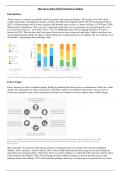
2025, 1.8 billion people will be living in regions with absolute water scarcity, as shown in Figure 1 (UN Water, 2020).
Water security is defined as “The capacity to safeguard sustainable access to quantities of acceptable quality water
for sustaining livelihoods” (UN Water, 2013). The UN Millennial Goals (MG’s) highlight the aims UN want to
achieve for 2030. The two ideas that I am going to focus on are faeces usage and sand dams. I believe that these two
areas hold the greatest change for Africa’s future generations and the present lives of millions. My two solutions cover
all the MG’s, and therefore they hold high value.
Figure 1: The percentage coverage of drinking water and sanitation in Africa (United Nations, 2019).
Faeces Usage:
Faeces disposal in Africa is underdeveloped, leading to pollution and diseases due to contamination. With just a small
change, the communities in Africa can increase soil fertility, reduce river pollution and diseases, ensure access to
clean water, and grow crops, just by disposing of the faeces in a manner to create compost and re-usable sewage.
Figure 2: communities in Haiti which have benefited from dry toilets and composting of human waste to produce fertiliser. SOIL
(Sustainable Organic Integrated Livelihood Organisation) helped communities transform their waste into a resource (United
Nations, 2019)
More than 80% of wastewater from human activities is discharged into rivers without the removal of pollution
(Malloy, 2018), and this is aimed to half by 2030. Africa would benefit greatly from using re-used faecal sludge in
agriculture and sanitation options. There have been case studies in Mzuzu, in which the toilets provide compost with a
central disposal site (Malloy, 2018). Faecal sludge has been studied in Uganda, to test the nutrient recovery and
pathogen inactivation (Manga, 2017), and found that pathogen inactivity in composting is not specified to one minor
Introduction:
Water scarcity is common in drylands, which are regions with semi-arid climates. This biome covers 40% of the
world’s land surface, including the majority of Africa (Excellent Development, 2020). The UN has predicted that by
2025, 1.8 billion people will be living in regions with absolute water scarcity, as shown in Figure 1 (UN Water, 2020).
Water security is defined as “The capacity to safeguard sustainable access to quantities of acceptable quality water
for sustaining livelihoods” (UN Water, 2013). The UN Millennial Goals (MG’s) highlight the aims UN want to
achieve for 2030. The two ideas that I am going to focus on are faeces usage and sand dams. I believe that these two
areas hold the greatest change for Africa’s future generations and the present lives of millions. My two solutions cover
all the MG’s, and therefore they hold high value.
Figure 1: The percentage coverage of drinking water and sanitation in Africa (United Nations, 2019).
Faeces Usage:
Faeces disposal in Africa is underdeveloped, leading to pollution and diseases due to contamination. With just a small
change, the communities in Africa can increase soil fertility, reduce river pollution and diseases, ensure access to
clean water, and grow crops, just by disposing of the faeces in a manner to create compost and re-usable sewage.
Figure 2: communities in Haiti which have benefited from dry toilets and composting of human waste to produce fertiliser. SOIL
(Sustainable Organic Integrated Livelihood Organisation) helped communities transform their waste into a resource (United
Nations, 2019)
More than 80% of wastewater from human activities is discharged into rivers without the removal of pollution
(Malloy, 2018), and this is aimed to half by 2030. Africa would benefit greatly from using re-used faecal sludge in
agriculture and sanitation options. There have been case studies in Mzuzu, in which the toilets provide compost with a
central disposal site (Malloy, 2018). Faecal sludge has been studied in Uganda, to test the nutrient recovery and
pathogen inactivation (Manga, 2017), and found that pathogen inactivity in composting is not specified to one minor