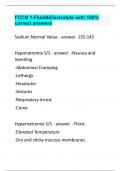
FCCN 1-Fluid&Electrolyte with 100% correct answers
Sodium Normal Value 135-145 Hyponatremia S/S -Nausea and Vomiting -Abdominal Cramping -Lethargy -Headache -Seizures -Respiratory Arrest -Coma Hypernatremia S/S -Thirst -Elevated Temperature -Dry and sticky mucous membranes -Restlessness and weakness -Disorientation -Lethargy, stupor or coma -Muscle irritability and convulsions Potassium Normal Value Range 3.5-5.0 mEq/L Hypokalemia S/S -Arrhythmias -HTN -Muscle Weakness -Impaired urine-concentrating ability -Hyperglycemia Hyperkalemia -Vague muscular weakness -Flaccid muscle paralysis -paresthesia's of face, tongue, feet and hands -Tall peaked T waves -Widened QRS complex -Ventricular arrhythmias -Cardiac arrest -Nausea -Intermittent intestinal colic or diarrhea Calcium Normal Value 8.5-10.5 Hypocalcemia S/S -Numbness tingling of fingers and toes -Muscle cramps, spasms, tremors, twitching -Hyperactive deep-tendon reflexes -Trousseau's, chvostek's sign -Convulsions -Decreased myocardial contractility with reduction in cardiac output -Prolonged QT interval -Arrhythmias from bradycardia to VT and Asystole -Anxiety Hypercalcemia -Muscle weakness -Decreased deep tendon reflex -polyuria -Hypercalciuria -Anorexia -nausea -Vomiting -Constipation -Arrhythmias -Heart block -Shortened QT interval -HTN -Confusion -Anxiety -Lethargy -Coma Magnesium Normal Value 1.7-2.2 Hypomagnesemia S/S -Trousseau's sign -Chvostek's Sign -Muscle weakness, twitching and cramps -HTN -Arrhythmias -Prolonged QT and PR intervals -Widened QRS complex -Depressed ST segment -Agitation -Confusion Hypermagnesemia S/S -Peripheral vasodilation with facial flushing, sense of warmth and tendency for hypotension -Nausea and vomiting -Drowsiness -Muscle weakness -Hypotension -Bradycardia -Respiratory depression -Coma -Cardiac arrest Phosphorus Normal Value 2.5-4.5 Hypophosphatemia S/S Paresthesias, Muscle weakness, Muscle pain, Mental changes, Cardiomyopathy, decreased cardiac contractility, Respiratory failure, seizures Hyperphosphatemia S/S -renal failure -symptoms of tetany, such as tingling of fingertips and mouth, numbness and muscle spasms -Non-osseous sites: kidney, heart, arteries, skin and cornea Maintenance therapy Replaces normal ongoing losses of water and electrolytes under normal physiological processes (urine, stool, sweat, respiration). Goal is to preserve water and electrolyte balance and provide nutrition among patients that are not able to eat or drink Replacement therapy Corrects any existing water and/or electrolyte deficits. These deficits can result from high GI ouput (NG, Diarrhea), urinary, skin losses, bleeding, or third spacing. The goal is to correct existing abnormalities in volume status and or serum electrolytes Isotonic -has a tonicity that is EQUAL to the plasma in the body. -a state when the fluid and electrolytes on both sides of the cell membrane are the same. -No fluid shifts because solutions are equally concentrated.
Written for
- Institution
- FCCN
- Course
- FCCN
Document information
- Uploaded on
- May 14, 2024
- Number of pages
- 14
- Written in
- 2023/2024
- Type
- Exam (elaborations)
- Contains
- Questions & answers
Subjects

Also available in package deal