Btec Applied Science Unit 3.docx
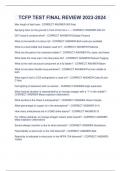
What is a hypothesis? - correct answer An Idea that you can test using practical experiments What are the Key features of a good hypothesis? - correct answer A good Hypothesis must: Be able to be tested scientifically Relate one dependent variable to on independent variable What is a Null Hypothesis? - correct answer States that there is no relationship or causality, for example, no relation between the temperature and the rate of reaction. What does qualitative data refer to? - correct answer It refers to the appearance or value of something, such as the colour observed or whether the bubbles are produced. What does Quantitative data refer to? - correct answer It refers to numerical measurements made, such as the volumes and times measured. What is SOP? - correct answer The Standard Operating Procedure. This is an established procedure or method used to carry out a routine activity. It ensures consistent results every time. What are some examples of SOPs? - correct answer Titration, Handling of chemicals, disposal of waste, qualitative analytical tests, preparing solutions What are risk assessments? - correct answer It identifies hazards, evaluates the risks associated with those hazards and it determines ways to eliminate or control those risks. What is a Hazard? - correct answer When the equipment or substance can cause harm, for example a hot plate or hydrochloric acid What is a risk? - correct answer The harm that the hazard could cause and the chances of it happening, for example the risk of using a hot plate is getting burnt. What is the independent variable? - correct answer The variables you change during an investigation. What is the Dependent variable? - correct answer The variables you are investigating and measure during an investigation. What is the control variable? - correct answer The variables you keep constant during an investigation. What should a method be? - correct answer A step-by-step set of instructions, Be logically ordered, allows you to take sensible measurements, and allows you to test your hypothesis. When planning your method what do you need to make sure? - correct answer That it will procedure a range of results, reliable results, precise results, and accurate results. What are some types of data? - correct answer The data can be continuous such as the age of plant ir number of plants. Some data can be a mixture of numbers and names such as the number of different types of plants found in a garden. What data is normally displayed on a bar chart? - correct answer Continuous data. You need to make sure its a smooth curve of best fit, and that the curve goes through or near most of the points. What are bar charts used for? - correct answer They are used for discrete data but can be used to compare different sets of data. What is the Pattern on the graph? - correct answer The shape of the graph. It is the line that goes up as time goes by but eventually levels off What is the trend on a graph? - correct answer The relationship between factors on the graph or in the table. The full trend is that the volume increases as the time increases but then levels off after a certain amount of time. What is the sample size? - correct answer The number of people sampled in the investigation. To be confident in your conclusions you need a large sample size to give strong evidence. What is Primary data? - correct answer This is the data that you have gathered for yourself through the experiments or investigations . What is secondary data? - correct answer The data that you get in books, scientific papers or the internet. You should compare your primary and secondary data to draw a conclusion How do you know if the data is anomalous? - correct answer It doesn't fit into the pattern of the other results. It does not lie close to the line of best fit. What can cause the anomalous data? - correct answer Not following the method correctly. inaccurate measuring/recording and impurities. What is systemic error? - correct answer The error that is built into the method or equipment which you are using. This can be corrected by calibrating the balance. These errors are quantitative. What is the random error? - correct answer These are due to not following the method correctly and can be minimized by repeating results and taking averages. What can misreading the observations cause - correct answer They can cause qualitative errors. What is the accuracy? - correct answer How close is the data to the true value? Errors due to the equipment could make the results less. What is the reliability? - correct answer How trustworthy the data is. It is usually ensured by repeating the readings to identify any anomalous results. What is precision? - correct answer How close the repeat readings are to each other. It can be improved by using measuring equipment that measure to more decimal places. What is an enzyme? - correct answer A protein molecule that acts as a catalyst in a biochemical reaction. What are proteins made up of? - correct answer amino acids What four chemical groups are attached to the central (alpha) carbon? - correct answer A hydrogen atom. A amino acid. A carboxyl group. A variable R group (side chain). How many different R groups are there? - correct answer There are 20 different R groups which means there are 20 different amino acids. What are amino acids linked together by? - correct answer Peptide Bonds. What does a condensation reaction occur between? - correct answer Two amino acids. What is produced in a condensation reaction? - correct answer Water. What is a dipeptide formed by? - correct answer Two amino acids linked by a peptide bond. What do three amino acids form? - correct answer A tripeptide What do many amino acids join to form? - correct answer A polypeptide What is a polypeptide with more than 50 amino acids called? - correct answer A protein. What is an active site? - correct answer The part of an enzyme where the biochemical reaction takes place. What is a secondary structure? - correct answer Where a polypeptide chains form orderly shapes. What are secondary structures held in shape by? - correct answer Hydrogen bonds between the -NH of one of the peptide link and the -C=O of another amino acid What is tertiary structure? - correct answer a three dimensional shape of a secondary structure What does the tertiary structure give? - correct answer It gives the enzyme the shape of its active site. What are the most common shapes of secondary structures? - correct answer Coiled α-helix and folded β-pleated sheet What does the active site consist of? - correct answer A small number of amino acids which form a specific shape because of the proteins secondary and tertiary structure. When an enzyme catalyzes a reaction where does it take place? - correct answer It takes places on the active site of an enzyme. What do enzymes work specifically to? - correct answer catalyse one type of biochemical reaction. In a biochemical reaction what are substrates converted to? - correct answer They are converted into products. What does the substrate bind to? - correct answer The active site. Only specific substrates will bind to a particular enzy
Written for
- Institution
- Btec Applied Science
- Course
- Btec Applied Science
Document information
- Uploaded on
- May 9, 2024
- Number of pages
- 14
- Written in
- 2023/2024
- Type
- Exam (elaborations)
- Contains
- Questions & answers
Subjects
-
btec applied science unit 3docx