BIO 205 Exam 1 Study Guide
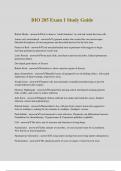
BIO 205 Exam 1 Study Guide Robert Hooke - answerfirst to observe "small chambers" in cork and coined the term cells. Anton van Leeuwenhoek - answerA garment maker who created his own microscopes. Detailed descriptions of microorganisms and described bacteria for the first time. Francisco Redi - answerUsed unsealed/sealed meat experiment with maggots to begin showing spontaneous generation wasn't true. Louis Pasteur - answerSwan neck flask, used heat to prevent microbes. Ended spontaneous generation debate. Developed germ theory of disease Robert Koch - answerPostulates to show causative agents of disease. Ignaz Semmelweis - answerIdentified cause of puerperal fever in birthing clinics. Advocated importance of hand washing, wiped fever away. Joseph Lister - answerSurgeon who used antiseptic wound/incision/dressings to prevent wound infection after surgery. Florence Nightingale - answerFounded first nursing school. Introduced cleaning patients beds, clothes, and rooms to reduce infection. John Snow - answerMapped cholera outbreak in London and found the source. Studied infection control and epidemiology. Edward Jenner - answerInnoculated a boy with pus from cowpox lesion (less aggressive form of smallpox), making the boy immune to smallpox. Smallpox vaccine. Paul Erhlich - answerUsed chemicals to treat infection. Chemicals can differentiate bacteria. Foundation for chemotherapy. Trypanosomes & Treponema pallidum (syphillis) Cell - answerThe basic unit of structure and function in living things Animalcules - answerLittle animals or microbes, 1st seen in pond water by Leeuenhoek. Now known as microorganisms. Spontaneous Generation - answerLiving matter arising from non-living matter (abiogenesis). Fermentation - answerThe chemical action of yeast on sugars. Creates beer & wine. Germ Theory of Disease - answerDiseases result from microbial infection. Microbes are responsible for infection. Pathogen - answerA disease causing microorganism. Koch's Postulates - answerA sequence of 4 experimental steps for directly relating a specific microbe to a specific disease. Epidemiology - answerThe study of where/when infectious diseases occur in a population and how they are transmitted/ maintained in nature. Vaccine - answerSubstance prepared from killed or weakened pathogens and introduced into a body to produce immunity. Chemotherapy - answerThe use of drugs to treat a disease. Francesco Redi's experiment - answerUsing meat and maggots, Redi put meat in sealed/unsealed/and cloth covered jars. The experiment showed the maggots were not spontaneously generating in the meat. Proved "animals give rise to other animals" Pasteur's Swan Neck Experiment - answerstep 1: flask with swan neck- air could come in, dirt could not, nothing grew in broth step 2: flask without neck, introduced dust, things grew. This disproved spontaneous generation Microbiota - answerGroup of microbes in association with the human body. Established during birth and continues after. Ex. Normal flora Mold - answerMulti-cellular fungi that reproduces through spores. Yeast - answerUnicellular fungi that reproduces through buds. Pseudopodia - answera temporary protrusion of the surface of an amoeboid cell for movement and feeding. Protozoa Cilia - answerHairlike projections that extend from the plasma membrane and are used for locomotion in protozoa Flagella - answerA long, whip-like filament that helps in cell motility. Protozoa Peptidoglycan - answerCell wall of prokaryotes, but NOT ARCHAEA. Made of a sugar polymer and polypeptide. 6 major groups of microorganisms - answerFungi Protozoa
Written for
- Institution
- BIO 205
- Course
- BIO 205
Document information
- Uploaded on
- May 8, 2024
- Number of pages
- 10
- Written in
- 2023/2024
- Type
- Exam (elaborations)
- Contains
- Questions & answers
Subjects
-
bio 205 exam 1 study guide

Also available in package deal