NSG 124 - fully solved
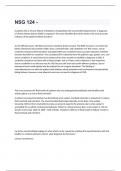
NSG 124 - A patient with a 25-year history of diabetes is hospitalized with uncontrolled hypertension. A diagnosis of chronic kidney disease (CKD) is suspected. The nurse identifies that which study is the most accurate indicator of the patient’s kidney function? As the GFR decreases, the BUN and serum creatinine levels increase. The BUN increase is not only from kidney disease but also protein intake, fever, corticosteroids, and catabolism. For this reason, serum creatinine clearance determinations (calculated GFR) are considered more accurate indicators of kidney function than BUN or creatinine. The calculated GFR is obtained from the patient's age, gender, race, and serum creatinine. It would need to be abnormal for three months to establish a diagnosis of CKD. A creatinine clearance test done with a blood sample, and a 24-hour urine collection is also important. Serum creatinine is not the best test for CKD because the level varies with different patients. Serum potassium levels could explain why the patient has an irregular heartbeat. The finding of microalbuminuria can alert the patient with diabetes about potential renal involvement and potentially failing kidneys. However, urine albumin levels are not used for diagnosis of CKD. The nurse assesses the fluid intake of patients who are undergoing hemodialysis and identifies that which patient is at risk of fluid overload? A patient receiving hemodialysis has diminished urine output, and fluid restriction is important to reduce fluid overload and retention. The recommended fluid intake depends on the daily urine output. Generally, 600 mL (from insensible loss) plus an amount equal to the previous day’s urine output is acceptable for a patient receiving hemodialysis. Patient 3, whose previous day’s urine output is 720 mL, should receive only 1320 mL (600 + 720) of fluids. Therefore 1400 mL of fluid intake in Patient 3 leads to fluid overload and retention. my pt has uncontrollable leakage of urine which can be caused by anything that would interfere with the bladder or urethral sphincter control. what diagnosis do they have? urinary incontinence my pt. has an inability to empty the bladder despite micturition or the accumulation of urine in the bladder because of an inability to urinate. my pt.'s condition may have been caused by bladder outlet obstruction or deficient detrusor contraction strength. what diagnosis does my pt have? urinary retention what are the diagnostic tests used for alterations in urinary continence and/or retention? bladder log voiding record urinalysis (dipstick and microscopic) urodynamic testing (general term for several tests including bladder scanner) what are some nursing keys to remember when using the bladder scanner? take the highest of 3 readings make sure it is set to the right gender post void in a healthy person is 50-75 mL older adults post void residual (PVR) is up to 200 A bladder scanner is a portable, hand-held ultrasound device, which can perform a quick, easy and non-invasive scan of the bladder. The scanner has an ultrasound probe and transducer to reflect sound waves from the patient's bladder to the scanner. Data is then transmitted to a computer in the handheld unit to automatically calculate the bladder volume. what does a high (over 200 mL) post void residual indicate? high PVR indicates increased risk of infection and increased risk of developing stones; it could also mean BPH
Written for
- Institution
-
Herzing University
- Course
-
NSG 124/ NSG124
Document information
- Uploaded on
- May 6, 2024
- Number of pages
- 21
- Written in
- 2023/2024
- Type
- Exam (elaborations)
- Contains
- Questions & answers
Subjects

Also available in package deal