NSG 3100 + 3100L TEST 2 QUESTIONS AND ANSWERS ALREADY PASSED
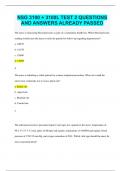
NSG 3100 + 3100L TEST 2 QUESTIONS AND ANSWERS ALREADY PASSED The nurse is measuring blood pressures as part of a community health fair. Which blood pressure reading would cause the nurse to refer the patient for follow-up regarding hypertension? a. 108/70 b. 116/78 c. 128/80 d. 138/88 d The nurse is admitting a stable patient for a minor outpatient procedure. What site would the nurse most commonly use to assess pulse rate? a. Radial site b. Apical site c. Brachial site d. Carotid site a The unlicensed assistive personnel reports vital signs for a patient to the nurse: temperature of 99.2° F (37.3° C) oral, pulse of 88 bpm and regular, respirations of 18 BPM and regular, blood pressure of 178/112 mm Hg, and oxygen saturation of 96%. Which vital sign should the nurse be most concerned about? a. Temperature b. Pulse c. Respirations d. Blood pressure d From the nurse's understanding, which statements regarding temperature and heat production in the body are accurate? (Select all that apply.) a. Heat generates energy for cellular functions. b. Hormones, such as thyroid hormones, decrease metabolism and heat production. c. Exercise decreases heat production through muscular activity. d. Expected temperature readings vary by the route selected for measurement. e. Women tend to have more fluctuations in temperature than do men. a, e, d The nurse is performing an initial assessment of a patient with a severe infection at hospital admission. Vital signs for the patient indicate hypotension and tachycardia. Which data would support this evaluation? a. Pulse 78, blood pressure 140/88 b. Pulse 86, blood pressure 120/76 c. Pulse 100, blood pressure 118/68 d. Pulse 114, blood pressure 88/56 d The nurse places a patient with a high fever on a cooling blanket. How is heat loss achieved with this treatment? a. Radiation b. Convection c. Conduction d. Evaporation c Which clinical patient scenario is associated with the most critical need for the nurse to obtain vital signs? a. Ambulating for the first time after surgery b. Complaining of pressure in the chest c. Completing ambulating 100 feet after a stroke d. Complaining of hunger while NPO (nothing by mouth) b The nurse understands that which statement is correct regarding respiratory rates? a. Infants have a lower respiratory rate than adults. b. Healthy adults breathe between 12 and 20 times a minute. c. A compensatory response to a fever is to breathe at a slower rate. d. An increase in intracranial pressure results in an increased rate. b The nurse is caring for a patient who has a blood pressure of 184/110. An hour after administering an antihypertensive medication, the nurse returns to recheck the blood pressure, only to find the patient in the chair pale, sweaty, and feeling faint. Which is the expected explanation for the nurse's observations? a. The blood pressure is 184/110; the medication has not had an effect. b. The blood pressure is 118/76; the sudden drop has caused the signs. c. The blood pressure is 174/96; the medication has made the patient sick. d. The blood pressure is 130/82; the symptoms are from another cause. b It is 6 a.m. and the unlicensed assistive personnel reports to the nurse that the patient has a temperature of 96.7° F (35.9° C) tympanic. Which factor explains this reading? a. The patient's room is cold. b. The patient was drinking cold water. c. The patient is exhibiting a normal circadian rhythm. d. The patient just completed a warm shower. c The nurse is caring for a patient who has been diagnosed with methicillin-resistant Staphylococcus aureus located in her incision. What transmission-based precautions will the nurse implement for the patient? a. Private room
Written for
- Institution
- NSG 3100 + 3100L
- Course
- NSG 3100 + 3100L
Document information
- Uploaded on
- May 2, 2024
- Number of pages
- 38
- Written in
- 2023/2024
- Type
- Exam (elaborations)
- Contains
- Questions & answers
Subjects
-
nsg l test 2 questions and answers alre

Also available in package deal