RN Nutrition Online Practice 2024 SOLUTION GRADE A+ GUARANTEED
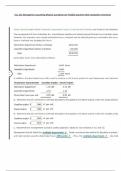
A nurse is caring for a client. Exhibit 1: Nurses' Notes: 2 months ago: Client discharged from hospital following total gastrectomy. Client tolerating full liquid diet. May advance to pureed diet in 1 week. Client instructed to schedule appointments with surgeon for monthly follow-up visits. Today: Client presents to surgeon's office for monthly follow-up visit. Client reports that they advanced their diet to a soft diet as instructed. Client states, "I am eating fine, but about 15 minutes after I eat, I get abdominal cramps, nausea, diarrhea, and it feels like my heart is racing. When that happens, my muscles feel weak, and I get sweaty." Dumping syndrome: abdominal cramping muscle weakness nausea diarrhea sweating that occur after eating. Hypoglycemia: muscle weakness sweating. Refeeding syndrome: muscle weakness. Clients who have had a total gastrectomy are at risk for dumping syndrome due to the rapid emptying of food into the small intestine which stimulates bowel motility. Dumping syndrome can cause vasomotor responses, such as muscle weakness, flushing, tachycardia, and sweating which are similar to manifestations of hypoglycemia. NGN question Client is admitted for treatment of hypovolemia due to vomiting and diarrhea for 2 days. highlight the findings that indicate an improvement in the client's condition. alert and oriented to person, place, time and situatioN reports no dizziness upon standing abdomen soft rounded with normoactive bowel sounds in all 4 quadrants urine output 300 mL in past 8 hr skin is warm, dry, and intact capillary refill is 2 seconds. A nurse is caring for a client who is receiving (TPN) and is prescribed an oral diet. The client asks the nurse why the TPN is being continued since they are now eating. Which of the following responses should the nurse make? a. "your blood glucose levels need to be within normal range before the TPN can be stopped" b. "you should consume at least 60% of your calories orally before the parenteral nutrition can be discontinued" c. "you should have a weight gain of at least 1 kg per day before the therapy is stopped" d. "your bowel movements need to be regular before the therapy can be discontinued" b. "you should consume at least 60% of your calories orally before the parenteral nutrition can be discontinued" A nurse is assessing the meal pattern of a client who has diverticular disease and a prescription for a high-fiber diet. Which of the following food choices by the client contains the most fiber? a. 1 medium banana b. 1/2 cup oatmeal c. 1 medium apple with skin d. 1/2 cup bran cereal d. 1/2 cup of bran cereal A nurse is assessing a client who is suspected of having lactose intolerance. Which of the following is an expected finding? a. flatulence b. bloody stools c. hyperemesis d. steatorrhea a. flatulence Flatulence, bloating, cramping, and diarrhea : lactose intolerance. A nurse is assessing a client who has type 2 diabetes mellitus. The nurse should recognize which of the following as a manifestation of hypoglycemia? a. confusion b. polydipsia c. vomiting d. ketonuria a. confusion A nurse is assessing a client's risk for pressure injuries using a skin risk assessment tool. The client eats more than half of most meals but occasionally refuses a meal. Which of the following information should the nurse document on the nutrition category of the skin risk assessment tool? a. 1 (very poor) b. 2 (probably inadequate) c. 3 (adequate) d. 4 (excellent) c. 3 (adequate) A nurse is providing dietary teaching about increased zinc intake for a client who has chronic skin ulcers of the lower extremities. Which of the following foods should the nurse recommend as containing the highest amount of zinc? a. 1 cup of apple slices b. 4 oz low-fat cottage cheese c. 4 oz ground beef patty d. 1 cup of raw spinach c. 4 oz ground beef patty. A nurse is assessing a client who has end-stage kidney disease (ESKD). Which of the following dietary habits increases the client's risk for dysrhythmias? a. consuming a diet low in fat b. eating a diet rich in potassium CONTINUED.....
Written for
- Institution
- RN Nutrition Online Practice
- Course
- RN Nutrition Online Practice
Document information
- Uploaded on
- April 30, 2024
- Number of pages
- 20
- Written in
- 2023/2024
- Type
- Exam (elaborations)
- Contains
- Questions & answers
Subjects
-
rn nutrition online practice
-
a nurse is caring for a client
-
a nurse is caring for a client who is receiving t