Domain 1: PPR Questions With 100% Correct
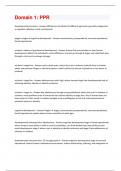
developmental processes - Answer-differences manifested at different age levels, generally categorized as cognitive, affective, social, and physical piaget's stages of cognitive development - Answer-sensorimotor, preoperational, concrete operational, formal operational erickson's theory of psychosocial development - Answer-theory that concentrates on how human development reflects the individual's social affiliations; humans go through 8 stages and individuals pass through a crisis and re-emerge stronger erickson's stage four - Answer-early school years, where the crisis is industry (natural drive to imitate adults and produce things) vs inferiority (when a child's ability has not yet reached his or her desire to produce) erickson's stage five - Answer-adolescence-junior high, where humans begin the developmental task of achieving identity; identity vs identity confusion erickson's stage six - Answer-late adolescence through young adulthood, where the crisis is intimacy vs isolation; many problems arise if human did not achieve identity in stage four; thus if human does not know who he is then result is isolation brought on by unwillingness to risk true intimacy because of potential impact on identity cognitive development - Answer-Piaget's 4 stages; sensorimotor, preoperational, concrete operational, formal operational; explain where human should be at what ages developmental characteristics: adolescence - Answer-cognitive development stage is formal operational, where humans have ability to think in and of possibilities, can think deductively, have ability to plan. social development stage 5 where crisis is identity vs identity confusion and stage 6 late adolescence of intimacy vs isolation developmental characteristics: EC through grade 4 - Answer-cognitive development stage of concrete operational, where humans understand conservation, subset relationships, ordering, and integration ofself to the environment. social development is stage 4, early school years where crisis is industry vs inferiority developmental characteristics: middle school years - Answer-cognitive development mix of stages concrete and formal operational; social stages 4 and 5 importance of play - Answer-should be integral part of classroom experience; children use this to learn before school; can be symbolic, constructive, solitary, social, indirect, intellectual, or physical; teachers can use play to present new concepts high expectations - Answer-teachers should cultivate this in the classroom culture; a space that inspires assurance of success for everyone risky behaviors - Answer-behaviors including drug use, sleep deprivation, malnutrition, etc; these could affect student's cognitive, social, physical, and emotional development; so teachers should not label student's lazy or unmotivated ELPS - Answer-English Language Proficiency Standards, state mandated requirements to guide all teachers in helping ELL students meet curricular expectations for English proficiency ethnicity - Answer-over 50% in the US are classified as white, whereas the other 50% are of other groups; meaning teachers must recognize this diversity; teachers must foster a culture of inclusivity English language learners - Answer-students in process of acquiring English; teachers should celebrate , respect, and embrace these students in all classroom situations; guidelines set to provide equity; bilingual programs and ESL programs; culture of inclusivity - Answer-establishing a classroom community, teachers should explore the root of diversity misunderstandings (difference means distinctiveness not deficit), assignments should include options that enable learners to showcase their strongest abilities, classwork displays of all and not just stars, , teaching kids to work in collaborative settings, lessons designed to include meaningful integration of all situations, instructions should be differentiateddiversity - Answer-most salient of characteristics in the classroom; must recognize this to know our students; cultural, socioeconomic, ethnic, linguistic, academic, developmental, special needs cultural diversity - Answer-about 50% of students are of different races or ethnicities so must integrate this into classroom routines and instruction; must try and strengthen community and commonality rather than fragmentation
Written for
- Institution
- Domain 1 PPR
- Course
- Domain 1 PPR
Document information
- Uploaded on
- April 30, 2024
- Number of pages
- 5
- Written in
- 2023/2024
- Type
- Exam (elaborations)
- Contains
- Questions & answers
Subjects

Also available in package deal