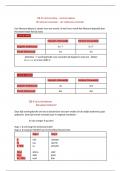
VARIATION 13 SEXUAL REPRODUCTION
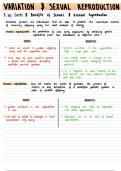
3 a Costs Benefits of sexual 31 Asexual Reproduction
Evolution favours the individuals that are able to produce the maximum number
of surviving offspring using the least amount of energy
sexual reproduction the production of new living organisms by combining genetic
information from two individuals of different sexes
COSTS BENEFITS
males are unable to produce offspring variation in the
genetic population is
only half the population can high large gene pool
Only half of each parent's genome can adapt better to changes to the
is passed onto offspring disrupting environment under changing selection
successful parental genomes pressures
It is required to keep running in the
Red Queen's arm race between parasites
and their hosts
Asexual reproduction does not involve the fusion of gametes the process of
meiosis or
any disruption of a successful parental genome in
order to produce offspring
COSTS BENEFITS
genetic variation in the population All offspring are able to reproduce
is low the whole population
not able to adapt to changes in their Reproduce at 2x the rate of sexual
environment reproduction
very easily
, SEXUAL REPRODUCTION
Costs:
◦Males are unable to produce o spring (only half the population can)
◦Only half of each parent’s genome is passed onto o spring, disrupting successful parental
genomes
Bene ts outweigh the costs due to an increase in genetic variation in the population:
Bene ts:
◦Genetic variation provides the raw material required for adaptation, giving sexually reproducing
organisms a better chance of survival under changing selection pressures
◦It is required to keep running in the Red Queen’s arms race between parasites and their hosts
◦The hosts that are better able to resist and tolerate parasitism have greater tness
◦The parasites that are better able to feed, reproduce and nd a new host have better tness
◦If hosts reproduce sexually, the genetic variability in their o spring reduces the chances that all
will be susceptible to infection be parasites
Examples of sexually reproducing species: chimpanzees, lions & birds
3 a Costs Benefits of sexual 31 Asexual Reproduction
Evolution favours the individuals that are able to produce the maximum number
of surviving offspring using the least amount of energy
sexual reproduction the production of new living organisms by combining genetic
information from two individuals of different sexes
COSTS BENEFITS
males are unable to produce offspring variation in the
genetic population is
only half the population can high large gene pool
Only half of each parent's genome can adapt better to changes to the
is passed onto offspring disrupting environment under changing selection
successful parental genomes pressures
It is required to keep running in the
Red Queen's arm race between parasites
and their hosts
Asexual reproduction does not involve the fusion of gametes the process of
meiosis or
any disruption of a successful parental genome in
order to produce offspring
COSTS BENEFITS
genetic variation in the population All offspring are able to reproduce
is low the whole population
not able to adapt to changes in their Reproduce at 2x the rate of sexual
environment reproduction
very easily
, SEXUAL REPRODUCTION
Costs:
◦Males are unable to produce o spring (only half the population can)
◦Only half of each parent’s genome is passed onto o spring, disrupting successful parental
genomes
Bene ts outweigh the costs due to an increase in genetic variation in the population:
Bene ts:
◦Genetic variation provides the raw material required for adaptation, giving sexually reproducing
organisms a better chance of survival under changing selection pressures
◦It is required to keep running in the Red Queen’s arms race between parasites and their hosts
◦The hosts that are better able to resist and tolerate parasitism have greater tness
◦The parasites that are better able to feed, reproduce and nd a new host have better tness
◦If hosts reproduce sexually, the genetic variability in their o spring reduces the chances that all
will be susceptible to infection be parasites
Examples of sexually reproducing species: chimpanzees, lions & birds