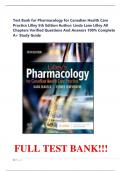
TEST BANK Pharmacology for the Primary Care Provider, 4th Edition by Marilyn Winterton Edmunds and Maren Stewart Mayhew TEST BANK NURSEDOCS Pharmacology for the Primary Care Provider, 4th Edition by Marilyn Winterton Edmunds and Maren Stewart Mayhew Test Bank Table of Content PART ONE: ESSENTIAL CONCEPTS FOR THE PRESCRIPTION OF MEDICATIONS Unit 1: Foundations of Prescriptive Practice 1. Prescriptive Authority and Role Implementation: Tradition vs. Change 2. Historical Review of Prescriptive Authority: The Role of Nurses (NPs, CNMs, CRNAs, and CNSs) and Physician Assistants Unit 2: Pharmacokinetics and Pharmacodynamics 3. General Pharmacokinetic and Pharmacodynamic Principles 4. Special Populations: Geriatrics 5. Special Populations: Pediatrics 6. Special Populations: Pregnant and Nursing Women 7. Over -the-Counter Medications 8. Complementary and Alternative Therapies Unit 3: The Art and Science of Pharmacotherapeutics 9. Establishing the Therapeutic Relationship 10. Practical Tips on Writing Prescriptions 11. Evidence -Based Decision -Making and Treatment Guidelines 12. Design and Implementation of Patient Education PART TWO: DRUG MONOGRAPHS Unit 4: Topical Agents 13. Dermatologic Agents 14. Eye, Ear, Throat, and Mouth Agents Unit 5: Respiratory Agents 15. Upper Respiratory Agents 16. Asthma and Chronic Obstructive Pulmonary Disease Medications Unit 6: Cardiovascular Agents 17. Hypertension and Miscellaneous Antihypertensive Medications 18. Coronary Artery Disease and Antianginal Medications 19. Heart Failure and Digoxin 20. ß-Blockers 21. Calcium Channel Blockers 22. ACE Inhibitors and Angiotensin Receptor Blockers 23. Antiarrhythmic Agents NURSEDOCS 24. Antihyperlipidemic Agents 25. Agents that Act on Blood Unit 7: Gastrointestinal Agents 26. Antacids and the Management of GERD 27. Histamine -2 Blockers and Proton Pump Inhibitors 28. Laxatives 29. Antidiarrheals 30. Antiemetics 31. Medications for Irritable Bowel Syndrome and Other Gastrointestinal Problems Unit 8: Renal/Genitourinary Agents 32. Diuretics 33. Male Genitourinary Agents 34. Drugs for Urinary Incontinence and Urinary Analgesia Unit 9: Musculoskeletal Agents 35. Acetaminophen 36. Aspirin and Nonsteroidal Antiinflammatory Drugs 37. Disease -Modifying Antirheumatic Drugs and Immune Modulators 38. Gout Medications 39. Osteoporosis Treatment 40. Muscle Relaxants Unit 10: Central Nervous System Agents 41. Medications for Attention Deficit Hyperactivity Disorder 42. Medications for Dementia 43. Analgesia and Pain Management 44. Migraine Medications 45. Antiepileptics 46. Antiparkinson Agents Unit 11: Psychotropic Agents 47. Antidepressants 48. Antianxiety and Antiinsomnia Agents 49. Antipsychotics 50. Substance Abuse Unit 12: Endocrine Agents 51. Glucocorticoids 52. Thyroid Medications 53. Diabetes Mellitus Agents Unit 13: Reproductive System Medications 54. Contraceptives NURSEDOCS 55. Hormone Replacement Therapy – NEW Title/Focus! 56. Drugs for Breast Cancer Unit 14: Antiinfectives 57. Principles for Prescribing Antiinfectives 58. Treatment of Specific Infections and Miscellaneous Antibiotics 59. Penicillins 60. Cephalosporins 61. Tetracyclines 62. Macrolides 63. Fluoroquinolones 64. Aminoglycosides 65. Sulfonamides 66. Antitubercular Agents 67. Antifungals 68. Antiretroviral Medications 69. Antiviral and Antiprotozoal Agents Unit 15: Health Promotion 70. Immunizations and Biologicals 71. Weight Management 72. Smoking Cessation 73. Vitamins and Minerals NURSEDOCS
Tentamen (uitwerkingen)
Test Bank - Pharmacology for the Primary Care Provider, 4th Edition (Edmunds) Chapter 1-73 Complete Guide Latest Assured A+.
Beoordeling
Verkocht
-
Pagina's
253
Cijfer
A+
Geüpload op
26-04-2024
Geschreven in
2023/2024
Test Bank - Pharmacology for the Primary Care Provider, 4th Edition (Edmunds, 2023) Chapter 1-73 Complete Guide Latest Assured A+. Pharmacology for the Primary Care Provider, 4th Edition by Marilyn Winterton Edmunds and Maren Stewart Mayhew Test Bank Table of Content PART ONE: ESSENTIAL CONCEPTS FOR THE PRESCRIPTION OF MEDICATIONS Unit 1: Foundations of Prescriptive Practice 1. Prescriptive Authority and Role Implementation: Tradition vs. Change 2. Historical Review of Prescriptive Authority: The Role of Nurses (NPs, CNMs, CRNAs, and CNSs) and Physician Assistants Unit 2: Pharmacokinetics and Pharmacodynamics 3. General Pharmacokinetic and Pharmacodynamic Principles 4. Special Populations: Geriatrics 5. Special Populations: Pediatrics 6. Special Populations: Pregnant and Nursing Women 7. Over-the-Counter Medications 8. Complementary and Alternative Therapies Unit 3: The Art and Science of Pharmacotherapeutics 9. Establishing the Therapeutic Relationship 10. Practical Tips on Writing Prescriptions 11. Evidence-Based Decision-Making and Treatment Guidelines 12. Design and Implementation of Patient Education PART TWO: DRUG MONOGRAPHS Unit 4: Topical Agents 13. Dermatologic Agents 14. Eye, Ear, Throat, and Mouth Agents Unit 5: Respiratory Agents 15. Upper Respiratory Agents 16. Asthma and Chronic Obstructive Pulmonary Disease Medications Unit 6: Cardiovascular Agents 17. Hypertension and Miscellaneous Antihypertensive Medications 18. Coronary Artery Disease and Antianginal Medications 19. Heart Failure and Digoxin 20. ß-Blockers 21. Calcium Channel Blockers 22. ACE Inhibitors and Angiotensin Receptor Blockers 23. Antiarrhythmic Agents 24. Antihyperlipidemic Agents 25. Agents that Act on Blood Unit 7: Gastrointestinal Agents 26. Antacids and the Management of GERD 27. Histamine-2 Blockers and Proton Pump Inhibitors 28. Laxatives 29. Antidiarrheals 30. Antiemetics 31. Medications for Irritable Bowel Syndrome and Other Gastrointestinal Problems Unit 8: Renal/Genitourinary Agents 32. Diuretics 33. Male Genitourinary Agents 34. Drugs for Urinary Incontinence and Urinary Analgesia Unit 9: Musculoskeletal Agents 35. Acetaminophen 36. Aspirin and Nonsteroidal Antiinflammatory Drugs 37. Disease-Modifying Antirheumatic Drugs and Immune Modulators 38. Gout Medications 39. Osteoporosis Treatment 40. Muscle Relaxants Unit 10: Central Nervous System Agents 41. Medications for Attention Deficit Hyperactivity Disorder 42. Medications for Dementia 43. Analgesia and Pain Management 44. Migraine Medications 45. Antiepileptics 46. Antiparkinson Agents Unit 11: Psychotropic Agents 47. Antidepressants 48. Antianxiety and Antiinsomnia Agents 49. Antipsychotics 50. Substance Abuse Unit 12: Endocrine Agents 51. Glucocorticoids 52. Thyroid Medications 53. Diabetes Mellitus Agents Unit 13: Reproductive System Medications 54. Contraceptives 55. Hormone Replacement Therapy – NEW Title/Focus! 56. Drugs for Breast Cancer Unit 14: Antiinfectives 57. Principles for Prescribing Antiinfectives 58. Treatment of Specific Infections and Miscellaneous Antibiotics 59. Penicillins 60. Cephalosporins 61. Tetracyclines 62. Macrolides 63. Fluoroquinolones 64. Aminoglycosides 65. Sulfonamides 66. Antitubercular Agents 67. Antifungals 68. Antiretroviral Medications 69. Antiviral and Antiprotozoal Agents Unit 15: Health Promotion 70. Immunizations and Biologicals 71. Weight Management 72. Smoking Cessation 73. Vitamins and Minerals Chapter 01: Prescriptive Authority and Role Implementation: Tradition vs. Change Test Bank MULTIPLE CHOICE 1. Which of the following has influenced an emphasis on primary care education in medical schools? a. Changes in Medicare reimbursement methods recommended in 1992 b. Competition from nonphysicians desiring to meet primary care shortages c. The need for monopolistic control in the marketplace of primary outpatient care d. The recognition that nonphysicians have variable success providing primary care ANS: A The Physician Payment Review Commission in 1992 directly increased financial reimbursement to clinicians who provide primary care. Coupled with a shortage of primary care providers, this incentive led medical schools to place greater emphasis on preparing primary care physicians. Competition from nonphysicians increased coincidentally as professionals from other disciplines stepped up to meet the needs. Nonphysicians have had increasing success at providing primary care and have been shown to be safe and effective. DIF: Cognitive Level: Remembering (Knowledge) REF: 2 2. Which of the following statements is true about the prescribing practices of physicians? a. Older physicians tend to prescribe more appropriate medications than younger physicians. b. Antibiotic medications remain in the top five classifications of medications prescribed. c. Most physicians rely on a “therapeutic armamentarium” that consists of less than 100 drug preparations per physician. d. The dominant form of drug information used by primary care physicians continues to be that provided by pharmaceutical companies. ANS: D Even though most physicians claim to place little weight on drug advertisements, pharmaceutical representatives, and patient preference and state that they rely on academic sources for drug information, a study showed that commercial rather than scientific sources of drug information dominated their drug information materials. Younger physicians tend to prescribe fewer and more appropriate drugs. Antibiotics have dropped out of the top five classifications of drugs prescribed. Most physicians have a therapeutic armamentarium of about 144 drugs. DIF: Cognitive Level: Remembering (Knowledge) REF: 3 3. As primary care nurse practitioners (NPs) continue to develop their role as prescribers of medications, it will be important to: a. attain the same level of expertise as physicians who currently prescribe medications. b. learn from the experiences of physicians and develop expertise based on evidencebased practice. c. maintain collaborative and supervisorial relationships with physicians who will oversee prescribing practices. d. develop relationships with pharmaceutical representatives to learn about new medications as they are developed. ANS: B As nonphysicians develop the roles associated with prescriptive authority, it will be important to learn from the past experiences of physicians and to develop prescribing practices based on evidence-based medicine. It is hoped that all prescribers, including physicians and nurse practitioners, will strive to do better than in the past. NPs should work toward prescriptive authority and for practice that is not supervised by another professional. Pharmaceutical representatives provide information that carries some bias. Academic sources are better. DIF: Cognitive Level: Applying (Application) REF: 4 Chapter 02: Historical Review of Prescriptive Authority: The Role of Nurses (NPs, CNMs, CRNAs, and CNSs) and Physician Assistants Test Bank MULTIPLE CHOICE 1. A primary care NP will begin practicing in a state in which the governor has opted out of the federal facility reimbursement requirement. The NP should be aware that this defines how NPs may write prescriptions: a. without physician supervision in private practice. b. as CRNAs without physician supervision in a hospital setting. c. in any situation but will not be reimbursed for this by government insurers. d. only with physician supervision in both private practice and a hospital setting. ANS: B In 2001, the Centers for Medicare and Medicaid Services changed the federal physician supervision rule for CRNAs to allow state governors to opt out, allowing CRNAs to write prescriptions and dispense drugs without physician supervision. DIF: Cognitive Level: Understanding (Comprehension) REF: 9 2. CRNAs in most states: a. must have a Drug Enforcement Administration (DEA) number to practice. b. must have prescriptive authority to practice. c. order and administer controlled substances but do not have full prescriptive authority. d. administer medications, including controlled substances, under direct physician supervision. ANS: C Only five states grant independent prescriptive authority to CRNAs. CRNAs do not require prescriptive authority because they dispense a drug immediately to a patient and do not prescribe. Without prescriptive authority, they do not need a DEA number.
Meer zien
Lees minder
Instelling
Pharmacology For The Primary Care Provider, 4th Ed
Vak
Pharmacology for the Primary Care Provider, 4th Ed
Oeps! We kunnen je document nu niet laden. Probeer het nog eens of neem contact op met support.
Geschreven voor
- Instelling
- Pharmacology for the Primary Care Provider, 4th Ed
- Vak
- Pharmacology for the Primary Care Provider, 4th Ed
Documentinformatie
- Geüpload op
- 26 april 2024
- Aantal pagina's
- 253
- Geschreven in
- 2023/2024
- Type
- Tentamen (uitwerkingen)
- Bevat
- Vragen en antwoorden
Onderwerpen
-
test bank pharmacology for the primary care prov
Voorbeeld van de inhoud
$17.99
Krijg toegang tot het volledige document:
100% tevredenheidsgarantie
Direct beschikbaar na je betaling
Lees online óf als PDF
Geen vaste maandelijkse kosten