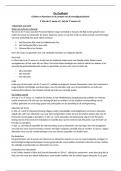
CHAPTER 3: STAFF APPRAISALS
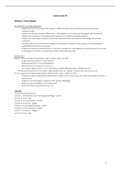
Errors that can occur during a staff appraisal
Errors Counter Measures
1. Bias
• When the appraiser is influenced by age, • Take care to avoid labelling any person
gender, race or seniority of the appraise according to personal characteristics
eg. Some people believe older people such as age, race, gender or religion.
are not capable of being trained for new • Be objective without preconceived ideas.
tasks or young people cannot handle • Treat the person as an individual is
responsibility. his/her own right.
2. Halo Effect
• Appraiser bases judgement of more • Involve appraise throughout the process.
specific traits on a favourable or • Appraiser should remain objective –
unfavourable impression eg. An appraise base ratings on the criteria and the
may be good at organising a sports event performance of the educator in the
– he/she is assumed to deserve a high classroom.
rating for lesson preparation,
effectiveness of teaching, quality of
performance.
3. Recency Error
• Appraisers are influenced by recent • Depends on the objective awareness of
events and do not base their judgements the appraisee – appraisers should ask
on evidence spanning the period since themselves “Does the person actually
the last appraisal. If appraisal is carried perform in the way that I am rating
out just after an appraisee has him/her?”
performed exceptionally well or has • Fill out appraisal instruments one section
made critical mistakes, the evaluation at a time concentrating only on criterion
could be unduly influenced. to be appraised.
4. Central Tendency Error
• Appraisers rank nearly all appraisees in • Appraisers should examine philosophies
the “average” or “satisfactory” range. of appraisal rating, specifically asking
themselves what it takes to be rated
average and if ratings are determined by
individual performances against fixed
and predetermined criteria.
• Also need to ask themselves if it is
possible that everyone could be rated as
average.
5. Leniency Error
• Every appraiser has his/her own value • Examiner philosophies of appraisal and
system that they use as a standard to rating.
appraise others. • Necessary to remember, the aim of
• Some allocate higher marks and others appraisal is to support the appraisees
low. Professional development, how can this
• Positive leniency overstates be done with levels of accomplishment
performance, negative leniency un that not not support this rating.
Errors that can occur during a staff appraisal
Errors Counter Measures
1. Bias
• When the appraiser is influenced by age, • Take care to avoid labelling any person
gender, race or seniority of the appraise according to personal characteristics
eg. Some people believe older people such as age, race, gender or religion.
are not capable of being trained for new • Be objective without preconceived ideas.
tasks or young people cannot handle • Treat the person as an individual is
responsibility. his/her own right.
2. Halo Effect
• Appraiser bases judgement of more • Involve appraise throughout the process.
specific traits on a favourable or • Appraiser should remain objective –
unfavourable impression eg. An appraise base ratings on the criteria and the
may be good at organising a sports event performance of the educator in the
– he/she is assumed to deserve a high classroom.
rating for lesson preparation,
effectiveness of teaching, quality of
performance.
3. Recency Error
• Appraisers are influenced by recent • Depends on the objective awareness of
events and do not base their judgements the appraisee – appraisers should ask
on evidence spanning the period since themselves “Does the person actually
the last appraisal. If appraisal is carried perform in the way that I am rating
out just after an appraisee has him/her?”
performed exceptionally well or has • Fill out appraisal instruments one section
made critical mistakes, the evaluation at a time concentrating only on criterion
could be unduly influenced. to be appraised.
4. Central Tendency Error
• Appraisers rank nearly all appraisees in • Appraisers should examine philosophies
the “average” or “satisfactory” range. of appraisal rating, specifically asking
themselves what it takes to be rated
average and if ratings are determined by
individual performances against fixed
and predetermined criteria.
• Also need to ask themselves if it is
possible that everyone could be rated as
average.
5. Leniency Error
• Every appraiser has his/her own value • Examiner philosophies of appraisal and
system that they use as a standard to rating.
appraise others. • Necessary to remember, the aim of
• Some allocate higher marks and others appraisal is to support the appraisees
low. Professional development, how can this
• Positive leniency overstates be done with levels of accomplishment
performance, negative leniency un that not not support this rating.