SHN169 – U&E
Urea & Electrolytes (U&E)
Objectives of this session
Understand why we test U&E
Appreciate the typical elements of U&E analysis
Acquaint yourself with the terminology
Appreciate the roles electrolytes play in the body
Understand how the body regulates blood levels
Understand what low and high levels of the measured parameters can tell us
Introduction
U&E: clinical abbreviation for urea & electrolytes
Most commonly requested biochemical analysis
They represent a set of tests typically requested when assessment of renal function
is required
Levels of urea and electrolytes present in blood provide a valuable insight into
kidney health, as well as other areas of the body
Also used to track progression of kidney disease
o Chronic kidney disease progresses through 5 stages and this can trace/follow
this progression
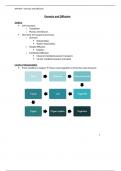
What do we look at when carrying out U&E?
Calcium and Magnesium can indicate overall health of the body when looking and
the U&E testing
Urea
What is urea?
o Urea is a breakdown product of amino acids of proteins
o It is a nitrogenous waste product, i.e. contains nitrogen
How is urea formed?
1
, SHN169 – U&E
o Following dietary intake, protein is broken down by the body into amino
acids •
o Excess amino acids need to be removed and are first converted into
ammonia by the liver
o Ammonia is very toxic so the liver converts it to urea
o The kidneys then filter your blood of urea (and other waste products) to
produce urine (containing urea)
How is urea detected in blood?
o BUN test = Blood Urea Nitrogen
o Used to assess renal or hepatic (liver) function
o The liver processes ammonia into urea, and
o Healthy kidneys filter urea from the blood into urine
o Therefore abnormal levels of urea are typically the result of abnormal renal
(kidney) or hepatic (liver) function
o Therefore the BUN test is not used alone in diagnosis, it is used alongside
other tests
o Blood creatinine (waste product of creatine metabolism) is commonly
checked alongside BUN as creatinine too is filtered out in normal renal
function
o The values are used to calculate BUN: Creatinine ratio, which is commonly
used as a measure of renal function
o Note:
The BUN test is an expression of urea concentration based on the
nitrogen content of urea
Other countries perform the same analysis but express urea
concentration as that of the whole molecule
It is possible to convert between the two results
This is important when looking at normal range levels
What can urea (BUN) levels tell us?
o Healthy kidneys remove >90% of urea from blood
o Higher than normal blood urea levels primarily indicate one or more of the
following situations:
1. Reduced renal function
Due to acute kidney injury AKI or chronic kidney disease CKD
Reduced filtration of blood to produce urine → blood urea
rises
2. Increased production of urea by liver
Typically due to high protein diet
2
Urea & Electrolytes (U&E)
Objectives of this session
Understand why we test U&E
Appreciate the typical elements of U&E analysis
Acquaint yourself with the terminology
Appreciate the roles electrolytes play in the body
Understand how the body regulates blood levels
Understand what low and high levels of the measured parameters can tell us
Introduction
U&E: clinical abbreviation for urea & electrolytes
Most commonly requested biochemical analysis
They represent a set of tests typically requested when assessment of renal function
is required
Levels of urea and electrolytes present in blood provide a valuable insight into
kidney health, as well as other areas of the body
Also used to track progression of kidney disease
o Chronic kidney disease progresses through 5 stages and this can trace/follow
this progression
What do we look at when carrying out U&E?
Calcium and Magnesium can indicate overall health of the body when looking and
the U&E testing
Urea
What is urea?
o Urea is a breakdown product of amino acids of proteins
o It is a nitrogenous waste product, i.e. contains nitrogen
How is urea formed?
1
, SHN169 – U&E
o Following dietary intake, protein is broken down by the body into amino
acids •
o Excess amino acids need to be removed and are first converted into
ammonia by the liver
o Ammonia is very toxic so the liver converts it to urea
o The kidneys then filter your blood of urea (and other waste products) to
produce urine (containing urea)
How is urea detected in blood?
o BUN test = Blood Urea Nitrogen
o Used to assess renal or hepatic (liver) function
o The liver processes ammonia into urea, and
o Healthy kidneys filter urea from the blood into urine
o Therefore abnormal levels of urea are typically the result of abnormal renal
(kidney) or hepatic (liver) function
o Therefore the BUN test is not used alone in diagnosis, it is used alongside
other tests
o Blood creatinine (waste product of creatine metabolism) is commonly
checked alongside BUN as creatinine too is filtered out in normal renal
function
o The values are used to calculate BUN: Creatinine ratio, which is commonly
used as a measure of renal function
o Note:
The BUN test is an expression of urea concentration based on the
nitrogen content of urea
Other countries perform the same analysis but express urea
concentration as that of the whole molecule
It is possible to convert between the two results
This is important when looking at normal range levels
What can urea (BUN) levels tell us?
o Healthy kidneys remove >90% of urea from blood
o Higher than normal blood urea levels primarily indicate one or more of the
following situations:
1. Reduced renal function
Due to acute kidney injury AKI or chronic kidney disease CKD
Reduced filtration of blood to produce urine → blood urea
rises
2. Increased production of urea by liver
Typically due to high protein diet
2