1. Background and Context:
a. Robert Louis Stevenson, one of the masters of the Victorian adventure story, was
born in Edinburgh, Scotland, on November 13, 1850. He was a sickly child, and
respiratory troubles plagued him throughout his life. As a young man, he traveled
through Europe, leading a bohemian lifestyle and penning his first two books, both
travel narratives. In 1876, he met a married woman, Fanny Van de Grift Osbourne,
and fell in love with her. Mrs. Osbourne eventually divorced her husband, and she
and Stevenson were married.
b. Stevenson returned to London with his bride and wrote prolifically over the next
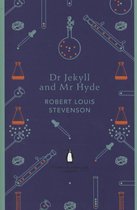
decade, in spite of his terrible health. Dr. Jekyll and Mr. Hyde, which Stevenson
described as a “fine bogey tale,” also came out in 1886. It met with tremendous
success, selling 40,000 copies in six months and ensuring Stevenson’s fame as a
writer.
c. In its narrative of a respectable doctor who transforms himself into a savage
murderer, Dr. Jekyll and Mr. Hyde tapped directly into the anxieties of Stevenson’s
age. The Victorian era, named for Queen Victoria, who ruled England for most of the
nineteenth century, was a time of unprecedented technological progress and an age
in which European nations carved up the world with their empires. By the end of the
century, however, many people were beginning to call into question the ideals of
progress and civilization that had defined the era, and a growing sense of pessimism
and decline pervaded artistic circles. Many felt that the end of the century was also
witnessing the twilight of Western culture.
d. With the notion of a single body containing both the erudite Dr. Jekyll and the
depraved Mr. Hyde, Stevenson’s novel imagines an inextricable link between
civilization and savagery, good and evil. Jekyll’s attraction to the freedom from
restraint that Hyde enjoys mirrors Victorian England’s secret attraction to allegedly
savage non-Western cultures, even as Europe claimed superiority over them. This
attraction also informs such books as Joseph Conrad’s Heart of Darkness. For, as the
Western world came in contact with other peoples and ways of life, it found aspects
of these cultures within itself, and both desired and feared to indulge them. These
aspects included open sensuality, physicality, and other so-called irrational
tendencies. Even as Victorian England sought to assert its civilization over and
against these instinctual sides of life, it found them secretly fascinating. Indeed,
society’s repression of its darker side only increased the fascination. As a product of
this society, Dr. Jekyll and Mr. Hyde manifests this fascination; yet, as a work of art,
it also questions this interest.
2. Stevenson’s Influences for writing the novel
a. Nature of Edinburgh
i. A dangerous place to be. The medical school paid good money for dead
bodies. This led to a rise in murders, especially of the poor and new graves
were robbed by thieves to the extent that families paid guards to keep
watch
b. Dual Nature of Man
, i. Stevenson was fascinated by stories of respectable men turning into savage
criminals at night. i.e. Deacon Broadie who was a cabinet maker during the
day and a criminal at night
c. Darwin’s Theory of Evolution
i. Turned organised religion upside down- Victorians did not know what to
believe so many looked to the supernatural for answers as opposed to God
ii. Also led to a renewed belief in prehistoric people and the fear they would
return and take over the world
d. Industrial Revolution
i. Mass migration to cities meant poverty for many and an increase in crime.
People were unsettled and saw this as the dawning of an evil age in history
3. Key Criticism and Theory
a. Robert Louis Stevenson, one of the masters of the Victorian adventure story, was
born in Edinburgh, Scotland, on November 13, 1850. He was a sickly child, and
respiratory troubles plagued him throughout his life. As a young man, he traveled
through Europe, leading a bohemian lifestyle and penning his first two books, both
travel narratives. In 1876, he met a married woman, Fanny Van de Grift Osbourne,
and fell in love with her. Mrs. Osbourne eventually divorced her husband, and she
and Stevenson were married.
b. Stevenson returned to London with his bride and wrote prolifically over the next
decade, in spite of his terrible health. Dr. Jekyll and Mr. Hyde, which Stevenson
described as a “fine bogey tale,” also came out in 1886. It met with tremendous
success, selling 40,000 copies in six months and ensuring Stevenson’s fame as a
writer.
c. In its narrative of a respectable doctor who transforms himself into a savage
murderer, Dr. Jekyll and Mr. Hyde tapped directly into the anxieties of Stevenson’s
age. The Victorian era, named for Queen Victoria, who ruled England for most of the
nineteenth century, was a time of unprecedented technological progress and an age
in which European nations carved up the world with their empires. By the end of the
century, however, many people were beginning to call into question the ideals of
progress and civilization that had defined the era, and a growing sense of pessimism
and decline pervaded artistic circles. Many felt that the end of the century was also
witnessing the twilight of Western culture.
d. With the notion of a single body containing both the erudite Dr. Jekyll and the
depraved Mr. Hyde, Stevenson’s novel imagines an inextricable link between
civilization and savagery, good and evil. Jekyll’s attraction to the freedom from
restraint that Hyde enjoys mirrors Victorian England’s secret attraction to allegedly
savage non-Western cultures, even as Europe claimed superiority over them. This
attraction also informs such books as Joseph Conrad’s Heart of Darkness. For, as the
Western world came in contact with other peoples and ways of life, it found aspects
of these cultures within itself, and both desired and feared to indulge them. These
aspects included open sensuality, physicality, and other so-called irrational
tendencies. Even as Victorian England sought to assert its civilization over and
against these instinctual sides of life, it found them secretly fascinating. Indeed,
society’s repression of its darker side only increased the fascination. As a product of
this society, Dr. Jekyll and Mr. Hyde manifests this fascination; yet, as a work of art,
it also questions this interest.
2. Stevenson’s Influences for writing the novel
a. Nature of Edinburgh
i. A dangerous place to be. The medical school paid good money for dead
bodies. This led to a rise in murders, especially of the poor and new graves
were robbed by thieves to the extent that families paid guards to keep
watch
b. Dual Nature of Man
, i. Stevenson was fascinated by stories of respectable men turning into savage
criminals at night. i.e. Deacon Broadie who was a cabinet maker during the
day and a criminal at night
c. Darwin’s Theory of Evolution
i. Turned organised religion upside down- Victorians did not know what to
believe so many looked to the supernatural for answers as opposed to God
ii. Also led to a renewed belief in prehistoric people and the fear they would
return and take over the world
d. Industrial Revolution
i. Mass migration to cities meant poverty for many and an increase in crime.
People were unsettled and saw this as the dawning of an evil age in history
3. Key Criticism and Theory