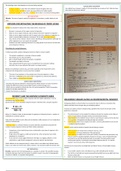
ELIZABETHAN ENGLAND: COURT AND PARLIAMENT
KEY DATES HERITAGE
1st Act of Succession (1533) Henry VII began the Tudor line through the Battle of Bosworth where he murdered Richard III. Elizabeth’s parents
2nd Act of Succession (1536) were Anne Boleyn and Henry VIII. Her mother’s execution made her realise she did not want to marry or have
3rd Act of Succession (1544) children. Elizabeth was sexually abused by Thomas Seymour. Elizabeth’s siblings were Edward VI (protestant) and
Elizabeth is in power (1558) Mary I (catholic). The three acts of succession (1533, 1536, 1544) declared Elizabeth as legitimate, illegitimate and
Essex Rebellion (1601) legitimate respectively. Elizabeth came into power in 1558 and died in 1603.
Elizabeth dies (1603)
THE PRIVY COUNCIL
KEY WORDS The main permanent institution of government was the Privy Council. They co-ordinated finance, law courts and
Reformation – The church in Western regional bodies. Elizabeth tried to use ‘divide and rule’, but this had its weaknesses. Key ministers include:
Europe splits - William Cecil (Loyal, trusted, part of the council for over 40 years)
Patronage – Land, titles or power were - Robert Dudley (Romance rumours, died in 1558)
given to people in order to maintain - Francis Walsingham (Fiercely loyal, responsible for foreign affairs, died in 1590)
their loyalty - Christopher Hatton (Impressed Elizabeth with dancing, helped organise progresses)
The Privy Chamber – The monarch’s
personal apartments
Cult of Personality – A way to idolise COURT LIFE
one person through unquestioning The Royal Court consisted of the Queen’s household, who lived with her and competed for power. The Royal Court
flattery and praise moved wherever the Queen was – it was a social hub that displayed every level of society. Performances in the court
Anglican – Protestant acted as subtle propaganda, glorifying Elizabeth. Progresses allowed her to save money and make relations with her
Puritan – Extreme protestant people. And the patronage system allowed Elizabeth to maintain the loyalty of the nobility and others.
MARRIAGE AND FEMALE RULE
There was great prejudice towards female rulers at the time of Elizabeth’s reign. Monarchs were thought to have traditionally male characteristics. Elizabeth
seized this opportunity and used her gender as a political weapon, allowing her to create a powerful cult of personality. She controlled parliament with her charm,
force and royal veto. When it came to marriage, Elizabeth was very disinterested as it meant she would have to give up some of her power. There were four
potential contenders: Prince Eric of Sweden (protestant), Philip II of Spain (catholic), Robert Dudley (protestant) and Duke of Anjou (catholic).
THE ESSEX REBELLION
Towards the end of Elizabeth’s reign there was increased poverty; the patronage system was breaking, and Elizabeth’s most trusted councillors have died. The Earl
of Essex (Robert Devereux) has been in Elizabeth’s court since 1584. His arrogance, ambition, rivalry with Cecil, banishment from parliament, peace-making in
Ireland and loss of wine monopoly were all reasons for his failed rebellion in 1601. This highlighted the loyalty and strength of the Privy Council, yet also highlighted
the failure of ‘divide and rule’ and Elizabeth’s decaying strength.
KEY DATES HERITAGE
1st Act of Succession (1533) Henry VII began the Tudor line through the Battle of Bosworth where he murdered Richard III. Elizabeth’s parents
2nd Act of Succession (1536) were Anne Boleyn and Henry VIII. Her mother’s execution made her realise she did not want to marry or have
3rd Act of Succession (1544) children. Elizabeth was sexually abused by Thomas Seymour. Elizabeth’s siblings were Edward VI (protestant) and
Elizabeth is in power (1558) Mary I (catholic). The three acts of succession (1533, 1536, 1544) declared Elizabeth as legitimate, illegitimate and
Essex Rebellion (1601) legitimate respectively. Elizabeth came into power in 1558 and died in 1603.
Elizabeth dies (1603)
THE PRIVY COUNCIL
KEY WORDS The main permanent institution of government was the Privy Council. They co-ordinated finance, law courts and
Reformation – The church in Western regional bodies. Elizabeth tried to use ‘divide and rule’, but this had its weaknesses. Key ministers include:
Europe splits - William Cecil (Loyal, trusted, part of the council for over 40 years)
Patronage – Land, titles or power were - Robert Dudley (Romance rumours, died in 1558)
given to people in order to maintain - Francis Walsingham (Fiercely loyal, responsible for foreign affairs, died in 1590)
their loyalty - Christopher Hatton (Impressed Elizabeth with dancing, helped organise progresses)
The Privy Chamber – The monarch’s
personal apartments
Cult of Personality – A way to idolise COURT LIFE
one person through unquestioning The Royal Court consisted of the Queen’s household, who lived with her and competed for power. The Royal Court
flattery and praise moved wherever the Queen was – it was a social hub that displayed every level of society. Performances in the court
Anglican – Protestant acted as subtle propaganda, glorifying Elizabeth. Progresses allowed her to save money and make relations with her
Puritan – Extreme protestant people. And the patronage system allowed Elizabeth to maintain the loyalty of the nobility and others.
MARRIAGE AND FEMALE RULE
There was great prejudice towards female rulers at the time of Elizabeth’s reign. Monarchs were thought to have traditionally male characteristics. Elizabeth
seized this opportunity and used her gender as a political weapon, allowing her to create a powerful cult of personality. She controlled parliament with her charm,
force and royal veto. When it came to marriage, Elizabeth was very disinterested as it meant she would have to give up some of her power. There were four
potential contenders: Prince Eric of Sweden (protestant), Philip II of Spain (catholic), Robert Dudley (protestant) and Duke of Anjou (catholic).
THE ESSEX REBELLION
Towards the end of Elizabeth’s reign there was increased poverty; the patronage system was breaking, and Elizabeth’s most trusted councillors have died. The Earl
of Essex (Robert Devereux) has been in Elizabeth’s court since 1584. His arrogance, ambition, rivalry with Cecil, banishment from parliament, peace-making in
Ireland and loss of wine monopoly were all reasons for his failed rebellion in 1601. This highlighted the loyalty and strength of the Privy Council, yet also highlighted
the failure of ‘divide and rule’ and Elizabeth’s decaying strength.