GEECOGEO - Summary Global Shift: Mapping the Changing
Contours of the World Economy (seventh edition)
Economic Geography (GEECOGEO)
Faculty of Spatial Sciences
University of Groningen
2019/2020
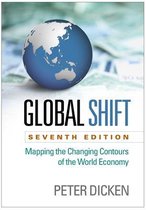
Global Shift: Mapping the Changing Contours of the World Economy (seventh edition)
ISBN 9781462519552
Can contain brackets with personal notes/Dutch words.
Summary Global Shift: Mapping the Changing Contours of the World Economy | GEECOGEO 1
,1. What in the World is Going On?
Lecture 1
Globalization came to been by many as the natural order: an inevitable and inexorable process of
increasing geographical spread and increasing functional integration between economic activities. But
it’s has two meanings:
> Empirical: the actual structural changes in the way global economy is organized.
> Ideological: the neo-liberal, free market ideology of the ‘globalization project’.
In 2008, with the collapse of the American Lehman Brothers (which embodies the neo-liberal
heading of the previous half century), the economic crisis started.
conflicting perspectives on ‘globalization’
The largest body of opinion are hyper-globalists: ‘we live in a borderless world in which
globalization is the new economic world order’.
> They believe it’s a natural order: nothing to do about it.
> Dicken argues this is a myth (!).
Pro-globalizers Anti-globalizers
Globalization is the solution: the rising tide will lift Globalization is the problem. Free markets create
all boats. inequalities. Reduction of well-being and
environmental problems.
Grounding ‘globalization’: geography really does matter
The world economy is a different place from 60/70 years ago. Not so much more open, but
increasingly interconnected in significantly different ways.
Challenging globalization myths:
> The world is not flat.
> The world is not borderless.
> Global corporations don’t run the world
> Globalization is not always good.
> Globalization is not always bad.
Summary Global Shift: Mapping the Changing Contours of the World Economy | GEECOGEO 2
,2. The Centre of Gravity Shifts: Transforming The Geographies of
the Global Economy
Lecture 1
New geographies of production, distribution of
consumption don’t replace the old ones. The
economic map of today is therefore an outcome
of a long period of economic development.
> The newly industrialized countries (UK, US,
Western Europe) of that time became dominant
in a core-periphery configuration (→ scheme). This
existed until approximately 1945.
> The US had the economic and political power to build a new economic order. The East did not
want to participate.
Two important features characterize the global economy since 1950: the increased volatility
[instabiliteit] of aggregate economic growth and the growing interconnectedness between
different parts of the world.
The volatility of aggregate economic growth
The economic growth is very unstable. In the period 1950-1970 it was fairly stable, but after that
big ups and downs occurred. It’s hard to predict, even short-term speaking.
Growing interconnectedness within the global economy
Three indicators prove that: trade has grown faster than output (A), foreign direct investment has
grown faster than trade (B), serious structural imbalances in the world economy have emerged (C).
A. Trade has grown faster than output
This means that the merchandise trade has grown 20-fold, while the production has grown only
6-fold since 1960.
B. FDI has grown faster than trade
Direct investments are investments by one firm in another, with the intention of gaining a degree
of control over that firm’s operations or to set up an affiliate [partnership]. This has, as mentioned
before, overtaken trade and is now the primary mechanism in global economy. The importance FDI
to national economies has grown.
However, FDI is mostly trade within the boundaries of firms.
C. Structural imbalances in the world economy
Flows of trade/FDI have created imbalances: some countries have surpluses, some have deficits.
Summary Global Shift: Mapping the Changing Contours of the World Economy | GEECOGEO 3
, Continuing geographical concentration within the global economy – but a changing
focus
Developing countries have experienced spectacular growth, but a big part are ‘big hitters’. For
example, China and the Asian Tigers.
Some put their money on the acronym economies (BRIC, MINT, CIVETS, MISTS). However,
research shows that developing countries are experiencing a slowdown.
NOTE: we must be careful with short-term predictions: they aren’t a prediction of long-term development.
The USA still dominates the global economy – though less than it did
The USA has been overtaken regarding manufacturing, but is still the biggest economy regarding
services. The USA has a great trade deficit due to a fall of exports and a rise of imports over the
last decades. Also, the part of the world’s FDIs coming from the USA is smaller. The attractiveness
of the USA as a FDI ‘destination’ has grown. Outcome: a more balanced FDI-pattern.
Europe is still a major player – but its performance is highly uneven
Europe is the most politically integrated region in the world. Within the European Union, big
differences occur between e.g. Germany and the United Kingdom (RIP) and southern countries
like Portugal and Greece as it comes to trade and FDI.
In general, Europe is very attractive as a FDI location.
With the fall of the Berlin Wall, Eastern European countries had to transform themselves to
capitalist markets: many times the happened in a turbulent and painful manner. These countries’
economies have grown spectacularly but a gap with the western countries is still visible.
‘Back to the future’: the resurgence of Asia
Asia is embodied by China for the most part, but Japan, the four tigers, and India play a role as well:
> Japan: ‘Japan Inc.’ was seen as big threat for Europe and the USA in the 1960s-1990s. After that,
their growth was less, but highly exaggerated by the rest of the world.
> The four tigers: manufacturing growth in Hong Kong, Korea, Singapore and Taiwan. After that,
Thailand and Indonesia displayed high rates of growth as well. They played a big role in export.
> China: the re-emergence of China. In the period 1980-2003, China’s growth was the highest in
the world (10%). It’s become the largest exporter of merchandise. China has a huge and cheap
labour force, and its economy is unusually open.
> India: has become subject to the outsourcing of IT services. It’s often compared with China, but
the evidence is rather thin. However, it can become a really major economic power.
Latin America – unfulfilled potential
Latin America is still lacking behind, while they are the richest in raw materials. Mexico has done
better previous years, because of proximity of the US market.
Summary Global Shift: Mapping the Changing Contours of the World Economy | GEECOGEO 4
Contours of the World Economy (seventh edition)
Economic Geography (GEECOGEO)
Faculty of Spatial Sciences
University of Groningen
2019/2020
Global Shift: Mapping the Changing Contours of the World Economy (seventh edition)
ISBN 9781462519552
Can contain brackets with personal notes/Dutch words.
Summary Global Shift: Mapping the Changing Contours of the World Economy | GEECOGEO 1
,1. What in the World is Going On?
Lecture 1
Globalization came to been by many as the natural order: an inevitable and inexorable process of
increasing geographical spread and increasing functional integration between economic activities. But
it’s has two meanings:
> Empirical: the actual structural changes in the way global economy is organized.
> Ideological: the neo-liberal, free market ideology of the ‘globalization project’.
In 2008, with the collapse of the American Lehman Brothers (which embodies the neo-liberal
heading of the previous half century), the economic crisis started.
conflicting perspectives on ‘globalization’
The largest body of opinion are hyper-globalists: ‘we live in a borderless world in which
globalization is the new economic world order’.
> They believe it’s a natural order: nothing to do about it.
> Dicken argues this is a myth (!).
Pro-globalizers Anti-globalizers
Globalization is the solution: the rising tide will lift Globalization is the problem. Free markets create
all boats. inequalities. Reduction of well-being and
environmental problems.
Grounding ‘globalization’: geography really does matter
The world economy is a different place from 60/70 years ago. Not so much more open, but
increasingly interconnected in significantly different ways.
Challenging globalization myths:
> The world is not flat.
> The world is not borderless.
> Global corporations don’t run the world
> Globalization is not always good.
> Globalization is not always bad.
Summary Global Shift: Mapping the Changing Contours of the World Economy | GEECOGEO 2
,2. The Centre of Gravity Shifts: Transforming The Geographies of
the Global Economy
Lecture 1
New geographies of production, distribution of
consumption don’t replace the old ones. The
economic map of today is therefore an outcome
of a long period of economic development.
> The newly industrialized countries (UK, US,
Western Europe) of that time became dominant
in a core-periphery configuration (→ scheme). This
existed until approximately 1945.
> The US had the economic and political power to build a new economic order. The East did not
want to participate.
Two important features characterize the global economy since 1950: the increased volatility
[instabiliteit] of aggregate economic growth and the growing interconnectedness between
different parts of the world.
The volatility of aggregate economic growth
The economic growth is very unstable. In the period 1950-1970 it was fairly stable, but after that
big ups and downs occurred. It’s hard to predict, even short-term speaking.
Growing interconnectedness within the global economy
Three indicators prove that: trade has grown faster than output (A), foreign direct investment has
grown faster than trade (B), serious structural imbalances in the world economy have emerged (C).
A. Trade has grown faster than output
This means that the merchandise trade has grown 20-fold, while the production has grown only
6-fold since 1960.
B. FDI has grown faster than trade
Direct investments are investments by one firm in another, with the intention of gaining a degree
of control over that firm’s operations or to set up an affiliate [partnership]. This has, as mentioned
before, overtaken trade and is now the primary mechanism in global economy. The importance FDI
to national economies has grown.
However, FDI is mostly trade within the boundaries of firms.
C. Structural imbalances in the world economy
Flows of trade/FDI have created imbalances: some countries have surpluses, some have deficits.
Summary Global Shift: Mapping the Changing Contours of the World Economy | GEECOGEO 3
, Continuing geographical concentration within the global economy – but a changing
focus
Developing countries have experienced spectacular growth, but a big part are ‘big hitters’. For
example, China and the Asian Tigers.
Some put their money on the acronym economies (BRIC, MINT, CIVETS, MISTS). However,
research shows that developing countries are experiencing a slowdown.
NOTE: we must be careful with short-term predictions: they aren’t a prediction of long-term development.
The USA still dominates the global economy – though less than it did
The USA has been overtaken regarding manufacturing, but is still the biggest economy regarding
services. The USA has a great trade deficit due to a fall of exports and a rise of imports over the
last decades. Also, the part of the world’s FDIs coming from the USA is smaller. The attractiveness
of the USA as a FDI ‘destination’ has grown. Outcome: a more balanced FDI-pattern.
Europe is still a major player – but its performance is highly uneven
Europe is the most politically integrated region in the world. Within the European Union, big
differences occur between e.g. Germany and the United Kingdom (RIP) and southern countries
like Portugal and Greece as it comes to trade and FDI.
In general, Europe is very attractive as a FDI location.
With the fall of the Berlin Wall, Eastern European countries had to transform themselves to
capitalist markets: many times the happened in a turbulent and painful manner. These countries’
economies have grown spectacularly but a gap with the western countries is still visible.
‘Back to the future’: the resurgence of Asia
Asia is embodied by China for the most part, but Japan, the four tigers, and India play a role as well:
> Japan: ‘Japan Inc.’ was seen as big threat for Europe and the USA in the 1960s-1990s. After that,
their growth was less, but highly exaggerated by the rest of the world.
> The four tigers: manufacturing growth in Hong Kong, Korea, Singapore and Taiwan. After that,
Thailand and Indonesia displayed high rates of growth as well. They played a big role in export.
> China: the re-emergence of China. In the period 1980-2003, China’s growth was the highest in
the world (10%). It’s become the largest exporter of merchandise. China has a huge and cheap
labour force, and its economy is unusually open.
> India: has become subject to the outsourcing of IT services. It’s often compared with China, but
the evidence is rather thin. However, it can become a really major economic power.
Latin America – unfulfilled potential
Latin America is still lacking behind, while they are the richest in raw materials. Mexico has done
better previous years, because of proximity of the US market.
Summary Global Shift: Mapping the Changing Contours of the World Economy | GEECOGEO 4