PHILOSOPHIE IN ACTION 2.4
[Ondertitel van document]
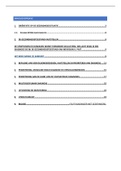
,Inhoud
Lecture 1: ............................................................................................................................................... 2
Work lecture day 1................................................................................................................................ 5
Lecture 2 ................................................................................................................................................ 9
Work lecture day 2.............................................................................................................................. 12
Lecture 3 .............................................................................................................................................. 17
Individual assignment: ....................................................................................................................... 20
References .......................................................................................................................................... 23
1
, Lecture 1:
What is justice?
- In todays health problems
- In 24 centuries of debate
What is it?
- Central question in ethics from Plato & Aristotle until today
o A virtue and character trait: a person can be just or unjust
o A characteristic of social institutions, a society or international organizations
o ‘Giving each person his or her due’ How do you know what each person is
due?
Formal principle of justice
- Aristotle: treat equal cases equally and unequal cases unequally
- The crucial question is how to do the comparison between cases, what criteria to
use?
- Classification issues
Social contract theories
- In social contract theories justice is about rights and obligations within a country or
community
- Thomas Hobbes (1651) en John Locke (1689)
o People give up some of their freedom and accept to be ruled by a government
in return for protection
o People thus leave the state of nature behind
Negative and positive rights:
- Negative right: physical integrity, freedom from violence, freedom of speech, freedom
of movement, religious freedom, personal property, freedom from far going state-
interference…
- Positive right: rights to food, housing, education, healthcare, public health, protection,
social inclusion, basic security…
Debates about distributive justice propose different criteria:
- Equality:
o A. Give all an equal share
o B. Give all an equal opportunity
- Utility:
o Allocate resources in such a way that overall happiness of the greatest
number of people is maximized
- Merit:
o Give each what they deserve based on merit
- Need:
o Give each what they need for health, or to live a good life
How to take a justice perspective
- Aristotle’s formal principle of justice
o Think about equality and difference
- Social contract and difference
o Think about rights and obligations
o Think about relations between negative and positive rights
o Think about relations between individuals and government
- Contemporary questions in health
2
[Ondertitel van document]
,Inhoud
Lecture 1: ............................................................................................................................................... 2
Work lecture day 1................................................................................................................................ 5
Lecture 2 ................................................................................................................................................ 9
Work lecture day 2.............................................................................................................................. 12
Lecture 3 .............................................................................................................................................. 17
Individual assignment: ....................................................................................................................... 20
References .......................................................................................................................................... 23
1
, Lecture 1:
What is justice?
- In todays health problems
- In 24 centuries of debate
What is it?
- Central question in ethics from Plato & Aristotle until today
o A virtue and character trait: a person can be just or unjust
o A characteristic of social institutions, a society or international organizations
o ‘Giving each person his or her due’ How do you know what each person is
due?
Formal principle of justice
- Aristotle: treat equal cases equally and unequal cases unequally
- The crucial question is how to do the comparison between cases, what criteria to
use?
- Classification issues
Social contract theories
- In social contract theories justice is about rights and obligations within a country or
community
- Thomas Hobbes (1651) en John Locke (1689)
o People give up some of their freedom and accept to be ruled by a government
in return for protection
o People thus leave the state of nature behind
Negative and positive rights:
- Negative right: physical integrity, freedom from violence, freedom of speech, freedom
of movement, religious freedom, personal property, freedom from far going state-
interference…
- Positive right: rights to food, housing, education, healthcare, public health, protection,
social inclusion, basic security…
Debates about distributive justice propose different criteria:
- Equality:
o A. Give all an equal share
o B. Give all an equal opportunity
- Utility:
o Allocate resources in such a way that overall happiness of the greatest
number of people is maximized
- Merit:
o Give each what they deserve based on merit
- Need:
o Give each what they need for health, or to live a good life
How to take a justice perspective
- Aristotle’s formal principle of justice
o Think about equality and difference
- Social contract and difference
o Think about rights and obligations
o Think about relations between negative and positive rights
o Think about relations between individuals and government
- Contemporary questions in health
2