09 January 2019
Assignment 2: Roger Case
Course : Advanced Auditing (324054)
Title : Data Analytics with ACL
Students :
Date : 7 December 2018
Introduction
This assignment is based on the Roger Case presented by Eilifsen, Messier, Glover and Prawitt in the
book of Auditing & Assurance Services. The main focus of this case is to get an basic understanding of
using an Audit Analytical tool (in this case ACL) and understanding when using the results of data-
analytics as audit evidence. During this case it is assumed that the files as provided, represent the
numbers during the fiscal year of 31 march – 28 februari.
Assignment 1
Audit evidence is one of the major concepts, alongside materiality and audit risk. Audit evidence is
defined as: all information, from whatever source, used by the auditor in arriving at the conclusions
on which the audit opinion is based. During the roger case, audit evidence is gathered from audit files,
which included all information related to a particular fiscal year Audit. Working papers such as risk-
assessment, audit sampling, audit analytical value and internal control documents are contained within
this file. Two primary requirements for this documentation are: Sufficiency and appropriateness. Data
should be sufficient to test a particular management assertion, while also being relevant and reliable
for said assertion.
Assignment 2
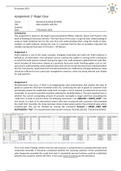
Misstatements may occur, if there is an inappropriate sales authorization that enables the sales of
goods to customers that have exceeded credit risk. Continuing the sale of goods to customers that
periodically exceed the established credit limit, provides a risk of material misstatement of accounts
receivable. As accounts receivable should be adjusted for doubtful debtors. The main question here is
whether the current outstanding amount of accounts receivable is larger (and thus exceeding) the
credit limit. In order to test this claim, the following command is run: AMOUNT > CREDIT_LIMIT . This
test results in a total of 10 observations where sales were conducted with customers that exceeded
the credit limit. Secondly, the initial overview shows 4 observations where the conducted sales where
unauthorized. This can be checked by running the command: Amount > CREDIT_LIMIT AND
AUTHORIZED =”NO”. The unauthorized sales concern invoices: 832140, 832226, 732324 and 832442.
Figure 1: Overview Accounts Receivable where customers exceeded credit limit and/or sales were unauthorized
First of all, these findings confirm that the sales process is compromised as unauthorized sales were
conducted. Secondly, it should be considered whether the receiving customer of the unauthorized
sales frequently exceeded the credit limit and if a (potential) personal relation could be established
between the customer and the AR-Clerk. In this case, tests of controls are the procedure.
Assignment 2: Roger Case
Course : Advanced Auditing (324054)
Title : Data Analytics with ACL
Students :
Date : 7 December 2018
Introduction
This assignment is based on the Roger Case presented by Eilifsen, Messier, Glover and Prawitt in the
book of Auditing & Assurance Services. The main focus of this case is to get an basic understanding of
using an Audit Analytical tool (in this case ACL) and understanding when using the results of data-
analytics as audit evidence. During this case it is assumed that the files as provided, represent the
numbers during the fiscal year of 31 march – 28 februari.
Assignment 1
Audit evidence is one of the major concepts, alongside materiality and audit risk. Audit evidence is
defined as: all information, from whatever source, used by the auditor in arriving at the conclusions
on which the audit opinion is based. During the roger case, audit evidence is gathered from audit files,
which included all information related to a particular fiscal year Audit. Working papers such as risk-
assessment, audit sampling, audit analytical value and internal control documents are contained within
this file. Two primary requirements for this documentation are: Sufficiency and appropriateness. Data
should be sufficient to test a particular management assertion, while also being relevant and reliable
for said assertion.
Assignment 2
Misstatements may occur, if there is an inappropriate sales authorization that enables the sales of
goods to customers that have exceeded credit risk. Continuing the sale of goods to customers that
periodically exceed the established credit limit, provides a risk of material misstatement of accounts
receivable. As accounts receivable should be adjusted for doubtful debtors. The main question here is
whether the current outstanding amount of accounts receivable is larger (and thus exceeding) the
credit limit. In order to test this claim, the following command is run: AMOUNT > CREDIT_LIMIT . This
test results in a total of 10 observations where sales were conducted with customers that exceeded
the credit limit. Secondly, the initial overview shows 4 observations where the conducted sales where
unauthorized. This can be checked by running the command: Amount > CREDIT_LIMIT AND
AUTHORIZED =”NO”. The unauthorized sales concern invoices: 832140, 832226, 732324 and 832442.
Figure 1: Overview Accounts Receivable where customers exceeded credit limit and/or sales were unauthorized
First of all, these findings confirm that the sales process is compromised as unauthorized sales were
conducted. Secondly, it should be considered whether the receiving customer of the unauthorized
sales frequently exceeded the credit limit and if a (potential) personal relation could be established
between the customer and the AR-Clerk. In this case, tests of controls are the procedure.