OB NURS 306 Study Guide for Week 4 Content
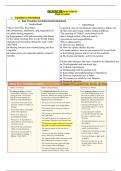
OB NURS 306 Study Guide for Week 4 Content o Transition to Parenthood o Role Transition to Motherhood/Fatherhood ▪ Motherhood ▪ Fatherhood Mercer describes four stages ■ Commitment, attachment, and preparation for an infant during pregnancy ■ Acquaintance with and increasing attachment to the infant, learning how to care for the infant, and physical restoration during the early weeks after birth ■ Moving toward a new normal during the first 4 months ■ Achievement of a maternal identity around 4 months In general, men do not fantasize about being a father, nor do they role-play being a father during childhood The meaning of “father” varies based on the man’s interpretation of the role and its expectations and responsibilities. This is influenced by: ■ How he was fathered ■ How his culture defines the role ■ In some cultures, men are not expected to be involved in the birthing process and/or care of the newborn. ■ By friends and family, and by his partner. Factors that influence the man’s transition to fatherhood are: ■ Developmental and emotional age ■ Cultural expectations ■ Relationship with his partner/wife ■ Knowledge and understanding of fatherhood ■ Previous experiences as a father ■ The manner in which he was fathered ■ Financial concerns ■ Support from partner/wife, friends, and family o Special populations: Adolescent parents ▪ Adolescence is the transition between childhood and Adulthood + working through the developmental tasks of being a teenager (Erik Erikson: identity vs role confusion) ▪ Less experiences to none o Signs of normal bonding and attachment ▪ BONDING: directional baby emotional feelings that begin during pregnancy ▪ ATTACHMENT: bidirectional ↔ emotional connection between both ▪ When to intervene when it is abnormal ■ Expected assessment findings: o ■ Parents hold the infant close. o ■ Parents refer to the infant by name or proper sex. o ■ Parents respond to the infant’s needs. o ■ Parents speak positively about the infant. o ■ Parents appear interested in learning about the infant. o ■ Parents ask appropriate questions about infant care. o ■ Parents appear comfortable holding and caring for the infant. ■ Maladaptive assessment findings: o ■ Parents call the infant “it.” o ■ Parents avoid eye contact with the infant (this can be viewed as adaptive based on culture). o ■ Parents do not respond to the infant’s cries. (ignores the baby) o ■ Parents are emotionally unavailable to the infant. o ■ Parents allow others to care for the infant, showing no interest (this can be viewed as adaptive based on culture). o ■ Parents demonstrate poor feeding techniques such as propping bottles, not burping the infant, or seeming to be uncomfortable and/or irritated when nursing. o Postpartum Blues vs Postpartum Depression Postpartum Blues *aka Baby Blues occur during the first 2 postpartum weeks, last for a few days Occurs or affects a majority of women. *feels sad and cries easily, but she is able to take care of herself and her infant (seek help after 4 weeks) Possible causes of postpartum blues are: ■ Changes in hormonal levels ■ Fatigue ■ Stress from taking on the new role of mother Signs and symptoms of postpartum blues are: ■ Anger ■Anxiety, ■ Mood swings ■ Impatience ■ Sadness ■ Weeping, ■ Crying ■ Difficulty sleeping ■ Difficulty concentrating ■ Difficulty eating ■ Feeling “I’m not myself” ■ Restlessness Postpartum Depression Postpartum depression (PPD) is a mood disorder characterized by severe depression that: -occurs within the first 6–12 months postpartum. - occurs in 14.5% of postpartum women PPD is classified as a major depressive disorder when the woman has a depressed mood or a loss of interest or pleasure in daily activities for at least 2 weeks plus four of the following symptoms: ■ Significant weight loss or gain: a change of more than 5% of body weight in 1 month ■ Insomnia or hypersomnia ■ Changes in psychomotor activity: agitation or retardation ■ Decreased energy or fatigue ■ Feelings of worthlessness or guilt ■ Decreased ability to concentrate; inability to make decisions ■ Recurrent thoughts of death or suicide attempt ■ A major difference between postpartum blues and PPD is that PPD is disabling; the woman is unable to care for herself and/or her baby ■ Requires psychiatric intervention & unable to care for herself and/or her baby • Signs & Symptoms ■ Sleep and appetite disturbance ■ Fatigue greater than expected for caring for a newborn ■ Despondency (low spirit, low hope) Hopelessness ■ Uncontrolled crying ■ Anxiety, fear, and/or panic ■ Inability to concentrate ■ Feelings of guilt, inadequacy, and/or worthlessness ■ Inability to care for self-and/or baby ■ Decreased affectionate contact with the infant ■ Thoughts of harming self-and/or the baby, Postpartum Psychosis Postpartum psychosis (PPP) is a variant of bipolar disorder and is the most serious form of postpartum mood disorders o Onset within first 8 weeks after childbirth & as early as the 3rd day postpartum o Rare postpartum mood disorder that occurs in 1–2 women per 1,000 births (4,000 / year) Distinguishing signs: • hallucinations, • agitation, • confusion, • suicidal/homicidal thoughts, • delusions, • sleep disturbances, • loss of touch with reality ■ Paranoia, grandiose or bizarre delusions usually associated with the baby ■ Mood swings ■ Extreme agitation ■ Depressed or elated moods ■ Distraught feelings about ability to enjoy infant ■ Confused thinking ■ Strange beliefs, such as that she or her infant must die ■ Disorganized behavior o Requires immediate hospitalization & treatment o Newborn Nutrition and Feeding o AWHONN, WHO recommendations for length of breastfeeding ▪ At least for 6 months of breast milk ▪ Better for 12 months or longer o Cultural difference in breastfeeding- refer to table in book on pg 419 o Contraindications to breastfeeding o Maternal and newborn advantages to breastfeeding o Differences in breast milk (colostrum, transitional milk, foremilk, hindmilk) Breast Milk Contains proteins, carbohydrates, and fats that are synthesized in alveolar glands of the breast Stage 1 & 2 Stage 3 (Mature Milk) 20% solids 80% water 22–23 calories per ounce Colostrum present for 2–3 days after birth Transitional Milk consists of colostrum and milk Foremilk milk that is produced and Hindmilk milk produced during the
Written for
- Institution
- OB NURS 306
- Course
- OB NURS 306
Document information
- Uploaded on
- April 7, 2024
- Number of pages
- 10
- Written in
- 2023/2024
- Type
- Exam (elaborations)
- Contains
- Questions & answers
Subjects
-
ob nurs 306 study guide for week 4 content otra

Also available in package deal