Calibrating A Thermometer
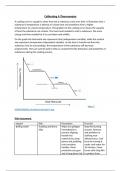
A cooling curve is a graph to show how fast a substance cools over time. It illustrates how a
substance's temperature is altered as it loses heat and transitions from a higher
temperature to a lower temperature. The gradient of the cooling curve shows the capacity
of heat the substance can contain. The more heat needed to melt a substance, the more
energy and time needed for it to cool down and solidify.
On the graph the horizontal axis represents time (independent variable), while the vertical
axis represents temperature (dependent variable). As the heat is transferred from the
substance into its surroundings, the temperature of the substance will decrease
progressively. They are overall used to help us comprehend the behaviour and properties of
substances during the cooling process.
https://
d20khd7ddkh5ls.cloudfront.net/expii-1.png
Risk Assessment
Hazard Risk Prevention First Aid
Boiling water Scalding and Burns Wipe any spillages Stop the burning
Slips immediately to process. Remove
prevent slipping. and jewellery or
Handle hot clothing near
materials by using affected area. Cool
gloves and grabbing burn by running it
cool container under cool water for
handles. Wear 10 minutes. Cover
protective eye gear burns with cling film
and a long sleeve lab to protect from
, coat to prevent bacteria.
burns from splashes.
Broken glass Cuts Always keep glass in Clean the wound by
middle of table to rinsing it with
prevent it from bottled or tap water,
being knocked off or by using sterile
the table. Clear up wipes. If there is
any broken glass nothing in the
immediately. wound, put pressure
on it using a
bandage for 10
minutes. When the
bleeding has
stopped, put on a
sterile dressing or a
plaster.
Stearic acid Skin irritation Wear a long sleeve In the event of a
lab coat and gloves spillage, it is
to protect your skin. essential to clean it
Wear goggles to up immediately. Use
protect your eyes. appropriate
Use appropriate absorbent materials,
containers or vessels such as spill pads or
with lids or covers to absorbent socks, to
prevent stearic acid
soak up the spilled
from spilling onto
stearic acid. Dispose
the surrounding
surfaces. of the absorbed
material
appropriately.
If in contact with
skin rinse
immediately.
Parafin wax Burns on skin Wear a long sleeve In the event of a
Irritation of eyes lab coat and gloves spillage, it is
to protect your skin. essential to clean it
Also wear goggles to up immediately. Use
protect your eyes. appropriate
Use appropriate absorbent materials,
containers or vessels
such as spill pads or
with lids or covers to
absorbent socks, to
prevent paraffin wax
from getting onto soak up the spilled
the surrounding paraffin wax.
surfaces. Dispose of the
absorbed material
, appropriately.
If in contact with
skin rinse
immediately.
Calibrating a Thermometer
Boiling method
1. Measure 200 cm³ water into a beaker and heat it until it reaches boiling point.
2. Place thermometer into beaker, ensuring the sensing area is completely submerged.
3. Allow the thermometer to stabilize for a few minutes until the reading on the
reference thermometer becomes constant.
4. Note the temperature represented on the reference thermometer, it should be
approximately 100°C
Freezing method
1. Fill a large beaker with ice and water to create an ice bath.
2. Stir with glass rod and allow it to stand for approximately 3 minutes. This ensures the
temperature is the same throughout the ice bath.
3. Place thermometer into beaker, ensuring the sensing area is completely submerged.
4. Allow the thermometer to stabilize for a few minutes until the reading on the
reference thermometer becomes constant.
5. Note the temperature represented on the reference thermometer, it should read
0°C.
Compare thermometer readings
Now, compare the readings of the thermometer being calibrated with the known
temperatures from the reference thermometer.
If there is a consistent deviation, note the difference between the readings. For example, a
positive offset is present if your thermometer routinely registers 3°C higher than the
reference thermometer.
Adjust the thermometer:
Make adjustments if possible. For example, if your thermometer consistently reads 3°C
higher, you may need to adjust it by -3°C to align with the reference thermometer. If the
thermometer requires significant adjustments or if you want to ensure its accuracy at
different temperature points, you may need to repeat the calibration process using various
temperature references.
A cooling curve is a graph to show how fast a substance cools over time. It illustrates how a
substance's temperature is altered as it loses heat and transitions from a higher
temperature to a lower temperature. The gradient of the cooling curve shows the capacity
of heat the substance can contain. The more heat needed to melt a substance, the more
energy and time needed for it to cool down and solidify.
On the graph the horizontal axis represents time (independent variable), while the vertical
axis represents temperature (dependent variable). As the heat is transferred from the
substance into its surroundings, the temperature of the substance will decrease
progressively. They are overall used to help us comprehend the behaviour and properties of
substances during the cooling process.
https://
d20khd7ddkh5ls.cloudfront.net/expii-1.png
Risk Assessment
Hazard Risk Prevention First Aid
Boiling water Scalding and Burns Wipe any spillages Stop the burning
Slips immediately to process. Remove
prevent slipping. and jewellery or
Handle hot clothing near
materials by using affected area. Cool
gloves and grabbing burn by running it
cool container under cool water for
handles. Wear 10 minutes. Cover
protective eye gear burns with cling film
and a long sleeve lab to protect from
, coat to prevent bacteria.
burns from splashes.
Broken glass Cuts Always keep glass in Clean the wound by
middle of table to rinsing it with
prevent it from bottled or tap water,
being knocked off or by using sterile
the table. Clear up wipes. If there is
any broken glass nothing in the
immediately. wound, put pressure
on it using a
bandage for 10
minutes. When the
bleeding has
stopped, put on a
sterile dressing or a
plaster.
Stearic acid Skin irritation Wear a long sleeve In the event of a
lab coat and gloves spillage, it is
to protect your skin. essential to clean it
Wear goggles to up immediately. Use
protect your eyes. appropriate
Use appropriate absorbent materials,
containers or vessels such as spill pads or
with lids or covers to absorbent socks, to
prevent stearic acid
soak up the spilled
from spilling onto
stearic acid. Dispose
the surrounding
surfaces. of the absorbed
material
appropriately.
If in contact with
skin rinse
immediately.
Parafin wax Burns on skin Wear a long sleeve In the event of a
Irritation of eyes lab coat and gloves spillage, it is
to protect your skin. essential to clean it
Also wear goggles to up immediately. Use
protect your eyes. appropriate
Use appropriate absorbent materials,
containers or vessels
such as spill pads or
with lids or covers to
absorbent socks, to
prevent paraffin wax
from getting onto soak up the spilled
the surrounding paraffin wax.
surfaces. Dispose of the
absorbed material
, appropriately.
If in contact with
skin rinse
immediately.
Calibrating a Thermometer
Boiling method
1. Measure 200 cm³ water into a beaker and heat it until it reaches boiling point.
2. Place thermometer into beaker, ensuring the sensing area is completely submerged.
3. Allow the thermometer to stabilize for a few minutes until the reading on the
reference thermometer becomes constant.
4. Note the temperature represented on the reference thermometer, it should be
approximately 100°C
Freezing method
1. Fill a large beaker with ice and water to create an ice bath.
2. Stir with glass rod and allow it to stand for approximately 3 minutes. This ensures the
temperature is the same throughout the ice bath.
3. Place thermometer into beaker, ensuring the sensing area is completely submerged.
4. Allow the thermometer to stabilize for a few minutes until the reading on the
reference thermometer becomes constant.
5. Note the temperature represented on the reference thermometer, it should read
0°C.
Compare thermometer readings
Now, compare the readings of the thermometer being calibrated with the known
temperatures from the reference thermometer.
If there is a consistent deviation, note the difference between the readings. For example, a
positive offset is present if your thermometer routinely registers 3°C higher than the
reference thermometer.
Adjust the thermometer:
Make adjustments if possible. For example, if your thermometer consistently reads 3°C
higher, you may need to adjust it by -3°C to align with the reference thermometer. If the
thermometer requires significant adjustments or if you want to ensure its accuracy at
different temperature points, you may need to repeat the calibration process using various
temperature references.