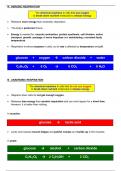
A. AEROBIC RESPIRATION
The chemical reactions in cells that use oxygen
to break down nutrient molecules to release energy
• Releases more energy than anaerobic respiration.
• The body’s preferred choice.
• Energy is needed for: muscle contraction, protein synthesis, cell division, active
transport, growth, passage of nerve impulses and maintaining a constant body
temperature.
• Respiration involves enzymes in cells, so its rate is affected by temperature and pH.
glucose + oxygen carbon dioxide + water
C6H12O6 + 6 O2 6 CO2 + 6 H2O
B. ANAEROBIC RESPIRATION
The chemical reactions in cells that do not use oxygen
to break down nutrient molecules to release energy
• Happens when cells do not get enough oxygen.
• Releases less energy than aerobic respiration and can only happen for a short time.
However, it is better than nothing.
In muscles:
glucose lactic acid
• Lactic acid causes muscle fatigue and painful cramps as it builds up in the muscles.
In yeast:
glucose alcohol + carbon dioxide
C6H12O6 2 C2H5OH + 2 CO2
, C. COMPARISON
Aerobic respiration Anaerobic respiration
Oxygen needed Yes No
Uses Glucose or fats Glucose only
Amount of
energy released More Less
per
glucose
molecule
Products Lactic acid only (Humans)
CO2 and water
Alcohol and CO2 (Yeast)
The chemical reactions in cells that use oxygen
to break down nutrient molecules to release energy
• Releases more energy than anaerobic respiration.
• The body’s preferred choice.
• Energy is needed for: muscle contraction, protein synthesis, cell division, active
transport, growth, passage of nerve impulses and maintaining a constant body
temperature.
• Respiration involves enzymes in cells, so its rate is affected by temperature and pH.
glucose + oxygen carbon dioxide + water
C6H12O6 + 6 O2 6 CO2 + 6 H2O
B. ANAEROBIC RESPIRATION
The chemical reactions in cells that do not use oxygen
to break down nutrient molecules to release energy
• Happens when cells do not get enough oxygen.
• Releases less energy than aerobic respiration and can only happen for a short time.
However, it is better than nothing.
In muscles:
glucose lactic acid
• Lactic acid causes muscle fatigue and painful cramps as it builds up in the muscles.
In yeast:
glucose alcohol + carbon dioxide
C6H12O6 2 C2H5OH + 2 CO2
, C. COMPARISON
Aerobic respiration Anaerobic respiration
Oxygen needed Yes No
Uses Glucose or fats Glucose only
Amount of
energy released More Less
per
glucose
molecule
Products Lactic acid only (Humans)
CO2 and water
Alcohol and CO2 (Yeast)