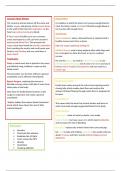
Coronary Heart Disease Heart Failure
The coronary arteries branch off the aorta and A condition in which the heart can’t pump enough blood to
deliver oxygen and glucose to the muscle tissue meet the body’s needs. i.e. it can’t fill with enough blood or
in the walls of the heart for respiration, so the can’t pump with enough force
heart can contract and pump blood.
Treatments:
If fatty material builds up in your coronary
Heart transplant: when a diseased heart is replaced with a
artery and ruptures a clot can form around it
healthy human heart from a donor
and stop the blood flow. This prevents the
oxygen your heart needs for aerobic respiration High risk surgery and long waiting list
from reaching the muscle and could cause your
heart to stop beating and you could have a Artificial hearts: used to keep patients alive while they wait
heart attack. for a transplant or allow the heart to rest as a patient
recover
Treatments:
No wait for donor, no need to match tissue type or use
Stent: a metal mesh that is placed in the artery immunosuppressant drugs but its only short term and you’d
and inflated using a balloon to open up the have to stay in hospital, its expensive and you must be a
blood vessel. certain age
This procedure can be done without a general
anaesthetic and is effective immediately
Bypass Surgery: replacing the narrow or Faulty Heart Valves
blocked coronary artery with bits of veins from Faulty heart valves prevent the valves from opening and/or
other parts of the body. closing fully which enables back flow and restricts the
Only done for badly blocked arteries as the amount of blood flowing through when they’re supposed to
surgery is expensive and needs a general be open.
anaesthetic Consequences
Statins: tablets that reduce blood cholesterol This means that the heart has to beat harder and faster in
levels which slows down the rate of fatty order to provide enough oxygenated blood to the body
material deposit
Replacements:
Mechanical: made of metal or plastic, man-made
Lasts a lifetime but may cause clots which need medication
and increases the risk of bleeding
Risk factors:
Biological: replaced by animal valves from cows and pigs
Genetics
No need to take anti-clotting medication but usually only last
Chemicals like asbestos
about 15 years and there may be ethical/religious/moral
Radiation like UV light
objections
Some viruses like HPV
Obesity
Alcoholism
Smoking addiction
The coronary arteries branch off the aorta and A condition in which the heart can’t pump enough blood to
deliver oxygen and glucose to the muscle tissue meet the body’s needs. i.e. it can’t fill with enough blood or
in the walls of the heart for respiration, so the can’t pump with enough force
heart can contract and pump blood.
Treatments:
If fatty material builds up in your coronary
Heart transplant: when a diseased heart is replaced with a
artery and ruptures a clot can form around it
healthy human heart from a donor
and stop the blood flow. This prevents the
oxygen your heart needs for aerobic respiration High risk surgery and long waiting list
from reaching the muscle and could cause your
heart to stop beating and you could have a Artificial hearts: used to keep patients alive while they wait
heart attack. for a transplant or allow the heart to rest as a patient
recover
Treatments:
No wait for donor, no need to match tissue type or use
Stent: a metal mesh that is placed in the artery immunosuppressant drugs but its only short term and you’d
and inflated using a balloon to open up the have to stay in hospital, its expensive and you must be a
blood vessel. certain age
This procedure can be done without a general
anaesthetic and is effective immediately
Bypass Surgery: replacing the narrow or Faulty Heart Valves
blocked coronary artery with bits of veins from Faulty heart valves prevent the valves from opening and/or
other parts of the body. closing fully which enables back flow and restricts the
Only done for badly blocked arteries as the amount of blood flowing through when they’re supposed to
surgery is expensive and needs a general be open.
anaesthetic Consequences
Statins: tablets that reduce blood cholesterol This means that the heart has to beat harder and faster in
levels which slows down the rate of fatty order to provide enough oxygenated blood to the body
material deposit
Replacements:
Mechanical: made of metal or plastic, man-made
Lasts a lifetime but may cause clots which need medication
and increases the risk of bleeding
Risk factors:
Biological: replaced by animal valves from cows and pigs
Genetics
No need to take anti-clotting medication but usually only last
Chemicals like asbestos
about 15 years and there may be ethical/religious/moral
Radiation like UV light
objections
Some viruses like HPV
Obesity
Alcoholism
Smoking addiction