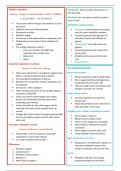
Aerobic respiration: Metabolism: all the reactions that occur in a
cell/ the body
Glucose + Oxygen Carbon Dioxide + Water (+ ENERGY)
Metabolic rate: the speed at which reactions
C 6 H 12 O6 + 6O 2 →6 C O2+6 H 2 O
occur in cells
The process where energy is released for use in all
Metabolic reactions include:
living cells
Opposite process to photosynthesis Respiration which releases the energy
Exothermic reaction used for other metabolic reactions
Requires oxygen Converting glucose into glycogen (in
Carried out in the mitochondria in eukaryotic cells animals) or starch and cellulose (in
Prokaryotes use enzymes in their cytoplasm to plants)
respire Forming lipids from fatty acids and
The energy released is used to: glycerol
o Carry out reactions to build larger Converting glucose and nitrates into
molecules from smaller ones amino acids
o Keep warm Breaking down excess proteins into
o Move urea
Photosynthesis
Anaerobic respiration: in animals
Glucose Lactic Acid + Energy The response to exercise:
Takes place when there is insufficient oxygen in the Heart rate increases:
body i.e. during periods of intense activity Blood is pumped round the body faster
The incomplete breakdown of glucose More oxygenated blood and glucose is
Releases less energy than aerobic respiration so is transported to the muscle cells
less efficient Cells can respire more and release more
Carried out in the cytoplasm energy so muscles can contract
Only a temporary process as not enough energy is
released to sustain life Arteries dilate/widen:
Lactic acid causes muscle fatigue and cramps
Increases blood flow to and from
because it is poisonous and stops them from
muscle cells
contracting and relaxing
Means blood flows closer to the skin to
Lactic acid needs to react with oxygen and be
allow the body to lose heat
removed from cells so that muscles return to
normal Breathing rate / depth of breathing increases:
Oxygen debt is the amount of oxygen required after
More oxygen is taken in
exercise to replace oxygen reserves and remove
Blood becomes oxygen faster
lactic acid
There is more oxygen for respiration
Anaerobic respiration: in yeast More energy is released for muscle
contraction
Glucose Ethanol + Carbon Dioxide
More oxygen to remove lactic acid
Fermentation is the term given to anaerobic Carbon dioxide is removed faster
respiration in yeast in the industry
Body temperature increases:
It is used to make bread and beer
Respiration is an exothermic reaction so
Differences:
increased respiration means more
1. Requires oxygen? energy is released in the form of heat
2. Carried out in?
Sweat:
3. Products of the reaction?
4. Efficiency? Molecules with the most energy
5. When does it happen? evaporate taking heat with them
cell/ the body
Glucose + Oxygen Carbon Dioxide + Water (+ ENERGY)
Metabolic rate: the speed at which reactions
C 6 H 12 O6 + 6O 2 →6 C O2+6 H 2 O
occur in cells
The process where energy is released for use in all
Metabolic reactions include:
living cells
Opposite process to photosynthesis Respiration which releases the energy
Exothermic reaction used for other metabolic reactions
Requires oxygen Converting glucose into glycogen (in
Carried out in the mitochondria in eukaryotic cells animals) or starch and cellulose (in
Prokaryotes use enzymes in their cytoplasm to plants)
respire Forming lipids from fatty acids and
The energy released is used to: glycerol
o Carry out reactions to build larger Converting glucose and nitrates into
molecules from smaller ones amino acids
o Keep warm Breaking down excess proteins into
o Move urea
Photosynthesis
Anaerobic respiration: in animals
Glucose Lactic Acid + Energy The response to exercise:
Takes place when there is insufficient oxygen in the Heart rate increases:
body i.e. during periods of intense activity Blood is pumped round the body faster
The incomplete breakdown of glucose More oxygenated blood and glucose is
Releases less energy than aerobic respiration so is transported to the muscle cells
less efficient Cells can respire more and release more
Carried out in the cytoplasm energy so muscles can contract
Only a temporary process as not enough energy is
released to sustain life Arteries dilate/widen:
Lactic acid causes muscle fatigue and cramps
Increases blood flow to and from
because it is poisonous and stops them from
muscle cells
contracting and relaxing
Means blood flows closer to the skin to
Lactic acid needs to react with oxygen and be
allow the body to lose heat
removed from cells so that muscles return to
normal Breathing rate / depth of breathing increases:
Oxygen debt is the amount of oxygen required after
More oxygen is taken in
exercise to replace oxygen reserves and remove
Blood becomes oxygen faster
lactic acid
There is more oxygen for respiration
Anaerobic respiration: in yeast More energy is released for muscle
contraction
Glucose Ethanol + Carbon Dioxide
More oxygen to remove lactic acid
Fermentation is the term given to anaerobic Carbon dioxide is removed faster
respiration in yeast in the industry
Body temperature increases:
It is used to make bread and beer
Respiration is an exothermic reaction so
Differences:
increased respiration means more
1. Requires oxygen? energy is released in the form of heat
2. Carried out in?
Sweat:
3. Products of the reaction?
4. Efficiency? Molecules with the most energy
5. When does it happen? evaporate taking heat with them