
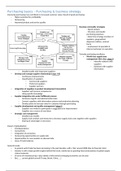
Purchasing basics – Purchasing & business strategy
Improving purchasing may contribute to increased customer value. Result of good purchasing:
- Higher potental for proftability
- Outsourcing
- Improved product and service quality
Develop commodity strategies
- Spend analysis
- Structure and classify
purchasing expenses
- Determine strategy (number of
suppliers, geographical
dispersal, relaton, contract
form)
- Involvement of specialist &
internal customers in executon
Towards purchasing excellence
• World class supply base
management (this class, class 5)
– Intensify relatons with
suppliers
– Database with supplier
informaton
– Detailed audits with important suppliers
• Develop and manage supplier relatonships (class 7-8)
– Contnuous improvements
– Classifcaton of suppliers:
• Commercial suppliers
• Preferred suppliers
• Supplier partners
• Integraton of suppliers in product development (innovaton)
– Suppliers with proven competences
– Using specifc nowledge
• Supplier integraton into order fulfllment process
– Outsource logistc and administratve tas s
– Connect suppliers with informaton systems and producton planning
– Develop plans to increase value for customer through purchasing
• Supplier development and quality management (class 5)
– Suppliers are invited to partcipate in suggestons for improvement
– Suppliers are a source of new ideas
• Strategic cost management
– Detailed cost models
– Supply chain analysis and measures to decrease supply chain costs together with suppliers
– Sharing of advantages is necessary
Impact of globalizaton:
• Interdependence
• Connectvity
• Integraton of economies
• Outsourcing opportunites on supply side
• Opportunites for new mar ets on demand side
• Issue of trade balances
General trends:
• In general world trade has been increasing in the past decades, with a ‘dip’ around 2008 (due to fnancial crisis)
• Industry is stll a major growth engine behind this trend, mainly due to growing interconnectedness in global supply
chains/networ s
• In terms of manufacturing’s value added a shif towards emerging economies can be seen
• But…….. current global turmoil (Trump, Brexit, China……)
,Reshoring: “Most companies not aware of real costs of of-shoring, we support them in this process” One of the tools: free
online TCO (Total Cost of Ownership) calculator (part of Strategic Cost Management PE process). Reshoring initatve lobbies
with sta eholders li e companies, governmental agencies and trade unions
Global sourcing: proactvely integratng and coordinatng common items and materials, processes, designs, technologies and
suppliers across worldwide purchasing, engineering and operatng locatons.
Advantages: Lower unit costs, benchmar ing current suppliers, accessing new mar ets/technologies
Disadvantages: more complicated distributon and logistcs, increasing handling costs, dealing with diferent cultures,
contractual problems, higher uncertainty about on-tme delivery and quality, politcal ‘dynamics’
What is Global?
- All imported goods/services
- Imports from non-traditonal countries/regions
What is Sourcing?
- Actual purchasing spend from foreign suppliers
- Worldwide selecton process for best suppliers (per commodity)
Ownership issues?
- Inter-frm: from external suppliers (outsourcing)
- Intra-frm: based on company relatonship
Offshoring: “Relocaton of parts of producton to locatons abroad (own facilites or suppliers)”
Near-sourcing: “Relocaton of producton actvites to a foreign country in the company’s regions (i.e. nearby)”
Back-shoring: “Re-concentraton of producton from foreign sources to company’s domestc producton site”
Reshoring: “Moving manufacturing bac to country of parent company”
Evolving levels of worldwide sourcing
1. Domestc purchasing only
2. Internatonal purchasing only when needed
3. Internatonal purchasing as integral part of sourcing strategy
4. Integraton and coordinaton of global sourcing strategies across worldwide business units
Integraton and coordinaton of global sourcing strategies with other functonal groups
Contribute to frmms compettve advantage
• Cost reductons
– Lower prices (transparency!!)
– Introduce competton to domestc supply base
• Differentaton opportunites
– Better quality
– Access to (advanced) technologies
– Access to limited sources
– Flexibility
– Increased supply performance
Barriers to global sourcing:
• Lac of understanding of internatonal purchasing procedures
– Poor nowledge about potental supply sources
– Lac of familiarity with required documentaton
• Lac of nowledge about foreign business practces, languages and cultures (for purchasing this may afect
product/component specifccatios)
• Higher ris s (e.g. due to more complex logistcs)
• Lac of senior management support
• Resistance to change
Critcal success factors:
• Executve commitment to global sourcing
• Rigirius cod systemcatc pricesses (“lecroiog frim pcst experieoces”)
• Availability of needed (critcal) resources
• Integraton through IT
• Suppiratie irgcoizcatiocl desigo (“giierococe”)
• Structured approaches to communicaton
• Ability to measure performance improvements (savings)
, Learning objectves:
1. Explain and assess impact of purchasing organizatonal compettvenesss
2. Asses applicability of methods, techniques and instruments
3. Reflect on purchasing issues in a critcal and academic manner
4. Analyze relevant purchasing topics from a managerial perspectve
Purchasing across diferent business contexts
Obtain the right materials (meetng quality requirements), in the right quantty, for delivery at the right tme and right place,
from the right source (a reliable supplier), with the right service (both before and afer the sale), and at the right price in the
short and long term.
Current view of purchasing objectves
1. Improve the organizatonms compettve positon.
2. Provide an uninterrupted flow of materials, supplies and services
required to operate the organizaton.
3. Keep inventory investment and loss at a minimum.
4. Maintain and improve quality.
5. Find and develop best-in-class suppliers.
6. Standardize, where possible, the items and services bought and the
processes used to procure them.
7. Purchase required items and services at lowest total cost of
ownership.
8. Achieve harmonious, productve internal relatonships.
9. Accomplish supply objectves at the lowest possible operatng costs.
Different functons
- Sourcing and commodity management: supplier selecton and management, contract negotaton
- Materials management: ensuring supplier performance and materials/service flows
- Administraton: handles purchase documents, dept. budget, data, and reports
- Supply research: data analytcs, new material, supply mar et, supply process, benchmar ing
Commodity management: identfy potental suppliers, analyse supplier capabilites, select suppliers, and determine prices,
terms, and conditons of supplier arrangements. PO and price determinaton.
Materials management: manage contract afer it is signed, direct the flow of materials and services from the supplier, and
eep trac of the supplier’s delivery and quality commitments to avoid any disruptve surprises. Trouble preventers.
Both called purchasing managers
Centralized: Authority and responsibility for most supply-related functons are assigned to a central organizaton
Decentralized: Authority and responsibility for supply-related functons are dispersed throughout the organizaton
A hybrid form is ofen used
Improving purchasing may contribute to increased customer value. Result of good purchasing:
- Higher potental for proftability
- Outsourcing
- Improved product and service quality
Develop commodity strategies
- Spend analysis
- Structure and classify
purchasing expenses
- Determine strategy (number of
suppliers, geographical
dispersal, relaton, contract
form)
- Involvement of specialist &
internal customers in executon
Towards purchasing excellence
• World class supply base
management (this class, class 5)
– Intensify relatons with
suppliers
– Database with supplier
informaton
– Detailed audits with important suppliers
• Develop and manage supplier relatonships (class 7-8)
– Contnuous improvements
– Classifcaton of suppliers:
• Commercial suppliers
• Preferred suppliers
• Supplier partners
• Integraton of suppliers in product development (innovaton)
– Suppliers with proven competences
– Using specifc nowledge
• Supplier integraton into order fulfllment process
– Outsource logistc and administratve tas s
– Connect suppliers with informaton systems and producton planning
– Develop plans to increase value for customer through purchasing
• Supplier development and quality management (class 5)
– Suppliers are invited to partcipate in suggestons for improvement
– Suppliers are a source of new ideas
• Strategic cost management
– Detailed cost models
– Supply chain analysis and measures to decrease supply chain costs together with suppliers
– Sharing of advantages is necessary
Impact of globalizaton:
• Interdependence
• Connectvity
• Integraton of economies
• Outsourcing opportunites on supply side
• Opportunites for new mar ets on demand side
• Issue of trade balances
General trends:
• In general world trade has been increasing in the past decades, with a ‘dip’ around 2008 (due to fnancial crisis)
• Industry is stll a major growth engine behind this trend, mainly due to growing interconnectedness in global supply
chains/networ s
• In terms of manufacturing’s value added a shif towards emerging economies can be seen
• But…….. current global turmoil (Trump, Brexit, China……)
,Reshoring: “Most companies not aware of real costs of of-shoring, we support them in this process” One of the tools: free
online TCO (Total Cost of Ownership) calculator (part of Strategic Cost Management PE process). Reshoring initatve lobbies
with sta eholders li e companies, governmental agencies and trade unions
Global sourcing: proactvely integratng and coordinatng common items and materials, processes, designs, technologies and
suppliers across worldwide purchasing, engineering and operatng locatons.
Advantages: Lower unit costs, benchmar ing current suppliers, accessing new mar ets/technologies
Disadvantages: more complicated distributon and logistcs, increasing handling costs, dealing with diferent cultures,
contractual problems, higher uncertainty about on-tme delivery and quality, politcal ‘dynamics’
What is Global?
- All imported goods/services
- Imports from non-traditonal countries/regions
What is Sourcing?
- Actual purchasing spend from foreign suppliers
- Worldwide selecton process for best suppliers (per commodity)
Ownership issues?
- Inter-frm: from external suppliers (outsourcing)
- Intra-frm: based on company relatonship
Offshoring: “Relocaton of parts of producton to locatons abroad (own facilites or suppliers)”
Near-sourcing: “Relocaton of producton actvites to a foreign country in the company’s regions (i.e. nearby)”
Back-shoring: “Re-concentraton of producton from foreign sources to company’s domestc producton site”
Reshoring: “Moving manufacturing bac to country of parent company”
Evolving levels of worldwide sourcing
1. Domestc purchasing only
2. Internatonal purchasing only when needed
3. Internatonal purchasing as integral part of sourcing strategy
4. Integraton and coordinaton of global sourcing strategies across worldwide business units
Integraton and coordinaton of global sourcing strategies with other functonal groups
Contribute to frmms compettve advantage
• Cost reductons
– Lower prices (transparency!!)
– Introduce competton to domestc supply base
• Differentaton opportunites
– Better quality
– Access to (advanced) technologies
– Access to limited sources
– Flexibility
– Increased supply performance
Barriers to global sourcing:
• Lac of understanding of internatonal purchasing procedures
– Poor nowledge about potental supply sources
– Lac of familiarity with required documentaton
• Lac of nowledge about foreign business practces, languages and cultures (for purchasing this may afect
product/component specifccatios)
• Higher ris s (e.g. due to more complex logistcs)
• Lac of senior management support
• Resistance to change
Critcal success factors:
• Executve commitment to global sourcing
• Rigirius cod systemcatc pricesses (“lecroiog frim pcst experieoces”)
• Availability of needed (critcal) resources
• Integraton through IT
• Suppiratie irgcoizcatiocl desigo (“giierococe”)
• Structured approaches to communicaton
• Ability to measure performance improvements (savings)
, Learning objectves:
1. Explain and assess impact of purchasing organizatonal compettvenesss
2. Asses applicability of methods, techniques and instruments
3. Reflect on purchasing issues in a critcal and academic manner
4. Analyze relevant purchasing topics from a managerial perspectve
Purchasing across diferent business contexts
Obtain the right materials (meetng quality requirements), in the right quantty, for delivery at the right tme and right place,
from the right source (a reliable supplier), with the right service (both before and afer the sale), and at the right price in the
short and long term.
Current view of purchasing objectves
1. Improve the organizatonms compettve positon.
2. Provide an uninterrupted flow of materials, supplies and services
required to operate the organizaton.
3. Keep inventory investment and loss at a minimum.
4. Maintain and improve quality.
5. Find and develop best-in-class suppliers.
6. Standardize, where possible, the items and services bought and the
processes used to procure them.
7. Purchase required items and services at lowest total cost of
ownership.
8. Achieve harmonious, productve internal relatonships.
9. Accomplish supply objectves at the lowest possible operatng costs.
Different functons
- Sourcing and commodity management: supplier selecton and management, contract negotaton
- Materials management: ensuring supplier performance and materials/service flows
- Administraton: handles purchase documents, dept. budget, data, and reports
- Supply research: data analytcs, new material, supply mar et, supply process, benchmar ing
Commodity management: identfy potental suppliers, analyse supplier capabilites, select suppliers, and determine prices,
terms, and conditons of supplier arrangements. PO and price determinaton.
Materials management: manage contract afer it is signed, direct the flow of materials and services from the supplier, and
eep trac of the supplier’s delivery and quality commitments to avoid any disruptve surprises. Trouble preventers.
Both called purchasing managers
Centralized: Authority and responsibility for most supply-related functons are assigned to a central organizaton
Decentralized: Authority and responsibility for supply-related functons are dispersed throughout the organizaton
A hybrid form is ofen used


