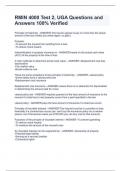
RMIN 4000 Test 2, UGA Questions and Answers 100% Verified
Principle of Indemnity - ANSWER-The insurer agrees to pay no more than the actual amount of the loss (make you whole again, no gain).
Purpose:
-To prevent the insured from profiting from a loss
-To reduce moral hazard
Indemnification in property insurance is - ANSWER-based on the actual cash value (ACV) of the property at the time of loss
3 main methods to determine actual cash value: - ANSWER--Replacement cost less depreciation
-Fair market value -Broad evidence rule
There are some exceptions to the principle of indemnity: - ANSWER--valued policy -Some states have a valued policy law
-Replacement cost insurance
Replacement cost insurance - ANSWER-means there is no deduction for depreciation in determining the amount paid for a loss
valued policy law - ANSWER-requires payment of the face amount of insurance to the insured if a total loss to real property occurs from a peril specified in the law
valued policy - ANSWER-pays the face amount of insurance if a total loss occurs
Principle of Insurable Interest - ANSWER-The insured must be in a position to lose financially if a covered loss occurs (ex: can't buy life insurance policy on a random person, but if that person owes you $100,000 you can buy one for that amount).
Purposes of the principle of insurable interest - ANSWER--To prevent gambling
-To reduce moral hazard
-To measure the amount of the insured's loss
An insurable interest can be supported by: - ANSWER--Ownership of property
-Potential legal liability
-Serving as a secured creditor
-Contractual rights
Principle of Indemnity - ANSWER-The insurer agrees to pay no more than the actual amount of the loss (make you whole again, no gain).
Purpose:
-To prevent the insured from profiting from a loss
-To reduce moral hazard
Indemnification in property insurance is - ANSWER-based on the actual cash value (ACV) of the property at the time of loss
3 main methods to determine actual cash value: - ANSWER--Replacement cost less depreciation
-Fair market value -Broad evidence rule
There are some exceptions to the principle of indemnity: - ANSWER--valued policy -Some states have a valued policy law
-Replacement cost insurance
Replacement cost insurance - ANSWER-means there is no deduction for depreciation in determining the amount paid for a loss
valued policy law - ANSWER-requires payment of the face amount of insurance to the insured if a total loss to real property occurs from a peril specified in the law
valued policy - ANSWER-pays the face amount of insurance if a total loss occurs
Principle of Insurable Interest - ANSWER-The insured must be in a position to lose financially if a covered loss occurs (ex: can't buy life insurance policy on a random person, but if that person owes you $100,000 you can buy one for that amount).
Purposes of the principle of insurable interest - ANSWER--To prevent gambling
-To reduce moral hazard
-To measure the amount of the insured's loss
An insurable interest can be supported by: - ANSWER--Ownership of property
-Potential legal liability
-Serving as a secured creditor
-Contractual rights