Chapter 12: Shock, Sepsis, and Multiple Organ Dysfunction Syndrome
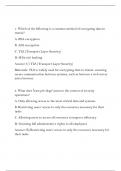
Chapter 12: Shock, Sepsis, and Multiple Organ Dysfunction Syndrome The nurse is caring for a patient admitted with hypovolemic shock. The nurse palpates thready brachial pulses but is unable to auscultate a blood pressure. What is the best nursing action? a. Assess the blood pressure by Doppler. b. Estimate the systolic pressure as 60 mm Hg. c. Obtain an electronic blood pressure monitor. d. Record the blood pressure as "not assessable." - ANS ANS: A Auscultated blood pressures in shock may be significantly inaccurate due to vasoconstriction. If blood pressure is not audible, the approximate value can be assessed by palpation or ultrasound. If brachial pulses are palpable, the approximate measure of systolic blood pressure is 80 mm Hg. This action has the potential to delay further assessment of a compromised patient in shock. Documenting a blood pressure as not assessable is inappropriate without further attempts using different modalities. The nurse has just completed an infusion of a 1000 mL bolus of 0.9% normal saline in a patient with severe sepsis. One hour later, which laboratory result requires immediate nursing action? a. Creatinine 1.0 mg/dL b. Lactate 6 mmol/L c. Potassium 3.8 mEq/L d. Sodium 140 mEq/L - ANS ANS: B Lactate level has been used as an indicator of decreased oxygen delivery to the cells, adequacy of resuscitation in shock, and as an outcome predictor. All other listed values are within normal limits and do not require additional follow-up. The nurse has been administering 0.9% normal saline intravenous fluids in a patient with severe sepsis. To evaluate the effectiveness of fluid therapy, which physiological parameters would be most important for the nurse to assess? a. Breath sounds and capillary refill b. Blood pressure and oral temperature c. Oral temperature and capillary refill d. Right atrial pressure and urine output - ANS ANS: D Early goal-directed therapy includes administration of IV fluids to keep central venous pressure at 8 mm Hg or greater. Combined with urine output, fluid therapy effectiveness can be adequately assessed. Evaluation of breath sounds assists with determining fluid overload in a patient but does not evaluate the effectiveness of fluid therapy. Capillary refill provides a quick assessment of the patient's overall cardiovascular status, but this assessment is not reliable in a patient who is hypothermic or has peripheral circulatory problems. Evaluation of oral temperature does not assess the effectiveness of fluid therapy in patients in shock. A patient is admitted to the critical care unit following coronary artery bypass surgery. Two hours postoperatively, the nurse assesses the following information: pulse is 120 beats/min; blood pressure is 70/50 mm Hg; pulmonary artery diastolic pressure is 2 mm Hg; cardiac output is 4 L/min; urine output is 250 mL/hr; chest drainage is 200 mL/hr. What is the best interpretation by the nurse? a. The assessed values are within normal limits. b. The patient is at risk for developing cardiogenic shock. c. The patient is at risk for developing fluid volume overload. d. The patient is at risk for developing hypovolemic shock. - ANS ANS: D Vital signs and hemodynamic values assessed collectively include classic signs and symptoms of hypovolemia. Both urine output and chest drainage values are high, contributing to the hypovolemia. Assessed values are not within normal limits. A cardiac output of 4 L/min is not indicative of cardiogenic shock. The patient is at risk for hypovolemia, not volume overload, as evidenced by excessive hourly chest drainage and urine output. A patient is admitted after collapsing at the end of a summer marathon. The patient is lethargic, with a heart rate of 110 beats/min, respiratory rate of 30 breaths/min, and a blood pressure of 78/46 mm Hg. The nurse anticipates administering which therapeutic intervention? a. Human albumin infusion b. Hypotonic saline solution c. Lactated Ringer's bolus d.
Written for
- Institution
- Introduction to Critical Care Nursing 8th Edition
- Course
- Introduction to Critical Care Nursing 8th Edition
Document information
- Uploaded on
- March 3, 2024
- Number of pages
- 15
- Written in
- 2023/2024
- Type
- Exam (elaborations)
- Contains
- Questions & answers
Subjects
-
chapter 12 shock sepsis and multiple organ dysf