Lorraine Hansberry was born in Chicago on May 19, 1930, the youngest of four children. Her parents were well-
educated, successful black citizens who publicly fought discrimination against black people. When Hansberry
was a child, she and her family lived in a black neighborhood on Chicago’s South Side. During this era,
segregation—the enforced separation of whites and blacks—was still legal and widespread throughout the
South. Northern states, including Hansberry’s own Illinois, had no official policy of segregation, but they were
generally self-segregated along racial and economic lines. Chicago was a striking example of a city carved into
strictly divided black and white neighborhoods. Hansberry’s family became one of the first to move into a white
neighborhood, but Hansberry still attended a segregated public school for blacks. When neighbors struck at them
with threats of violence and legal action, the Hansberrys defended themselves. Hansberry’s father successfully
brought his case all the way to the Supreme Court.
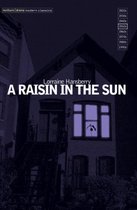
Hansberry wrote that she always felt the inclination to record her experiences. At times, her writing—including A
Raisin in the Sun—is recognizably autobiographical. She was one of the first playwrights to create realistic
portraits of African-American life. When A Raisin in the Sunopened in March 1959, it met with great praise from
white and black audience members alike. Arguably the first play to portray black characters, themes, and
conflicts in a natural and realistic manner, A Raisin in the Sun received the New York Drama Critics’ Circle Award
for Best Play of the Year. Hansberry was the youngest playwright, the fifth woman, and the only black writer at
that point to win the award. She used her new fame to help bring attention to the American civil rights movement
as well as African struggles for independence from colonialism. Her promising career was cut short when she
died from cancer in 1965, at the age of thirty-four.
A Raisin in the Sun can be considered a turning point in American art because it addresses so many issues
important during the 1950s in the United States. The 1950s are widely mocked in modern times as an age of
complacency and conformism, symbolized by the growth of suburbs and commercial culture that began in that
decade. Such a view, however, is superficial at best. Beneath the economic prosperity that characterized
America in the years following World War II roiled growing domestic and racial tension. The stereotype of 1950s
America as a land of happy housewives and blacks content with their inferior status resulted in an upswell of
social resentment that would finally find public voice in the civil rights and feminist movements of the 1960s. A
Raisin in the Sun, first performed as the conservative 1950s slid into the radical sixties, explores both of these
vital issues.
A Raisin in the Sun was a revolutionary work for its time. Hansberry creates in the Younger family one of the first
honest depictions of a black family on an American stage, in an age when predominantly black audiences simply
did not exist. Before this play, African-American roles, usually small and comedic, largely employed ethnic
stereotypes. Hansberry, however, shows an entire black family in a realistic light, one that is unflattering and far
from comedic. She uses black vernacular throughout the play and broaches important issues and conflicts, such
as poverty, discrimination, and the construction of African-American racial identity.
A Raisin in the Sun explores not only the tension between white and black society but also the strain within the
black community over how to react to an oppressive white community. Hansberry’s drama asks difficult questions
about assimilation and identity. Through the character of Joseph Asagai, Hansberry reveals a trend toward
celebrating African heritage. As he calls for a native revolt in his homeland, she seems to predict the anticolonial
struggles in African countries of the upcoming decades, as well as the inevitability and necessity of integration.
educated, successful black citizens who publicly fought discrimination against black people. When Hansberry
was a child, she and her family lived in a black neighborhood on Chicago’s South Side. During this era,
segregation—the enforced separation of whites and blacks—was still legal and widespread throughout the
South. Northern states, including Hansberry’s own Illinois, had no official policy of segregation, but they were
generally self-segregated along racial and economic lines. Chicago was a striking example of a city carved into
strictly divided black and white neighborhoods. Hansberry’s family became one of the first to move into a white
neighborhood, but Hansberry still attended a segregated public school for blacks. When neighbors struck at them
with threats of violence and legal action, the Hansberrys defended themselves. Hansberry’s father successfully
brought his case all the way to the Supreme Court.
Hansberry wrote that she always felt the inclination to record her experiences. At times, her writing—including A
Raisin in the Sun—is recognizably autobiographical. She was one of the first playwrights to create realistic
portraits of African-American life. When A Raisin in the Sunopened in March 1959, it met with great praise from
white and black audience members alike. Arguably the first play to portray black characters, themes, and
conflicts in a natural and realistic manner, A Raisin in the Sun received the New York Drama Critics’ Circle Award
for Best Play of the Year. Hansberry was the youngest playwright, the fifth woman, and the only black writer at
that point to win the award. She used her new fame to help bring attention to the American civil rights movement
as well as African struggles for independence from colonialism. Her promising career was cut short when she
died from cancer in 1965, at the age of thirty-four.
A Raisin in the Sun can be considered a turning point in American art because it addresses so many issues
important during the 1950s in the United States. The 1950s are widely mocked in modern times as an age of
complacency and conformism, symbolized by the growth of suburbs and commercial culture that began in that
decade. Such a view, however, is superficial at best. Beneath the economic prosperity that characterized
America in the years following World War II roiled growing domestic and racial tension. The stereotype of 1950s
America as a land of happy housewives and blacks content with their inferior status resulted in an upswell of
social resentment that would finally find public voice in the civil rights and feminist movements of the 1960s. A
Raisin in the Sun, first performed as the conservative 1950s slid into the radical sixties, explores both of these
vital issues.
A Raisin in the Sun was a revolutionary work for its time. Hansberry creates in the Younger family one of the first
honest depictions of a black family on an American stage, in an age when predominantly black audiences simply
did not exist. Before this play, African-American roles, usually small and comedic, largely employed ethnic
stereotypes. Hansberry, however, shows an entire black family in a realistic light, one that is unflattering and far
from comedic. She uses black vernacular throughout the play and broaches important issues and conflicts, such
as poverty, discrimination, and the construction of African-American racial identity.
A Raisin in the Sun explores not only the tension between white and black society but also the strain within the
black community over how to react to an oppressive white community. Hansberry’s drama asks difficult questions
about assimilation and identity. Through the character of Joseph Asagai, Hansberry reveals a trend toward
celebrating African heritage. As he calls for a native revolt in his homeland, she seems to predict the anticolonial
struggles in African countries of the upcoming decades, as well as the inevitability and necessity of integration.