NRSG MISC Vernon watkins vsim 100%
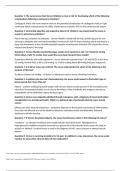
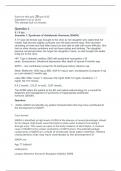
Question 1: The nurse knows that Vernon Watkins is most at risk for developing which of the following complications following a pulmonary embolism? Cardiogenic shock: the nurse must be alert for the potential complication of cardiogenic shock or right ventricular failure subsequent to the effect of pulmonary embolism (PE) on the cardiovascular system Question 2: what initial objective and subjective data in Mr. Watkin’s case should lead the nurse to suspect a pulmonary embolism? Pain in the leg, resistance to ambulate – Vernon Watkin’s stated that he had a painful leg and he was refusing to ambulate this morning (immobility) increases the risk for stasis of blood, which may lead to a deep vein thrombosis in the calf with potential sequelae of pulmonary embolism (PE) should the clot be released and travel to the lungs Question 3: Vernon Watkins arterial blood gas results were reported as: pH 7.47, PaCO2 32 mmHg HCO3 mEq/L, PaO2 74 mmHg. How would the nurse best interpret these results? Respiratory alkalosis with mild hypoxemia – occurs when pH is greater than 7.45 and PaCO2 is less than 35 mmHg. Normal PaO2 is 80 to 100 mmHg, so a PaO2 reading below 80 mmHg indicates hypoxemia Question 4: A D-dimer assay was ordered. The nurse understands that which of the following is the purpose of th
Written for
- Institution
-
Georgian Court College
- Course
-
NRSG MISC
Document information
- Uploaded on
- February 25, 2024
- Number of pages
- 2
- Written in
- 2023/2024
- Type
- Exam (elaborations)
- Contains
- Questions & answers
Subjects

Also available in package deal