NCLEX cardiac questions and answers already passed
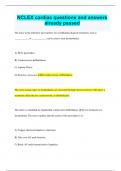
NCLEX cardiac questions and answers already passed The nurse in the telemetry unit explains two nonpharmacological treatments such as ___________, or ___________, can be used to treat dysrhythmias. A) ECG; pacemaker B) Cardioversion; defibrillation C) Aspirin; Plavix D) Exercise; stress test B) Cardioversion; defibrillation The more serious types of dysrhythmias are corrected through electrical shock of the heart, a treatment called elective cardioversion, or defibrillation. The client is scheduled for implantable cardioverter defibrillators (ICD) for treatment of a dysrhythmia. The nurse explains that the action of this procedure is to: A) Trigger electrical impulses to the heart. B) Take over SA node function. C) Block AV node transmission of impulses. D) Increase ventricular conduction. A) Trigger electrical impulses to the heart. The nurse recognizes the action of beta blockers for treatment of dysrhythmias is: A) Positive inotropic effect. B) Negative inotropic effect. C) Positive chronotropic effect. D) Negative chronotropic effect. D) Negative chronotropic effect. Beta blockers slow the heart rate (negative chronotropic effect) and decrease conduction velocity through the AV node. A client with a diagnosis of cardiac dysrhythmias and a history of type I diabetes mellitus is placed on propranolol therapy. The client asks the nurse if the drug will affect insulin needs. The best response by the nurse would be that: A) The drug will have no effect on insulin needs. B) The drug might cause hypoglycemia. C) The drug could cause hyperglycemia. D) The client should ask the physician this question. B) The drug might cause hypoglycemia. Rationale: There is increased incidence of hypoglycemia with type I diabetes mellitus, because propranolol can inhibit glycogenolysis. The nurse discusses mineral therapy with a client diagnosed with atrial fibrillation. Which of the following deficiencies will the nurse most likely discuss with the client? A) Iron B) Calcium C) Magnesium D) Sodium C) Magnesium Rationale: Magnesium deficiency is associated with dysrhythmias, including atrial fibrillation, premature atrial and ventricular contractions, ventricular tachycardia, and ventricular fibrillation. This might be related to its role in maintaining intracellular potassium. The nurse adjusts the care plan of a client of Asian descent who is receiving propranolol to include increased monitoring of: A) Heart rate. B) Blood pressure.
École, étude et sujet
- Établissement
- NCLEX cardiac
- Cours
- NCLEX cardiac
Infos sur le Document
- Publié le
- 23 février 2024
- Nombre de pages
- 31
- Écrit en
- 2023/2024
- Type
- Examen
- Contient
- Questions et réponses
Sujets
-
nclex cardiac questions and answers already passe

Document également disponible en groupe