GERD Questions and Answers 100%Pass
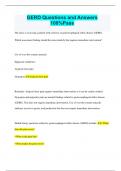
GERD Questions and Answers 100%Pass The nurse is assessing a patient with a history of gastroesophageal reflux disease (GERD). Which assessment finding should the nurse identify that requires immediate intervention? Use of over-the-counter antacids Epigastric tenderness Atypical chest pain Dyspepsia Atypical chest pain Rationale: Atypical chest pain requires immediate intervention as it can be cardiac-related. Dyspepsia and epigastric pain are normal findings related to gastroesophageal reflux disease (GERD). This does not require immediate intervention. Use of over-the-counter antacids indicates excessive gastric acid production but does not require immediate intervention. Health history questions related to gastroesophageal reflux disease (GERD) include: • When does the pain occur? • What is the pain like? • What makes the pain worse? • What makes the pain better? • Are you experiencing any regurgitation? • Are you experiencing any difficulty swallowing? • Are you experiencing any atypical chest pain? A patient with gastroesophageal reflux disease (GERD) reports drinking 3 cups of coffee in the morning and 1-2 sodas later in the day. Which question should the nurse ask the patient based on this finding? "Do you experience heartburn throughout the day?" "Do you drink any water at all throughout the day?" "Have you been taking your proton pump inhibitors?" "In which position do you sleep at night?" "Do you experience heartburn throughout the day?" Rationale: Due to the patient's high consumption of caffeinated beverages, the nurse should ask about subsequent symptoms that may be occurring. Proton pump inhibitors are used to treat GERD; however, the nurse needs to determine symptoms related to caffeine consumption. The nurse would inquire about all fluid intake to determine hydration. Which position the patient sleeps in will help in determining symptoms at night. The nurse is teaching a patient the use of antacids to treat gastroesophageal reflux disease (GERD). Which instruction should the nurse include? "Avoid long-term use as it can cause gynecomastia." "Do not crush tablets prior to taking antacids." "Take antacids 1 to 2 hours before or after medications." "Notify the healthcare provider of extrapyramidal effects." "Take antacids 1 to 2 hours before or after medications." Rationale: When teaching the patient on the use of antacids, the nurse should mention that medication should be taken 1 to 2 hours before or after other medications as this will interfere with absorption. Proton pump inhibitors should be swallowed whole and not crushed. Long-term use of H2-blockers can cause gynecomastia. Metoclopramide, which stimulates gastrointestinal motility, can cause extrapyramidal effects. Antacid patient education includes: • learning that overuse can cause electrolyte imbalances • taking antacids 1 to 2 hours before or after other medications • avoiding calcium and magnesium-based medications with pre-existing renal disease. An older patient with gastroesophageal reflux disease (GERD) asks about long-term effects from taking pantoprazole, a proton pump inhibitor. Which statement should the nurse respond to this patient?
Written for
- Institution
- GERD
- Course
- GERD
Document information
- Uploaded on
- February 20, 2024
- Number of pages
- 14
- Written in
- 2023/2024
- Type
- Exam (elaborations)
- Contains
- Questions & answers
Subjects
-
gerd questions and answers 100pass

Also available in package deal