Kul Brussels 2022-2023
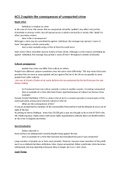
Management Accounting
1. Introduction and costs classi cation
1. Introduction
- Cost : sacri ced or foregone recourse to achieve a speci c objective (monetary
value)
- Actual cost : cost that has occurred (past historical cost information is used)
- e.g. Used in nancial statement at end of year to know hoc much pro t
- Budgeted cost : predicted cost (based on future information)
- e.g. when company wants to introduce new product -> set price
- Cost object : anything for which your want to measure cost
- Stage I : Accumulation : all costs are collected based on accounting system
- e.g. Labour costs, costs incurred for supervision, material costs
- Stage II : Assignment : costs are assigned to cost objects (goods and services)
- e.g. Cost incurred for iPhone 11 are assigned to iPhone 11
- Costs are useful to managers for
- MAKING decisions
- IMPLEMENTING decisions
- Di erent types of rms
- Manufacturing-sector companies : purchase materials and components and
transform into nished good
- Merchandising-sector companies : purchase and sell tangible products without
changing anything
- Service-sector companies : provide services (legal advice, audit)
2. Costs classi cation
- Needs for CC
- Goal : grouping costs acc to their common characteristics
- 3 types of CC
- Behaviour : how a cost will react to changes in levels of activity
- e.g. xed, variable, semi-variable/step-cost ( xed and variable e.g. water
amount + additional cost per liter)
When managers have to decide upon how many
products of each type wants to be produced and
sale price -> base on total cost not on unit cost
1
ff fi fi fi fi fi fi fi fi fi fi
, - Association with cost objects : direct (traceable to unit) and indirect costs
(allocated not traceable)
- Direct cost : direct material (cost of raw material used for making product
and can be traced until the end) + direct labor (cost of salaries, wages,
personal who works directly on the product)
- Indirect costs : indirect material (materials to support production process,
e.g. printing service) + indirect labor (cost of personal who do not work
directly on the product, e.g. maintenance worker) + other costs (e.g.
depreciation, plant and equipment)
- Most variable costs are direct costs but not always !!
- Function : product and period costs
- Product costs : costs directly related to company’s activity
- e.g. direct material, labor, transportation
- Period costs : costs being treated as expenses in the period in which they
are incurred
- e.g. overhead (not related to creation of product but necessary for
operation of business), administration costs, selling costs, R&D
Income statement
Revenues
- Cost of Good Sold (only deduce cogs in this current nancial year)
= Gross Margin
- Operating (period) costs
= Operating Income
!!! COGS : products sold this year may have been produced last year and maybe not all
goods proceeded this year have been sold -> take into account inventory
Beginning Finished Goods Inventory, Jan 1 x 1
+ Cost of Goods Manufactured (full cost)
- Ending Finished Goods Inventory, Dec 31 x 1
= Cost of Goods Sold
2
fi
, 2. Full variable costing
- Costing system : used to determine company’s cost for pro tability analysis,
inventory valuation, cost control
- Absorption costing (full)
- Direct costing (variable)
- Inventory-costing choice : which costs are chosen to determine value of inventory
Absorption (Full) costing
- Determine complete production cost for manufacturing product ( xed + variable)
- DMC + DLC + IPC ( xed and variable manufacturing overhead costs) + ending
inventory of WIP / units produced
- DMC : beginning inventory (raw material) + purchases - ending inventory
- Full cost per unit is demanded
- Fixed overhead is included in product costs and allocated to each unit of a
product produced in the period
Only charge in COGS as expenses in income statement bc we can only charge
what has been sold during the current nancial year -> only COGS not whole
inventory -> period costs NEVER included in COGS
- COGS : units sold x full cost/unit
- Stock : amount left in inventory x full cost/unit
- Period costs : commissions (1% of turnover)
Min 22
3
fi fi fi fi
Management Accounting
1. Introduction and costs classi cation
1. Introduction
- Cost : sacri ced or foregone recourse to achieve a speci c objective (monetary
value)
- Actual cost : cost that has occurred (past historical cost information is used)
- e.g. Used in nancial statement at end of year to know hoc much pro t
- Budgeted cost : predicted cost (based on future information)
- e.g. when company wants to introduce new product -> set price
- Cost object : anything for which your want to measure cost
- Stage I : Accumulation : all costs are collected based on accounting system
- e.g. Labour costs, costs incurred for supervision, material costs
- Stage II : Assignment : costs are assigned to cost objects (goods and services)
- e.g. Cost incurred for iPhone 11 are assigned to iPhone 11
- Costs are useful to managers for
- MAKING decisions
- IMPLEMENTING decisions
- Di erent types of rms
- Manufacturing-sector companies : purchase materials and components and
transform into nished good
- Merchandising-sector companies : purchase and sell tangible products without
changing anything
- Service-sector companies : provide services (legal advice, audit)
2. Costs classi cation
- Needs for CC
- Goal : grouping costs acc to their common characteristics
- 3 types of CC
- Behaviour : how a cost will react to changes in levels of activity
- e.g. xed, variable, semi-variable/step-cost ( xed and variable e.g. water
amount + additional cost per liter)
When managers have to decide upon how many
products of each type wants to be produced and
sale price -> base on total cost not on unit cost
1
ff fi fi fi fi fi fi fi fi fi fi
, - Association with cost objects : direct (traceable to unit) and indirect costs
(allocated not traceable)
- Direct cost : direct material (cost of raw material used for making product
and can be traced until the end) + direct labor (cost of salaries, wages,
personal who works directly on the product)
- Indirect costs : indirect material (materials to support production process,
e.g. printing service) + indirect labor (cost of personal who do not work
directly on the product, e.g. maintenance worker) + other costs (e.g.
depreciation, plant and equipment)
- Most variable costs are direct costs but not always !!
- Function : product and period costs
- Product costs : costs directly related to company’s activity
- e.g. direct material, labor, transportation
- Period costs : costs being treated as expenses in the period in which they
are incurred
- e.g. overhead (not related to creation of product but necessary for
operation of business), administration costs, selling costs, R&D
Income statement
Revenues
- Cost of Good Sold (only deduce cogs in this current nancial year)
= Gross Margin
- Operating (period) costs
= Operating Income
!!! COGS : products sold this year may have been produced last year and maybe not all
goods proceeded this year have been sold -> take into account inventory
Beginning Finished Goods Inventory, Jan 1 x 1
+ Cost of Goods Manufactured (full cost)
- Ending Finished Goods Inventory, Dec 31 x 1
= Cost of Goods Sold
2
fi
, 2. Full variable costing
- Costing system : used to determine company’s cost for pro tability analysis,
inventory valuation, cost control
- Absorption costing (full)
- Direct costing (variable)
- Inventory-costing choice : which costs are chosen to determine value of inventory
Absorption (Full) costing
- Determine complete production cost for manufacturing product ( xed + variable)
- DMC + DLC + IPC ( xed and variable manufacturing overhead costs) + ending
inventory of WIP / units produced
- DMC : beginning inventory (raw material) + purchases - ending inventory
- Full cost per unit is demanded
- Fixed overhead is included in product costs and allocated to each unit of a
product produced in the period
Only charge in COGS as expenses in income statement bc we can only charge
what has been sold during the current nancial year -> only COGS not whole
inventory -> period costs NEVER included in COGS
- COGS : units sold x full cost/unit
- Stock : amount left in inventory x full cost/unit
- Period costs : commissions (1% of turnover)
Min 22
3
fi fi fi fi