Constitution
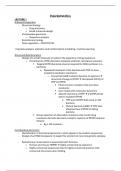
Sets out laws, rules and practices by which a state is governed
Specifies the relationship between governing institutions, and the citizens and the
state
Principles on which the constitution is based (Rule of law)
Nature of political institutions, their roles/powers/limitations and how their members
are elected/appointed
Rights and duties of citizens and how they are safeguarded
How laws are made and enforced
How the constitution can be amended
Geographical components of the state
Codified Constitttion
‘Written’ constitution
Constitution in one single, authoritative document
Usually produced at a critical juncture within history e.g. after independence (1787
US Constitution)
Status of fundamental law, above ordinary law (Two-tier legal system)
Entrenched, special procedures needed to amend law e.g. USA- Super-majority(2/3)
needed and ¾ of states to agree (17 amendments made to US constitution)
The courts use the constitution to determine if acts are constitutional (have a lot of
power)
Uncodified Constitttion
‘Unwritten’ constitution
Constitution comprised of a number of sources
Can be amended by a simple majority (over 50%)
Constitutional law has the same status as ordinary law (One-tier legal system)
Judicial review is limited (especially in the UK due to parliamentary sovereignty and
the uncodified constitution)
Statutes that amended the UK constitution
o Constitutional Reform Act 2005
o Human Rights Act 1998
o Scotland Act 1998
Conventions that amended the UK constitution
o Salisbury Convention
o PM must be a member of the HoC not the HoL
o Any important constitutional changes must be approved by
referendum
Referendums that amended the UK constitution
o 1997 devolution to Wales and Scotland
o 1998 devolution to Northern Ireland
o 1998 London Mayor and Assembly
o 2011 Wales given more law-making powers
o 2011 AV rejected
Sets out laws, rules and practices by which a state is governed
Specifies the relationship between governing institutions, and the citizens and the
state
Principles on which the constitution is based (Rule of law)
Nature of political institutions, their roles/powers/limitations and how their members
are elected/appointed
Rights and duties of citizens and how they are safeguarded
How laws are made and enforced
How the constitution can be amended
Geographical components of the state
Codified Constitttion
‘Written’ constitution
Constitution in one single, authoritative document
Usually produced at a critical juncture within history e.g. after independence (1787
US Constitution)
Status of fundamental law, above ordinary law (Two-tier legal system)
Entrenched, special procedures needed to amend law e.g. USA- Super-majority(2/3)
needed and ¾ of states to agree (17 amendments made to US constitution)
The courts use the constitution to determine if acts are constitutional (have a lot of
power)
Uncodified Constitttion
‘Unwritten’ constitution
Constitution comprised of a number of sources
Can be amended by a simple majority (over 50%)
Constitutional law has the same status as ordinary law (One-tier legal system)
Judicial review is limited (especially in the UK due to parliamentary sovereignty and
the uncodified constitution)
Statutes that amended the UK constitution
o Constitutional Reform Act 2005
o Human Rights Act 1998
o Scotland Act 1998
Conventions that amended the UK constitution
o Salisbury Convention
o PM must be a member of the HoC not the HoL
o Any important constitutional changes must be approved by
referendum
Referendums that amended the UK constitution
o 1997 devolution to Wales and Scotland
o 1998 devolution to Northern Ireland
o 1998 London Mayor and Assembly
o 2011 Wales given more law-making powers
o 2011 AV rejected