CEUFast - Allergic Reactions Study Guide with Complete Solutions 2023.
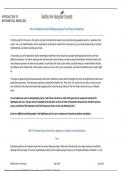
CEUFast - Allergic Reactions Study Guide with Complete Solutions 2023. Introduction Contact Information About CEUfast Accreditation Features Nurse Salary Guide Course Completion Services Individual Accounts Organization Accounts NYR PAR Get Involved CEUFast - Allergic Reactions 1 of 19 10/18/23, 5:35 PM CEUFast - Allergic Reactions Study Guide with Complete Solutions 2023. Sitemap Tell a Friend Blog News National Nurses Wee Support/Help Contact Us Help Center Verify Certificate Expired Courses Show More Show More State Pages Show More Resources Copyright © CEUF | Site Design, Developmen Privacy Policy their normal viral or bacterial influence in the body (Haith, 2005). An allergen is defined as something that can induce IgE-mediated and T-helper 2 cell immune response. They are mostly low molecular weight proteins which are often able to be made particulates in the air (Merck, 2007). The terms allergy, atopy, and hypersensitivity are often interchanged and confused. Allergies are categorized into four different hypersensitivity reactions by Gell and Coombs and atopy refers simply to the first type (type I hypersensitivity reactions) only (Merck, 2005). There are many diseases and reactions that fall under the general classification of allergy. These will be described below as well as their subsequent etiologies, pathophysiology, treatment, and prevention. It is thought that genetic, environmental, and site-specific factors contribute to the development of allergies. Because allergies seem to be inherited (as evidenced by strong family histories, association between atopic disease and specific genetic factors), genetics is partially implicated in the development of the disease. Allergic reactions are mediated through the T-helper 2 responses which activate eosinophils and IgE production. This response is a generalized response and causes the generalized inflammatory reaction common with exposure to allergens. The T-helper 1 responses are more specific, and the body develops antibodies to these allergens when the T-helper 1 system is activated. Upon exposure a second time to the allergen, the body targets the allergen itself specifically, and does not cause the generalized swelling that the T-helper 2 response does. In fact, T-helper 1 responses actually suppress the T-helper 2 response. Early childhood exposure to bacterial/viral infection can shift the T-helper 2 cell responses to the more specific T-helper 1 responses. The "hygiene hypothesis" suggests that in more developed countries where there are fewer children per family, cleaner indoor environments, and early vaccination and antibiotic usage, children may be deprived of the ability to develop this natural "shifting" towards the T-helper 1 cell response. The site-specific response refers to molecules in the lungs and gastrointestinal tract that Etiology of Allergies CEUFast - Allergic Reactions 2 of 19 10/18/23, 5:35 PM direct T-helper 2 cells to certain tissues which can react to allergens in those specific areas. It is also thought that chronic exposure to an allergen sensitizes the patient (Merck, 2007). As mentioned above, there are four different categories into which allergic reactions lie. They are as follows: 1. Type I (immediate hypersensitivity) reactions. These reactions are local or systemic anaphylactic inflammatory responses which are IgE-mediated and underlie all atopic diseases (Thomas, 1997). Antigen binds to IgE (bound to tissue mast cells and blood basophils), trigger the release of mediators (histamine, chemotactic factors, etc.), and synthesize other mediators (prostaglandins, leukotrienes, platelet-activating factor, interleukins). These mediators cause the common symptoms of an atopic reaction by causing vasodilation, capillary permeability, mucus production, smooth muscle spasm, eosinophil and T-infiltration into tissue as well as other inflammatory cells. Atopic disease most commonly affects the nose, eyes, skin, and lungs. Disorders that fall into this category can include atopic dermatitis, contact dermatitis, urticaria, angioedema, latex allergy, asthma, allergic bronchopulmonary aspergillosis, hypersensitivity pneumonitis, and allergic reactions to venomous stings (bees, ants, etc.) (Merck, 2005; Merck 2007). The anaphylactic reactions occur when the allergen reaches the bloodstream and causes a massive release of chemical mediators (Thomas, 1997). 2. Type II (cytotoxic) reactions. Type II reactions involve more specific immune response in which antigen-antibody complexes activate cytotoxic T cells or macrophages and complement which cause cell and tissue damage. In this case, the body is sensitized to an allergen and the body produces an antibody to the specific antigen. Then the antibody binds to cellular or tissue antigens or to a hapten (which is a small molecule which can cause an immune response only when attached to a larger protein-like carrier. The carrier does not elicit a response by itself, only when the hapten is coupled to it) coupled to a cell or tissue. This leads to the tissue damage described above (Merck, 2005). Generally larger molecules tend to elicit an immune response in the body. Reaction to these hapten-carrier products are the same as for antigens in that the body that generate antibodies to the material. Upon Types of Allergic Reactions CEUFast - Allergic Reactions 3 of 19 10/18/23, 5:35 PM recognition of the complex a second time, an immune response occurs (Wikipedia, 2008). These reactions are mediated by IgG and IgM and are the ones that cause transfusion reactions and many of the drug reactions. Due to the release of complement, blood cells are destroyed (Thomas, 1997). Disorders that involve type II reactions include transfusion reaction, graft rejection (in organ transplantation), Coombs’-positive hemolytic anemia, Hashimoto thyroiditis, etc. (Merck, 2005; Thomas 1997).
Written for
- Institution
- CEUFast
- Course
- CEUFast
Document information
- Uploaded on
- February 16, 2024
- Number of pages
- 19
- Written in
- 2023/2024
- Type
- Exam (elaborations)
- Contains
- Questions & answers
Subjects
-
ceufast allergic reactions study guide
-
ceufast allergic reactions
-
ceufast study guide with complete solutions 2023
-
ceufast study guide with complete solutions

Also available in package deal