PS3421 : Research Methods in developmental psychology
Introduction lecture : Useful -Miller et al 2017- developmental research methods (5 th)
Module aims:
- Learn to use existing literature to inform research policy and practice
- learn to choose appropriate tools for measurement and assessment
- Learn to administer tests
- Learn to manage, analyse and understand data
- Learnt to identify causal and risk factors in development
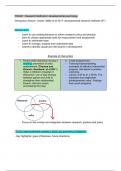
Example of intervention
1. Parent child interaction therapy ( 2. Youth programmes :
reading) prevention of child - Transcript demonstrating
maltreatment (Thomas and examples of effective intervention
Zimmer- Gembeck, et al 2011) program, that leads to positive
- Video ( children’s hospital of outcomes
Wisconsin- use of play therapy - Larson, R.W et al .( 2019). The
between parent and child to important (but neglected)
strengthen their relationship) developmental value.: findings
- Parent, child and coach from youth programs
(overseeing the play)
Research practice
policy
- Focus on the overlap and integration between research, practice and policy
*To Do: read systematic reviews ( which are summary of research)
- Key highlights: gaps of literature- future directions
, Research methods concepts
- Construct-
- research Q
- operationalisation
- study design Main focus of
- -measurement tool this module!!
- -data
Definitions of this model above
Construct: idea of theory not directly observable (Examples – emotion, intelligent,
warmth, maternal responsiveness) -Reflection: what is the construct that the
researchers want to study
Research Questions; ‘ concise specific inquiry into the presence function emergence
or interaction between constructs ( e.g., qs: should be feasible, clear significant and
ethical) -reflection: what do you want to know about this construct?
Operationalisation; Process of defining a construct as a measurable indicator or ghat
construct
Study design: strategy to integrate operationalised variables in a coherent and
logical way (e.g., Qualitative, experimental or correlational)
Measurement tools: systematic procedures for assigning scores that represent a
construct(e.g.- self report, behavioural or physiological)
Data: set of quantified individual scores of operationalised variables used to examine
hypothesis ( analysis plan pre-data collection)- Reflection: do the design and tools
warrant general conclusion they make?
Running example:
1. Construct: emotion
2. Research qs: when do children begin to understand fearful expressions as
afraid?
3. Operationalisation: correct labelling of photos of others expressing fear
4. Study design: cross-sectional sample of children between 4-14 years
5. Measurement tool: video recording, photo stimuli, coding protocol
6. Data:
Introduction lecture : Useful -Miller et al 2017- developmental research methods (5 th)
Module aims:
- Learn to use existing literature to inform research policy and practice
- learn to choose appropriate tools for measurement and assessment
- Learn to administer tests
- Learn to manage, analyse and understand data
- Learnt to identify causal and risk factors in development
Example of intervention
1. Parent child interaction therapy ( 2. Youth programmes :
reading) prevention of child - Transcript demonstrating
maltreatment (Thomas and examples of effective intervention
Zimmer- Gembeck, et al 2011) program, that leads to positive
- Video ( children’s hospital of outcomes
Wisconsin- use of play therapy - Larson, R.W et al .( 2019). The
between parent and child to important (but neglected)
strengthen their relationship) developmental value.: findings
- Parent, child and coach from youth programs
(overseeing the play)
Research practice
policy
- Focus on the overlap and integration between research, practice and policy
*To Do: read systematic reviews ( which are summary of research)
- Key highlights: gaps of literature- future directions
, Research methods concepts
- Construct-
- research Q
- operationalisation
- study design Main focus of
- -measurement tool this module!!
- -data
Definitions of this model above
Construct: idea of theory not directly observable (Examples – emotion, intelligent,
warmth, maternal responsiveness) -Reflection: what is the construct that the
researchers want to study
Research Questions; ‘ concise specific inquiry into the presence function emergence
or interaction between constructs ( e.g., qs: should be feasible, clear significant and
ethical) -reflection: what do you want to know about this construct?
Operationalisation; Process of defining a construct as a measurable indicator or ghat
construct
Study design: strategy to integrate operationalised variables in a coherent and
logical way (e.g., Qualitative, experimental or correlational)
Measurement tools: systematic procedures for assigning scores that represent a
construct(e.g.- self report, behavioural or physiological)
Data: set of quantified individual scores of operationalised variables used to examine
hypothesis ( analysis plan pre-data collection)- Reflection: do the design and tools
warrant general conclusion they make?
Running example:
1. Construct: emotion
2. Research qs: when do children begin to understand fearful expressions as
afraid?
3. Operationalisation: correct labelling of photos of others expressing fear
4. Study design: cross-sectional sample of children between 4-14 years
5. Measurement tool: video recording, photo stimuli, coding protocol
6. Data: