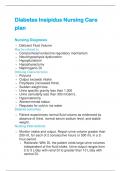
Diabetes Insipidus Nursing Care
plan
Nursing Diagnosis
▪ Deficient Fluid Volume
May be related to
▪ Compromised endocrine regulatory mechanism
▪ Neurohypophysis dysfunction
▪ Hypopituitarism
▪ Hypophysectomy
▪ Nephrogenic DI
Defining Characteristics
▪ Polyuria
▪ Output exceeds intake
▪ Polydipsia (increased thirst)
▪ Sudden weight loss
▪ Urine specific gravity less than 1.005
▪ Urine osmolality less than 300 mOsm/L
▪ Hypernatremia
▪ Altered mental status
▪ Requests for cold or ice water
Desired outcomes
▪ Patient experiences normal fluid volume as evidenced by
absence of thirst, normal serum sodium level, and stable
weight.
Nursing Interventions
▪ Monitor intake and output. Report urine volume greater than
200 mL for each of 2 consecutive hours or 500 mL in a 2-
hour period.
▪ Rationale: With DI, the patient voids large urine volumes
independent of the fluid intake. Urine output ranges from
2 to 3 L/day with renal DI to greater than 10 L/day with
central DI.
, ▪ Monitor for increased thirst (polydipsia).
▪ Rationale: If the patient is conscious and the thirst centre
is intact, thirst can be a reliable indicator of fluid balance.
Polyuria and polydipsia strongly suggest DI. Also, the DI
patient prefers ice water.
▪ Weigh daily.
▪ Rationale: Weight loss occurs with excessive fluid loss.
▪ Monitor urine specific gravity.
▪ Rationale: This may be 1.005 or less.
▪ Monitor serum and urine osmolality.
▪ Rationale: Urine osmolality will be decreased and serum
osmolality will increase.
▪ Monitor urine and serum sodium levels.
▪ Rationale: The patient with DI has decreased urine
sodium levels and hypernatremia.
▪ Monitor serum potassium.
▪ Rationale: Hypokalaemia may result from the increase in
urinary output of potassium.
▪ Monitor for signs of hypovolemic shock (e.g., tachycardia,
tachypnoea, hypotension).
▪ Rationale: Frequent assessment can detect changes
early for rapid intervention. Polyuria causes decreased
circulatory blood volume.
▪ Allow the patient to drink water at will.
▪ Rationale: Patients with intact thirst mechanisms may
maintain fluid balance by drinking huge quantities of
water to compensate for the amount they urinate.
Patients prefer cold or ice water.
▪ Provide easily accessible fluid source, keeping adequate
fluids at bedside.
▪ Rationale: This encourages fluid intake.
Administer intravenous (IV) fluids’ fluids are indicated if the
patient cannot take in sufficient fluids orally.
▪ 5% dextrose in water or 0.45% sodium chloride
▪ Rationale: Hypotonic IV fluids provide free water and
help lower serum sodium levels gradually.
▪ 0.9% sodium chloride
plan
Nursing Diagnosis
▪ Deficient Fluid Volume
May be related to
▪ Compromised endocrine regulatory mechanism
▪ Neurohypophysis dysfunction
▪ Hypopituitarism
▪ Hypophysectomy
▪ Nephrogenic DI
Defining Characteristics
▪ Polyuria
▪ Output exceeds intake
▪ Polydipsia (increased thirst)
▪ Sudden weight loss
▪ Urine specific gravity less than 1.005
▪ Urine osmolality less than 300 mOsm/L
▪ Hypernatremia
▪ Altered mental status
▪ Requests for cold or ice water
Desired outcomes
▪ Patient experiences normal fluid volume as evidenced by
absence of thirst, normal serum sodium level, and stable
weight.
Nursing Interventions
▪ Monitor intake and output. Report urine volume greater than
200 mL for each of 2 consecutive hours or 500 mL in a 2-
hour period.
▪ Rationale: With DI, the patient voids large urine volumes
independent of the fluid intake. Urine output ranges from
2 to 3 L/day with renal DI to greater than 10 L/day with
central DI.
, ▪ Monitor for increased thirst (polydipsia).
▪ Rationale: If the patient is conscious and the thirst centre
is intact, thirst can be a reliable indicator of fluid balance.
Polyuria and polydipsia strongly suggest DI. Also, the DI
patient prefers ice water.
▪ Weigh daily.
▪ Rationale: Weight loss occurs with excessive fluid loss.
▪ Monitor urine specific gravity.
▪ Rationale: This may be 1.005 or less.
▪ Monitor serum and urine osmolality.
▪ Rationale: Urine osmolality will be decreased and serum
osmolality will increase.
▪ Monitor urine and serum sodium levels.
▪ Rationale: The patient with DI has decreased urine
sodium levels and hypernatremia.
▪ Monitor serum potassium.
▪ Rationale: Hypokalaemia may result from the increase in
urinary output of potassium.
▪ Monitor for signs of hypovolemic shock (e.g., tachycardia,
tachypnoea, hypotension).
▪ Rationale: Frequent assessment can detect changes
early for rapid intervention. Polyuria causes decreased
circulatory blood volume.
▪ Allow the patient to drink water at will.
▪ Rationale: Patients with intact thirst mechanisms may
maintain fluid balance by drinking huge quantities of
water to compensate for the amount they urinate.
Patients prefer cold or ice water.
▪ Provide easily accessible fluid source, keeping adequate
fluids at bedside.
▪ Rationale: This encourages fluid intake.
Administer intravenous (IV) fluids’ fluids are indicated if the
patient cannot take in sufficient fluids orally.
▪ 5% dextrose in water or 0.45% sodium chloride
▪ Rationale: Hypotonic IV fluids provide free water and
help lower serum sodium levels gradually.
▪ 0.9% sodium chloride