NR 509-Week 5 quiz
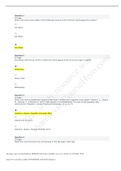
1) An older patient has been diagnosed with pernicious anemia. The FNP knows that this condition could be related to - ANSWER Decreased gastric acid secretion
2) The FNP is examining a patient who tells the FNP "I sure sweat a lot especially on my face and feet but it doesn't have an odor". The FNP knows that this could be
related to - ANSWER The eccrine glands
3) During an abdominal assessment the FNP elicits tenderness on light palpation in
the right lower quadrant. The FNP interprets that this finding could indicate a disorder which of these structures? - ANSWER Appendix
4) An Inuit visiting Nevada from anchorage has come to the clinic in July during the hottest part of the day. It so happens that the clinics air conditioning is broken and the temperature is very hot. The FNP knows that which of these statements is true about the Inuit sweating tendencies? - ANSWER They will sweat more on their faces and less on their trunks and extremities
5) The FNP notices that a patient has black, tarry stool and recalls that a possible cause would be - ANSWER Gastrointestinal bleeding
6) The FNP knows that during an abdominal assessment deep palpation is used to determine - ANSWER Enlarged organs
7) The FNP is assessing the abdomen of an aging adult. Which of these statements regarding an aging adult and abdominal assessment is true? - ANSWER The abdominal musculature is thinner
8) During examination the FNP finds that a patient has excessive dryness of the skin. The best term to describe this condition is - ANSWER Xerosis
9) A FNP notices that a patient has ascites, which indicates the presence of - ANSWER Fluid
1) An older patient has been diagnosed with pernicious anemia. The FNP knows that this condition could be related to - ANSWER Decreased gastric acid secretion
2) The FNP is examining a patient who tells the FNP "I sure sweat a lot especially on my face and feet but it doesn't have an odor". The FNP knows that this could be
related to - ANSWER The eccrine glands
3) During an abdominal assessment the FNP elicits tenderness on light palpation in
the right lower quadrant. The FNP interprets that this finding could indicate a disorder which of these structures? - ANSWER Appendix
4) An Inuit visiting Nevada from anchorage has come to the clinic in July during the hottest part of the day. It so happens that the clinics air conditioning is broken and the temperature is very hot. The FNP knows that which of these statements is true about the Inuit sweating tendencies? - ANSWER They will sweat more on their faces and less on their trunks and extremities
5) The FNP notices that a patient has black, tarry stool and recalls that a possible cause would be - ANSWER Gastrointestinal bleeding
6) The FNP knows that during an abdominal assessment deep palpation is used to determine - ANSWER Enlarged organs
7) The FNP is assessing the abdomen of an aging adult. Which of these statements regarding an aging adult and abdominal assessment is true? - ANSWER The abdominal musculature is thinner
8) During examination the FNP finds that a patient has excessive dryness of the skin. The best term to describe this condition is - ANSWER Xerosis
9) A FNP notices that a patient has ascites, which indicates the presence of - ANSWER Fluid