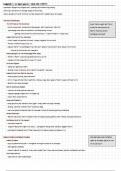
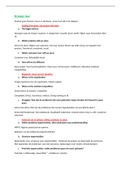
PROSTHODONTICS PAST PAPERS 1400 MCQs
1. Clasp distortion occurred because A. ductility was too low. B. hardness was too great. C. ultimate tensile strength was too low. D. tension temperature was too high. E. elastic limit was exceeded. 2. When all other removable partial denture considerations remain unchanged; clasps constructed of which material can engage the deepest undercut: A. Chrome cobalt casts. B. Nickel chrome casts. C. Wrought stainless steel. D. Wrought gold. Gold engages 0.75 mm undercut, St.St. 0.5 mm undercut, CrCo 0.25 mm undercut. 3. A partial denture that seats on the master cast but fails to seat in the mouth due to A. contraction of the metal frame work during casting. B. insufficient expansion of the investment material. C. distortion of impression. D. failure to block unwanted undercuts. 4. A patient with a removable partial denture is dissatisfied with the false appearance of the mandibular anterior teeth. The dentist could CORRECT this appearance by I. Moving the teeth farther lingually so that they are not so obvious. II. Varying the inclinations of the incisors so that alternate teeth appear tilted. III. Moving the teeth farther facially so that their appearance is enhanced. IV. Separating the teeth slightly to make each one look distinct. A. III only. B. Any of these options. C. II, III. D. II, IV. E. I, III 5. The removable partial denture requires relining what is would be the most appropriate action? A. Take a new impression by asking the patient to occlude on it. B. Provide equal space (may be it was thickness) between denture and gingival tissues. Make sure the framework and retainers are seated in place before taking impression. 6. Which of the following does not affect the elasticity of retentive clasp? A. Length of the arm. B. The cross section shape. C. The material used. D. The undercut area. 7. An occlusal approaching clasp TIP: A. Should occupy a predetermined undercut. B. Contact the tooth under the survey line. C. Rigid. 8. Regarding the tip of the retention arm of the retainer in a partial denture, what is true? A. It should engage the predetermined undercut. B. It should engage the maximum undercut available. C. It should not engage any undercuts. 9. In the construction of partial denture the surveyor is not used to: A. Contour the wax as part of the fabrication of the working cast. B. Locate the guide planes. C. Determine the location of indirect retainers. D. Identify any undesirable undercuts. 10. What is correct in regard to cobalt chromium circumferential clasp? A. They have round profile in cross section. B. Rigid two third above the survey line and flexible one third below the survey line. C. One third above and two third below the survey line. D. Engages deepest area of the undercut for maximum retention. 11. What is the advantage of acrylic resin over Cr-Co? A. Cost. B. Plaque control. C. Ease of adding teeth. D. Better thermal conductivity. 12. What determines the limits of the inferior border of the lingual component of an RPD (lower RPD major connector)? A. Elevation of anterior floor of the mouth. B. Space of the tongue. C. Sub Mandibular duct opening. D. Anterior crowding. E. Whether lingual plate or lingual bar is used. 13. In removable partial denture, the principle of an indirect retainer is that: A. stabilize against lateral movement. B. prevent settling of major connectors. C. restrict tissue movement at the distal extension base of the partial denture. D. minimize movement of the base away from the supporting tissue. 14. What is TRUE in regard to the preparation of occlusal rests: A. Use an inverted cone bur. B. Use a flat fissure bur. C. Parallel to occlusal plane. D. At right angle to the long axis of tooth. E. None of the above. 15. The auxiliary occlusal rest on teeth for partial denture should be placed: A. Away from edentulous space. B. Adjacent to edentulous space. C. Near fulcrum line. D. Away from fulcrum line. 16. Tripod marking in surveyor is used to: A. Remount the cast on d articulator. B. Re orient the cast on surveyor. C. Occlusal rests 17. Maximum support in distal extension RPD gained through: A. indirect retainers. B. Proper tissue support by denture base. C. Clasps. D. use stress breakers 18. What is the advantage of “Kroll” RPI Clasp: A. best esthetics. B. minimal tissue contact. C. better retention. D. minimizes the need for indirect retention. 19. Circumferential clasp, what is correct? A. Rigid 2/3 above survey line & flexible 1/3 below. B. Flexible 2/3 above survey line & rigid 1/3 below. C. Should always engage deepest undercut. D. Cross section is circle. E. Should engage a predetermined undercut. 20. Maxillary distal extension partial denture extends to posterior palatal seal. True / false Answer: F. 21. What is true about partial dentures? A. They cause immediate changes in the oral plaque behavior. B. Night wearing of dentures reduces plaque accumulation. C. Relieving the gingival area reduces gingival enlargement. 22. Gingival relief areas on partial dentures result in gingival enlargement? True or False. Answer: True. 23. Why do you construct a lower removable partial denture with lingual bar? A. It is used when the space between raised floor, mouth and gingival margin is minimal. B. Plaque accumulation is less than with lingual plate. C. Should be made thicker when short 24. In planning and construction of a cast metal partial denture the study cast: A. facilitates the construction of custom trays. B. minimizes the need for articulating. C. provides only limited information about inter ridge distance, which is best assessed clinically. D. can be used as a working cast when duplicating facilities are not available. 25. A free end saddle partial denture: A. will exert less load on the supporting mucosa if the extension of the base is reduced. will be most effectively retained when the clasps engage undercut nearest the saddle. C. will usually have a path of insertion produced by tilting the anterior part of the cast upwards on the surveyor table. D. will have support more evenly distributed between teeth and soft tissues if a mucostatic impression technique is employed. 26. Which of the following areas CAN NOT be determined by survey analysis of partially edentulous cast? A. Areas to be revealed as blocked out to properly location. B. Areas to be shaped to properly location. C. Areas used for guideline planes. Areas used for indirect retention. E. Areas used for support. F. Depth of rest seats. 27. At his first post insertion appointment, a patient with a new removable partial denture complains of a tender abutment tooth. The most likely cause is: A. overextended borders of the partial. B. inadequate polishing of the framework. C. improper path of insertion. D. the occlusion. 28. How can a dental surveyor be used to prevent problems related to the production of removable partial dentures? A. It can help to determine the path of insertion and removal of a removable partial denture. B. Location of undercuts on abutment teeth. C. Location of soft tissue undercuts. D. All of the above. 29. When a removable partial denture is fabricated to occlude with natural teeth, the occlusal form of the artificial teeth is influenced by the: A. endodontic condition of the abutment teeth. B. occlusal form of the remaining teeth. C. need to produce a fully balanced occlusion. D. None of the above. 30. How should the occlusion in partial removable dentures be designed? artificial teeth should be out of occlusion. artificial teeth should not interfere with the incisal guidance established by the remaining natural teeth. 31. The best way to protect the abutments of a Class I removable partial denture from the negative effects of the additional load applied to them is by: A. splinting abutments with adjacent teeth. B. keeping a light occlusion on the distal extensions. C. placing distal rests on distal abutments. D. using cast clasps on distal abutments. E. regular relining of the distal extensions. 32. In the design of a removable partial denture, guiding planes are made A. parallel to the long axis of the tooth. B. parallel to the path of insertion. C. at a right angle to the occlusal plane. D. at a right angle to the major connector. 33. In partial denture design, the major connector should A. rigidly connect the bilateral components. B. act as a stress-breaker. C. not interfere with lateral forces. D. dissipate vertical forces. 34. A survey of the master cast shows that the 3.5 and 3.7 abutments for a fixed partial denture have different paths of insertion with respect to 3.7. A semi- precision attachment is chosen rather than preparing the teeth again. Where should the male part of the attachment ideally be located? A. Distal of the 3.5 retainer. B. Distal of the 3.6 pontic. C. Mesial of the 3.7 retainer. D. Mesial of the 3.6 pontic. 35. The maxillary cast partial denture major connector design with the greatest potential to cause speech problems is A. a thick narrow major connector. B. an anterior and a posterior bar. C. a thin broad palatal strap. D. narrow horseshoe shaped. 36. A male patient comes to you complaining his lower teeth are loose and painful. Upper edentulous, lower canine to canine present (or premolar to premolar). Lower incisors have grade 3 mobility. You agreed on extraction and replacement with immediate denture. I. What test or procedure will help you in diagnosis? A. Vitality B. Percussion C. Transillumination D. Opg II. You decide to give immediate denture, what material will you recommend to the patient? A. Acrylic B. Cobalt chromium III. If you decide to give acrylic denture, what is the advantage of acrylic over cobalt chromium? A. Can add teeth in future B. Better thermal conductivity IV. What impression material will you use for final impression? A. Alginate B. ZnO Eugenol C. PVS D. Polyether E. Impression plaster V. After giving the denture, what instructions will you give to the patient? A. You will need a new denture or relining will be required B. Nothing, denture will be best for life C. Denture will help in healing the socket 37. A 55 year old woman has all upper natural teeth except 8s. In the lower arch 31, 32, 33, 34, 41, 42, 43, 44 present. 34 and 44 have big composite restorations on them. You explain the patient, and she gets ready for a denture (RPD) I. What is the advantage of Cobalt Chromium over Acrylic? A. Better adaptability B. Ease of adding teeth II. How will you take support from the abutments? A. place occlusal rest on 34 and 44 B. give crown on 34 and 44 C. inlay/onlay. III. How will you get maximum support for the denture? A. Maximum extension B. Crowns on abutment C. Mesial occlusal rest IV. You decide to give lingual plate as a major connector, what is the main advantage? A. Indirect retention B. Stabilize the anterior teeth C. Good oral hygiene V. Both condyles are positioned anteriorly around the articular eminence, no other TML pathology is seen. What is the cause of anteriorly positioned condyle? A. It is normal on OPG. B. Patient is biting too anteriorly C. Anterior disc displacement/ displacement of condylar disc D. Degradation of head of condyles E. Degeneration process in early 40’s 38. Freeway space A. can be measured accurately in dentulous patients. B. sets to 2-4mm in the edentulous patient. C. Occlusal vertical dimension minus vertical dimension at rest. 39. Neutral zone is: A. Buccal and lingual forces balanced in occlusion. B. Vertical dimension at rest. C. Varies with posture. D. Increases on tooth extraction. 40. Anterior teeth arrangement? A. mandibular anterior should be set lingually. B. should be always arranged in class1 relation. C. should be visible below the lip line. 41. Which of the following is included in the posterior limit of a maxillary denture? A. Hamular notch. B. Fovea palantini. C. External oblique ridge. 42. Patient wears complete denture in upper jaw for 20 years, opposing only few lower ant teeth, no posterior prosthesis in the lower jaw. What will be the effect? Rapid palatal resorption. Lower ant teeth mobility. 43. A patient wearing denture complains of pain in lower premolar region spreading to lower lip, which is sharp. The most possible cause is: A. Change in occlusion. B. TMD C. Altered vertical dimension. D. Trigeminal neuralgia. 44. When a patient wearing a complete denture makes a whistling sound while enunciating the (S) sound, it is caused by: A. The anterior teeth being placed too far labially. B. The anterior teeth being placed too far lingually. C. Too great a vertical overlap. D. The palatal vault being too high and narrow. 45. A Patient with lower denture complaining of paresthesia of the lower lip, the most common cause is: A. Pressure on mental foramen. B. Pressure on the genioglossus. C. Pressure on mylohyoid muscles. 46. The biting load of denture base to tissues compared to teeth is: A. Ten times more. B. Ten times less. C. Equal. D. Under compression. 47. Shape and irregularity of ridge edge in a patient who needs full denture, what is your treatment? A. Do not proceed with treatment. B. Minimal surgical intervention. C. Implant surgery. 48. What is the advantage of over-denture in comparison to full denture? A. Proprioceptors B. Simplicity of elaboration C. Aesthetics 49. Disadvantage of over-denture is: A. decreased masticatory force. B. decreased retention, stability and support. C. increased alveolar bone resorption. D. None of the above. 50. You decide to place overdenture for a patient who has sound abutment teeth, the order of preference while choosing abutment teeth would be: A. Molars, premolars, canines, incisors. B. Molars, canines, premolars,incisors. C. Canines, molars, premolars, incisors. D. Canines, pre molars, molars, incisors. 51. While the teeth are set in wax, dentures are tried in to: A. verify the maxillomandibular records. B. verify the vertical dimension of occlusion. C. evaluate esthetics. D. All of the above. 52. Vestibuloplasty is a preprosthetic surgical procedure used to A. facilitate reliable impression making. B. provide adequate posterior inter-arch space. C. allow placement of teeth over the residual ridge. D. increase the supporting surface area. 53. Upon examination of an edentulous patient, it is observed that the tuberosities contact the retromolar pads at the correct occlusal vertical dimension. The treatment of choice is to A. reduce the retromolar pads surgically to provide the necessary clearance. B. reduce the tuberosities surgically to provide the necessary clearance. C. construct new dentures at an increased occlusal vertical dimension to gain the necessary clearance. D. proceed with construction of the denture and reduce the posterior extension of the mandibular denture to eliminate interferences. 54. Following the insertion of complete dentures, a generalized soreness over the entire mandibular alveolar ridge can be caused by: A. Inadequate interocclusal distance. B. impingement on the buccal frenum. C. high muscle attachments. D. excess border thickness. 55. Extreme resorption of an edentulous mandible can bring the alveolar ridge to the level of the attachment of the A. buccinator, styloglossus and geniohyoid muscles. B. mylohyoid, buccinator and styloglossus muscles. C. superior constrictor, mylohyoid and buccinator muscles. D. mylohyoid, buccinator and genioglossus muscles. 56. Which of the following structures affects the thickness of the flange of a maxillary complete denture? A. Malar process. B. Coronoid process. C. Mylohyoid ridge. D. Zygomatic process. E. Genial tubercle. 57. During the fabrication of new complete dentures, which of the following can be modified to achieve the desired occlusion? 1. The compensating curve. 2. The orientation of the occlusal plane. 3. The cusp inclination. 4. The condylar inclination. A. (2) (3) B. (1) and (3) C. (2) and (4) D. (4) only E. All of the above. 58. In patients wearing complete dentures, the most frequent cause of tooth contact (clicking) during speaking is A. nervous tension. B. incorrect centric relation position. C. excessive occlusal vertical dimension. D. lack of vertical overlap. E. unbalanced occlusion. 59. To improve denture stability, mandibular molar teeth should normally be placed A. over the crest of the mandibular ridge. B. buccal to the crest of the mandibular ridge. C. over the buccal shelf area. D. lingual to the crest of the mandibular ridge. 60. In complete dentures, the external oblique line is used as a guide for the A. position of the posterior teeth. B. height of the occlusal plane. C. termination of the buccal flange. D. termination of the lingual flange. 61. The extension of the lingual anterior border of a mandibular denture is limited by the A. mylohyoid muscle. B. geniohyoid muscle. C. genioglossus muscle. D. fibres of the digastric muscle. 62. A maxillary complete denture exhibits more retention and stability than a mandibular one because it 1. covers a greater area. 2. incorporates a posterior palatal seal. 3. is not subject to as much muscular displacement. 4. is completely surrounded by soft tissue. A. (2) (3) B. (1) and (3) C. (2) and (4) D. (4) only E. All of the above. 63. 60 year old patient, he is wearing full denture I. What is seen on the palate? A. Chronic atrophic candidiasis. B. Acute atrophic candidiasis. C. Chronic hyperplastic/hypertrophic candidiasis. D. Acute hyperplastic/hypertrophic candidiasis. II. What will be your first treatment if there is no problem with esthetic? Keep the denture out of mouth for one week and give oral hygiene instructions. B. Nystatin / lozenges. atr C. Make a new denture. D. Give antibiotics. III. Patient comes back after a week, and the lesion has not healed, what will be your next step? A. Amphotericin lozenges 10mg. B. Anitibiotics. C. Nystatin spray (dosage given). D. Miconazole 2%. IV. Which micro-organisms can cause this lesion? A. Candidida. B. Streptococcus mutans. C. Staphylococcus aureus. V. What is incorrect in relation to its treatment? A. Dentures always need to be remade. 64. 70 year old lady, wearing dentures since last 20 years, never had any problem with them. Her new denture (12 months old) is giving her problem. It is fine when at rest or talking but the lower denture becomes loose when eating. She got her teeth extracted early in age, on her second baby, and she is wearing dentures since then. She recently had a hip replacement procedure done, and is in early stage of Parkinson. On examination, you found that the denture fits well and is made to a high standard. She says her lower incisors are becoming long and she should get them all extracted now, when she is fit and healthy. I. What is the red spot on the upper ridge? A. incisive papilla B. insertion of labial frenum C. root fragment D. abcess II. By looking at the picture, how would you describe Maxilla? A. undesirable labial undercut B. excessive resorption of anterior ridge C. exostosis of anterior maxilla D. unmanageable buccal frena E. overhanging/enlarged maxillary tuberosities III. In making Lower denture (of high quality), what is the most significant difficulty that you will face? A. Lingual plate showing through the lower incisors embrasure B. Hypertrophy of tongue/ inadequate area for the tongue- to manage it in the lower denture C. High occlusal plane- due to over erupted incisors D. To get retentive area on Canine, as undercut lies in the gingival third E. Problematic buccal frenum IV. Reason for the denture to become loose? (during function) A. Canine interference on lateral excursion B. Unfavourable palatal anatomy C. Increase OVD D. Decrease saliva (xerostomia) / changes in saliva quality E. Involuntary muscle action on denture, due to Parkinson disease F. Managing dentures for a lot of years V. Before the procedure? (Patient had undergone hip replacement, what will you do before performing the procedure/extraction) A. No prophylaxis required B. Refer to Orthopedic to consult regarding prophylaxis C. (antibiotic dosage given) VI. What will be the difficulty in making new denture? Recording jaw relation 65. An old patient has pain under his full upper and lower dentures. The pain increases when he wears them during the day and stops immediately after removing the dentures. His doctor thinks it is due to mental nerve compression by lower denture and refers to you for the second opinion. I. What investigations will you perform other than checking denture borders? A. occlusal prematurities. B. soft tissues under denture. C. assess vertical dimension. D. retention of the denture. E. palpation of muscles. II. What is the likely cause of pain? A. Increased vertical dimension. B. Over extension of borders of the denture. III. What is the clinical symptoms of mental nerve compression by the denture borders? A. Lower lip numbness. B. Pain. C. Chin and lower lip numbness. D. Pain in the floor of the mouth not crossing the midline. IV. Tests to investigate nerve sensation. What is INCORRECT? A. two-point discrimination. B. sharp test. C. Blunt test. D. pressure test. E. thermal test. F. direction test. V. What do you think the diagnosis of the nerve could be? A. Nueropyraxia. B. Neuropraxia. C. Neurotmesis. D. axonotmesis 66. Failure of denture is commonly caused by: A. Increased occlusal plane. B. Decreased vertical dimension C. Insufficient denture bearing area. D. Wrong freeway space (or inadequate interocclusal distance). 67. Diffuse pain under a complete mandibular denture is most likely caused by: A. Overextension of the denture flange. B. Occlusal plane too high. C. Occlusal face height too great. D. Mental foramen near crest of the ridge. 68. In constructing the framework of FPD (waxing), a full contour waxing is done then the wax is cut back in order to: A. ensure a correct ratio of core thickness to layered material. B. ensure a continuous smooth junction between the lingual and proximalmetal surfaces and porcelain. C. control the proper position of ceramic-metal junction. 69. In determining the replacement of missing maxillary anteriors with ridge lap design or with incorporation of labial flange, what factors is most important: A. high lip line. B. Patient wishes. C. need for anterior retention. D. the degree of ridge resorption. 70. Better retention of resin-bonded bridge: nickel-chromium. Beryllium. 71. Veneers: A. are useful in adults because of completed growth. B. are useful in adolescents where more extensive tooth preparation may risk exposure. C. Both of the above This question mentions veneers, and porcelain veneers should not be put until the gingival contours are at their correct position. 72. In the construction of a full veneer gold crown, future recession of gingival tissue can be prevented or at least minimized by? A. Extension of the crown 1 mm under the gingival crevice. B. Reproduction of normal tooth incline in the gingival one third of the crown. C. Slight over contouring of the tooth in the gingival one fifth of the crown. D. Slight under contouring of the tooth in the gingival one fifth of the crown. 73. The requirement for crown and root length is: A. 2:3. B. 1:1. C. 1:2. 74. What is the advantage of fixed-fixed bridge? A. It can be used in inclined teeth with large pulp. B. It can be used in a long span. C. It can be used in over tapered abutment. D. It can be used when there are different paths of insertion. 75. For the definitive restorations, biologic width is important for: A. Margin placement. B. Proper gingival height. C. Correct emergence profile. D. All of the above. 76. After the placement of a restoration the patient comes back to you after week complaining of pain on biting and bleeding gums; what is the first thing you would look at? Occlusal height. Contacts areas. A would have been the choice if gingival bleeding wasn’t there, but since there is bleeding. It might be because of gingival overhang of restoration, hence the contact area. Or pain after a week of restoration is commonly due to food impaction in the contact area. 77. The non-rigid connector is placed: A. Mesial to the distal retainer. B. Distal to anterior retainer. C. On anterior teeth. 78. A fixed partial denture is to be constructed for the mandibular arch of a 35 year- old female. The opposing permanent maxillary first molar is extruded 3mm beyond the plane of occlusion. The best way to correct this situation is to: A. reduce and reshape occlusal length of the tooth by 3mm. B. extract the opposing tooth and replace it with a fixed partial denture. C. crown restoration of the maxillary molar to a satisfactory plane of occlusion with a cast restoration. D. cut the maxillary extruded molar off the working cast, construct a mandibular fixed prosthesis and equilibrate the maxillary molar to the new occlusal plane after the prosthesis is cemented. 79. Patient had new resin-bonded bridge, it fell off 3 months after cementation but occlusion and design are not a problem. What is the correct management for this problem? A. Just do pumice enamel and re etch metal and cement. B. Slightly reduce lingual enamel and retch and bond metal. C. Remake metal create resin tags. D. Remake the bridge. 80. What is Ante’s Law about? A. The relation between the span of the bridge and the pontics. B. The periodontal area of the abutment teeth. C. The relation between the length of the root and the abutment. 81. In cementing Maryland or Roche bridges, the effect is generally to: A. Lighten the colour of the teeth by the opacity of the cement. B. Darken the colour of the abutment by the presence of metal on the lingual. C. Have no detrimental colour effect. D. Darken the abutment teeth by incisal metal coverage 82. Crown fits on the die, but on the tooth there is a discrepancy of about 0.3mm, what will you do? A. Relieve cast from the inside. B. Take a new impression and make new crown. C. Burnish margins. D. Use thick mix of cement. E. Grind the interior of the crown. F. Prepare the tooth further. 83. Patient with class I malocclusion, he has canine guard occlusion, where will you face difficulties in crown preparation? A. You will not face difficulties. B. Mandibular canine. C. Maxillary canine. 84. In short clinical crowns, what is true in regards to crown preparation? A. The shorter the crown the more parallel the walls should be. B. Short clinical crowns are not good candidates. C. The shorter the crown the more tapered the walls should be. 85. In a class II/2 malocclusion, which bridge design would be contraindicated for a missing lateral upper incisor? A. Cantilever bridge B. Maryland bridge C. Metal bridgework 86. Patient with class II division II, the lateral incisor is missing. You want to make a fixed bridge which of the following is suitable? A. Rocket bridge using central incisor as abutment. B. Cantilever using central incisor. C. Fixed bridge using the central incisor and bicuspid. 87. Winged axial wall preparation: A. is a metal porcelain transition. B. may improve resistance form. C. good for a short crown. D. all of above. 88. Which is the best cantilever bridge design for missing maxillary canine? Abutment on: A. Both premolars. B. Lateral and central incisor. C. Lateral incisor. D. First premolar. 89. Final restoration that will last for a long time in severely discolored tooth is: A. All ceramic crown. B. Porcelin fused to metal. C. Extrenal bleaching. D. Composite veneer. 90. Patient is 18 years has badly decayed centrals need to be restore and there is a minimal overlap, the best treatment is: A. Metal crown. B. Porcelain jacket. C. Veneer. D. Metal ceramic. 91. “Pop off”’ of a porcelain veneer from the under the lying gold crown is due to: A. too thick application of pure gold surface conditioner. B. contamination at the porcelain metal interface. C. under firing the opaque layer. D. All of the above. 92. When should metallic framework not be contaminated during the fabrication of a porcelain fused to metal crown? A. Between bisque stage and glazing stage. B. Between preheat and opaque stages. C. Between opaque and bisque stages. D. Between one opaque and two opaque stages. 93. Which material used for FPD restoration in patient with teeth grinding habit? A. Gold B. Porcelain. C. Acrylic. D. Base metal. 94. What is the best way to cement a Maryland bridge? A. GIC. B. Resin. C. High compression restorative resin. D. Zinc Phosphate cement. E. Oxide Zinc and eugenol. 95. The best way of getting good retention in full veneer crown is by: Tapering. Lengthening the prep. 96. The location of a crown margin is determined by 1) esthetic requirements. 2) clinical crown length. 3) presence of caries. 4) presence of an existing restoration. A. (2) (3) B. (1) and (3) C. (2) and (4) D. (4) only E. of the above. 97. A fracture in an all ceramic crown may be caused by 1) inadequate ceramic thickness. 2) sharp line angles in the tooth preparation. 3) excessive occlusal load. 4) use of an inappropriate luting material. A. (2) (3) B. (1) and (3) C. (2) and (4) D. (4) only E. All of the above. 98. The gingival margin of the preparation for a full crown on a posterior tooth, with a clinical crown that satisfies the requirements for retention and resistance, should be placed A. 5mm subgingivally. B. on the enamel. C. at least 1mm supragingivally. D. at the cemento-enamel junction. E. at the gingival margin. 99. Which of the following should be checked first when a cast gold crown that fits on its die cannot be seated on its abutment? A. The occlusal contacts. B. The taper of the preparation. C. The proximal contacts. D. The impression used to pour the cast. 100. For a cast gold restoration, a gingival bevel is used instead of a shoulder because a bevel 1) protects the enamel. 2) increases retention. 3) improves marginal adaptation. 4) increases the thickness of gold. A. (2) (3) B. (1) and (3) C. (2) and (4) D. (4) only E. All of the above. 101. The tooth preparation for a porcelain veneer must create a/an 1) rough surface for improved bonding. 2) space for an appropriate thickness of the veneering material. 3) margin well below the gingival crest. 4) definite finish line. A. (1) and (3). B. All of the above. C. (1) (2) (3). D. (4) only. E. (2) and (4). 102. Fixed partial denture pontics should A. completely replace the missing hard and soft tissue. B. have a concave surface touching the mucosa. C. have minimal soft tissue coverage. D. hide the porcelain-metal junction on their gingival aspect. 103. A 60-year old patient requests the replacement of tooth 4.6, which was extracted many years ago. Tooth 1.6 has extruded 1.8mm into the space of the missing tooth. The three unit fixed bridge replacing the mandibular first molar should be fabricated A. to the existing occlusion. B. after extracting tooth 1.6 and replacing it with a fixed partial denture. C. after restoring tooth 1.6 to a more normal plane of occlusion. D. after devitalizing and preparing tooth 1.6 for a cast crown. 104. Whenever possible, the margins of a restoration should be placed 1) subgingivally. 2) supragingivally. 3) on cementum. 4) on enamel. A. (2) (3) B. (1) and (3) C. (2) and (4) D. (4) only E. All of the above. 105. Which of the following SHOULD NOT be corrected with a porcelain veneer? A. Peg lateral incisor. B. Diastema between 1.1 and 2.1. C. Cross bite on tooth 1.3 D. Enamel hypoplasia. 106. Which of the following would be a CONTRAINDICATION for the use of a resin bonded fixed partial denture (acid etched bridge or “Maryland Bridge”)? A. Class II malocclusion. B. An opposing free end saddle removable partial. C. Previous orthodontic treatment. D. Heavily restored abutment. 107. For the construction of an esthetic and strong bridge to replace the PFM chipped one you will use: A. Feldspathic B. Leucite. C. Alumina. D. Zirconia 108. Resin bonded bridges lose retention between: A. resin-enamel. B. resin-metal. C. within resin. 109. A 55 year old man has a four unit bridge in upper anteriors that is 11,12,21,22. The 21 has chipped porcelain and the metal was seen I. Patient has important conference or meeting today. How will u repair it chair side? A. Etch with 4% hydrofluoric acid for 20 sec and restore with composite B. Etch with 4% hydrofluoric acid for 5 min and restore with composite C. CAD/CAM porcelain veneer to cover the defect D. Composite resin with 37% orthophosphoric acid for 1 minute E. With AFP gel 2.5% for 20 sec II. What is the reason for chipped porcelain? A. Improper framework B. No vacuum C. Rapid firing D. Unfavorable bite E. Thin porcelain. III. Name of this defect is: A. adhesion defect. B. cohesion defect. C. adhesion, cohesion defect. IV. What will you consider while making a new restoration/ how will you prevent this in future? A. Make group function occlusion. B. Use splint at night C. Anterior tooth setup. V. For a new bridge if you want to construct a high strength porcelain, what material will you use? A. Zirconia B. Feldspathic porcelain C. Leucite D. Sintered alumina 110. A lower molar requiring a crown has an amalgam restoration extending 1.0 mm subgingivally. The crown margin should be placed: A. on the existing amalgam. B. at the amalgam/tooth junction. C. mm apical to the amalgam margin. D. mm apical to the amalgam margin. 111. Which is of the following is not suitable for cementing crown of erosive tooth? A. Zinc phosphate. B. GIC. C. Composite resin cement. In patient with erosion most of the enamel is lost because of acid attack, since resin bonding cement needs enamel for effective bonding so it is contraindicated with erosive teeth. 112. Which is of the following is not suitable for cementing crowns in such cases like gastric regurgitation? A. Zinc phosphate. B. Glass ionomer cement. C. Composite resin cement. But in case of restoration GIC is contraindicated. 113. What is the possible cause of porcelain being opaque? Porcelain is dried too rapidly. Thick porcelain layer. Thin porcelain layer over opaque layer. . 114. Zinc oxide eugenol impression paste A. cannot be used to record undercut areas. B. is a thermoplastic impression material. C. has a setting time ,the rate of which decreases as humidity increases. 115. Which impression material is contraindicated for final impression of maxillary arch of complete denture patient who is on hypertensive medications and diagnosed with xerostomia? A. Impression waxes. B. Alginates. C. Zinc-oxide eugenol paste. D. Light bodied elastomers. Eugenol extremely irritates mucosal issues, particularly in dry mouth cases. 116. High humidity in a room where zinc oxide and eugenol impression paste is being mixed will A. increase the setting time. B. not affect the setting. C. prevent any setting. D. decrease the setting time. High temp and humidity shorten the initial setting time for all pastes. 117. A patient has full upper denture. In the lower arch only incisors, canines and premolars. Lower incisors are very mobile and you agreed on extraction with placement of immediate denture. Which impression material will you use? A. ZnO eugenol B. alginate C. polyvinylsiloxane 118. Stiffness of material is measured by: A. Proportional unit. B. Modulus of elasticity. C. Stress/Strain. D. Ultimate tensile strength. 119. Slip casting is a method utilized to construct all-ceramic restoration with: A. castable glass ceramic. B. leucite-reinforced glass ceramic. C. alumina-reinforced glass ceramic. D. zirconia whiskers-reinforced glass ceramic. 120. What is the best way to get optimum adoption of ceramic to metal? A. Slow firing. B. High compression. C. Under tension. D. Fired several times before completion. 121. Ceramic veneer crack most common reason is OR Contraindication of Porcelain shell crown: A. Edge to edge bite. B. Class II div1. C. Class II div2. D. Class 3. 122. Taking impression with elastomers for maxillary fixed bridge using custom tray, the special tray should be: A. Perforated. B. Having space of 3mm. C. Having space of 5mm. D. Tray can be flexed. E. Adhesive not required. 123. Most stable impression is: A. Polyether. B. Hydrocolloid. C. Polyvinyl siloxane. D. Agar. 124. Impression material for making final impression for implant prosthesis is: A. Additional silicone. B. Condensation silicones. C. Polyether. D. Polysulphides. 125. In regards of Polyvinyl siloxane, it has the following characteristics except: A. Should be poured after an hour if palladium is not involved. B. Should be immediately poured. C. Dimensionally stable until a week. D. Suitable for intrasulcular impressions. E. Refrigeration increases its working time. F. Can be sterilized. 126. Which material has the longest shelf- life? A. Polyvinyl-siloxane. B. Polysulfide. C. Zinc oxide. D. Polyether. 127. Which impression material is the best when more than one cast is to be poured? A. Condensation silicones. B. Polysulfide. C. Polyether. D. Additional silicones. 128. When should pour polyether impression material? A. Within 24 hours after taking impression. B. Within 30 minutes after taking impression. C. Should be stored dry and then poured. D. Should be stored in humid place. 129. A well-made full crown, constructed by the indirect technique, from a silicone impression that has been allowed to bench set for 24 hours, will probably show the following characteristic when tried in the patients mouth: A. It will seat on the preparation well but will be too tight in the interproximal areas. B. Its interproximal contacts will be slightly open and the occlusal surface will be in supraocclusion. C. It will have open margins even though it fits the die well. D. It will fit the preparation well but the occlusal surface will be in infraocclusion. 130. In comparing polysulfide, polyether and addition cured silicone impression materials, which of the following statements is true? A. All three of the materials contract slightly during curing. B. All the materials expand slightly upon cooling from mouth temperature to room temperature. C. After one week, addition cured silicones will undergo more distortion than polysulfides. D. Lead oxide is used as an activator in silicones. 131. The stiffness of gold alloy is determined by its: A. Proportional limit. B. Modulus of elasticity. C. Ultimate tensile strength. D. Flow. 132. The minimal labial tooth reduction for satisfactory aesthetics with porcelain fused to metal crown is: A. 1mm. B. The full thickness of enamel. C. 1.5 mm. D. 2.5mm. E. One third of the dentine thickness. F. None of the above 133. What is TRUE? A. Boiling point of acrylic acid boiling point of water. B. Boiling point of acrylic acid is similar to that of water. C. Boiling point of acrylic acid boiling point of water. 134. How will cover lower premolar when making a metallic porcelain crown? A. cover the occlusal and buccal surfaces by porcelain. B. cover just buccal surface by porcelain. 135. In comparing porcelain to metal-crown with full porcelain crown in anterior teeth: Porcelain to metal crown is more conservative (minimal reduction) on the palatal surface. B. Metal-crowns are more aesthetic than full porcelain. C. Preparation of the tooth is more simple when doing full porcelain crowns. 136. In metal-ceramic restorations, failure or fracture usually occurs: A. in the porcelain. B. at the porcelain-metal interface. C. in the metal. 137. Porcelain which combine strength and esthetic is: A. Feldspathic. B. Zirconia. C. Alumina. D. Sintered porcelain. E. Procera (dont rem the whole sentence). F. Inceram. 138. The opacity of a porcelain is due to: A. Thin layers of porcelain. B. Incorrect compression. C. Incorrect firing. 139. The most acceptable theory of bonding porcelain to noble metal is: A. Formation of base metal oxide. B. Formation of noble metal oxide. C. Adhesion. 140. Which of the following contribute to the bonding of dental porcelain to metal casting alloys? 1. Metallic bonds. 2. Chemical bonding. 3. Adhesive bonds. 4. Mechanical bonding. A. and 2 only. B. 1, 2 and 4. C. 1,3 and 4. D. 2 and 4 only. E. 3 and 4 only. F. All of the above. 141. When considering PFM restorations : A. it is more conservative than porcelain alone. B. shoulder is needed overall. C. metal ceramic bond is weaker in facial veneers as compared to full PFM crown. D. metal sub frames with low AU content provide less consistent bonding to porcelain. 142. A patient is unhappy with the esthetics of an anterior metal- ceramic crown, complaining that it looks too opaque in the incisal third. The reason for this is most likely: A. using the incorrect opaque porcelain shade. B. inadequate vacuum during porcelain firing. C. not masking the metal well enough with the opaque. D. the tooth was prepared in a single facial plane. 143. Metal ceramic restoration may fail due to fracture of ceramic material. This can best be avoided by: A. occlusal forces are minimal. B. the metal is not over 0.5 mm thick . C. the ceramic material is at least 1.5mm thick. 144. Porcelain adhered to metal by: A. chemical bond. B. mechanical bond. chemico-mechanical bond. 145. Which of the following impression materials is NOT recommended for making a final impression for fabrication of dies for a porcelain fused to metal crown? A. Addition silicone. B. Condensation silicone. C. Irreversible hydrocolloid. D. Polyether. 146. What are the artificial teeth in removable dentures made of? 149. Excellent gingival margin design for porcelain fused to metal unit is: A. Bevel design. B. Knife edge design. C. Chamfer. D. Full shoulder. 150. The best metal for a porcelain crown is: A. pure Gold. B. gold 14 Karat. C. chrome cobalt. D. copper. 151. In metal porcelain crown why is there a butt join? A. porcelain is brittle. B. metal is brittle. C. porcelain is thin. D. metal is thin. 152. Which of the following is the MOST appropriate related to hardness? A. Tungsten carbidePorcelain enamelamalgamacrylic. B. PorcelainEnamelTungsten carbideamalgamacrylic. C. PorcelainTungsten carbideamalgamenamelacrylic. D. Tungsten carbideporcelainamalgamenamelacrylic. 153. For a porcelain fused to metal restoration, the metal surface: A. requires some degree of mechanical retention. B. should not be heat treated. C. requires a well polished surface. D. must develop an oxide for chemical bonding. 154. What is the reason for chipped porcelain? A. thin porcelain. B. no vaccum. C. rapid firing. D. inadequate frame work 155. An epinephrine-containing retraction cord has the potential of A. interfering with the setting of the impression material. B. causing tissue necrosis. C. producing a systemic reaction. D. discolouring gingival tissue. 156. Upon setting, a mixture of plaster of Paris and water will exhibit A. loss in compressive strength. B. expansion. C. gain in moisture content. D. contraction. 157. Irreversible hydrocolloid materials are best removed from the mouth by A. a quick snap. B. a slow teasing motion. C. twisting and rocking. D. having the patient create a positive pressure. 158. The best means of extending the working time of an irreversible hydrocolloid impression material is to A. extend spatulation time. B. add additional water. C. use cold water. D. add a small amount of borax. E. add potassium sulfate. 159. Which of the following cements can chemically bond to enamel? 1) Zinc phosphate cement. 2) Polycarboxylate cement. 3) Ethoxy benzoic acid cement. 4) Glass ionomer cement. A. (1) (2) (3) B. (2) and (4) C. (4) only D. All of the above. 160. The prime advantage of vacuum firing of porcelain is A. better colour. B. less shrinkage. C. more translucency. D. increased strength. 161. Most zinc-oxide-eugenol cements are not suitable for permanent cementation of crowns and fixed partial dentures because of A. high viscosity. B. low pH. C. high solubility in saliva. D. adverse pulp response. 162. In the preparation of gypsum products, an increase in the water/powder ratio will A. increase the surface hardness. B. increase the compressive strength. C. accelerate the setting reaction. D. None of the above. 163. Dental porcelain has 1) low compressive strength. 2) high hardness. 3) high tensile strength. 4) low impact strength. A. (1) (2) (3) B. (1) and (3) C. (2) and (4) D. (4) only E. All of the above. 164. Gold contributes which of the following properties to a gold-copper alloy? A. Corrosion resistance. B. Increased strength. C. Lowered specific gravity. D. Increased hardness. 165. Which of the following impression materials is the most dimensionally stable? A. Condensation type silicone. B. Polysulphide. C. Polyvinyl siloxane. D. Reversible hydrocolloid. E. Irreversible hydrocolloid. 166. If an alginate impression must be stored for a few minutes before the cast is poured, it should be placed in A. water. B. 100% relative humidity. C. A 1% aqueous calcium sulfate solution. D. None of the above. 167. Which of the following modifications to the standard procedure for mixing gypsum products will increase the compressive strength of the set material? A. Adding a small amount of salt to the water before mixing. B. Decreasing the water/powder ratio by a small amount. C. Using warmer water. D. Decreasing the mixing time. 168. The addition of platinum to a dental gold alloy results in increased 1) strength. 2) hardness. 3) melting point. 4) resistance to corrosion. A. (1) (2) (3) B. (1) and (3) C. (2) and (4) D. (4) only E. All of the above. 169. The most common cause of porosity in Porcelain Jacket crown is: A. Moisture contamination. B. Excessive firing temperature. C. Failing to anneal the platinum matrix. D. Excessive condensation of the porcelain. E. Inadequate condensation of the porcelain 170. The advantage of the silicone in soft relining material over ….. rubber is: A. Retains high flow. B. Prevents the colonization of Candida Albicans. C. Resilient in long run. D. Better bond strength. 171. Porcelain bounded to metal is strongest when it is: A. high fired. B. high tension. C. Low fusing under compression. 172. Which one of the following is true in regards to osseointegration implants in dentistry? A. Fibrous tissues are formed and integrated directly between titanium and bone. Following insertion, implants can be immediately loaded without problem. The success of the implants is directly proportional to its area of contact with bone. D. The success of the implants depends mostly on low torque preparation and insertion of the fixture. E. The success of integration is accurately investigated by immediate radiographic examination. 173. Implant not favorable in the 14 15 region for a 45 year old patient because of: A. Maxillary sinus expansion. B. Poor bone quality. C. Inadequate space for two adjacent implants. D. Need bone augmentation. 174. Concerning maxillary and mandibular posterior implants, A. 95% survival rate for mandibular implants and a 65 – 85% survival rate for maxillary implants were reported. B. Bone quality and favorable loading are important factors for success of implant - supported restorations. C. Minimum thickness of 1 mm of surrounding bone is required for optimal osseointegration. Stress to the implant is primarily affected by implant position. All of the above. 175. The minimum no. of implants required in mandible for construction of denture? A. 2. B. 4. C. 6. D. 8. 176. An adult patient who had a cleft palate surgically closed as a child still has a small patent cleft (oronasal fistula) to the anterior of the palate. She does not want further surgery for this cleft and is now to lose her remaining maxillary teeth. What is the most appropriate first stage of treatment? A. Chin block bone harvesting for grafting. B. Iliac crest bone harvesting for grafting. C. Maxillary overdenture supported by implants. D. Maxillary fixed bridgework supported by implants. E. No treatment. 177. Several attachment systems exist for mandibular overdentures. Typically, two implants are placed in the mandibular anterior region, and either a bar is used to connect the two implants or the implants remain separate. What is the difference in patient satisfaction of the overdenture between the different attachment types? A. There is no significant difference between the two retention mechanisms. B. The bar - supported overdenture is more stable. C. The individual implant - supported overdenture is more stable. D. The bar - supported overdenture requires more maintenance in the long term. 178. You will be constructing a new maxillary complete denture and a new mandibular overdenture for an edentulous patient. Why is the denture construction recommended prior to surgical implant placement? A. The denture can be used as a guide for location of the implants. B. Improved fit. C. Improved occlusion. D. Establishment of vertical dimension of occlusion. E. All of the above. 179. Absolute contraindication to implants: A. History of breast cancer. B. Diabetes. C. Osteoporosis. D. Hormone therapy. E. None of the above. 180. What is the best bone for osteogenesis? A. Cortical. B. Cancellous. C. Heterezygous marrow. 181. Middle-age woman has seen a dentist 3 years ago, no treatment was required back at that time. Now she is concerned about her teeth. She has money and want her teeth to be fixed. Picture from the front: Multiple caries on front teeth, but I couldn't see fillings Picture of the upper arch: 14, 15 are missing. I. Question about the reasons why she got problems with her teeth in since last dental check-up? A. Changes in saliva production. B. Failed previous restorations. II. She had a friend, who did implants in the front and quiet happy with them. She also wanted 2 implants to replace her missing premolars. What should be considered when planning implants in that region? Or what can complicate the implant placement in comparison with anterior region? A. not enough interocclusial distance B. not enough space between canine and 1st molar C. maxillary sinus in the area. III. Titanium is used in dentistry: A. In a very pure form in implants B. In an alloy with aluminium in casting for crowns and bridges C. In an alloy with nickel in orthodontic wires D. A and B E. A, B and C IV. Most dental implants are made of: A. Bioactive glass. B. Commercially pure titanium. C. Titanium-aluminum-vanadium alloy. D. High crystallinity hydroxyapatite coated titanium. E. Type III gold. 182. What is the purpose of making a record of protrusive relation and what function does it serve after it is made? A. To register the condylar path and to adjust the inclination of the incisal guidance. B. To aid in determining the freeway space and to adjust the inclination of the incisal guidance. To register the condylar path and to adjust the condylar guides of the articulator so that they are equivalent to the condylar paths of the patient. D. Preserve vitality of radicular pulp. E. To aid in establishing the occlusal vertical dimension and to adjust the condylar guides of the articulator so that they are equivalent to the condylar paths of the patient. F. To aid in establishing balance occlusion and to adjust the condylar guides of articulator so that are equivalent to occlusion of patient. 183. Vertical dimension at rest: A. Varies with posture. B. Increases on tooth extraction. 184. What is TRUE about vertical dimension? A. Does not change for the whole life. B. Decreases when head is tilted back. C. Increases when a lower denture is placed in mouth. 185. When considering the reestablishment of the proper vertical dimension of occlusion (VDO), which statement is true? VDO is the vertical length of the face as measured between 2 arbitrary points selected above and below the mouth when natural teeth or wax rims are in contact in centric. B. The VDO is always greater than vertical dimension of rest VDR. C. The VDO and the interocclusal distance are not equal to VDR. D. VDO is also known as freeway space. 186. The physiologic rest position of the mandible is: 1. a position determined by the musculature. 2. a fairly constant position throughout life. 3. used in determining occlusal vertical dimension. 4. used when making a centric interocclusal record. A. (2) (3) B. (1) and (3) C. (2) and (4) D. (4) only E. All of the above. 187. Resting face height in edentulous patients: A. decreases when head is tilted back. B. increases when lower denture is inserted. C. does not change over time. 188. When an edentulous space is maintained without a replacement restoration or a prosthesis, which of the following is shown to be true? A. Moderately shortened dental arches had little impact on occlusal stability, tooth loading, temporomandibular disorders, interdental spacing, periodontal disease, patient comfort, or masticatory performance. Loss of a single posterior tooth, creating an interrupted dental arch or bounded posterior space, had significant effect on shifting, decrease in alveolar support, or loss of adjacent teeth. C. Provision of a fixed partial denture was associated with a modestly improved survival rate of adjacent teeth. D. Loss of teeth had considerable psychosocial impact. 189. Frankfort plane extends from: A. horizontally from sella to nasion. B. ala of the nose to tragus. C. horizontally from point on superior aspect of external auditory meatus to orbitale. 190. A hinge axis face-bow records: A. Bennett angle. B. centric relation. C. lateral condylar inclination. D. horizontal condylar inclination. E. opening and closing axis of the mandible. 191. The infraorbital pointer is used for transferring: A. midline shift. B. hinge-axis relation. C. occlusal plane position. D. radius of condyle reference point . E. horizontal condylar inclination. (Appendix V) The third point locator of face bow whether it is orbital or nasal, is designed to orient the occlusal plane to the Frankfort horizontal plane. 192. A facebow is used to record the: 1. vertical dimension of occlusion. 2. inter-condylar distance. 3. horizontal condylar inclination. 4. relationship of the maxilla to the hinge axis. A. (2) (3). B. (1) and (3). C. (2) and (4). D. (4) only. E. All of the above. 193. What is important in determining the terminal hinge axis? A. Kinematic face bow. B. Wax bite registry. C. Working casts in dye stone. 194. In restoring occlusal anatomy, the protrusive condylar path inclination has its primary influence on the morphology of A. cusp height. B. anterior teeth only. C. mesial inclines of maxillary cusps and distal inclines of mandibular cusps. mesial inclines of mandibular cusps and distal inclines of maxillary cusps. 195. Which of the following is/are useful guide(s) in determining a patient’s occlusal vertical dimension? 1) Appearance. 2) Phonetics. 3) Observation of the rest position. 4) Pre-extraction profile records. A. (2) (3) B. (1) and (3) C. (2) and (4) D. (4) only. E. All of the above.
École, étude et sujet
- Établissement
- PROSTHODONTICS
- Cours
- PROSTHODONTICS
Infos sur le Document
- Publié le
- 29 janvier 2024
- Nombre de pages
- 31
- Écrit en
- 2023/2024
- Type
- Examen
- Contient
- Questions et réponses
Sujets
-
prosthodontics past papers 1400 mcqs