
University of Applied Sciences Utrecht 2024
Genetic mutations in cancer
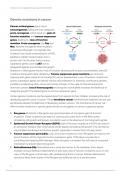
Cancer-critical genes play a role in
tumourigenesis, falling into two categories:
proto-oncogenes, which result in a gain-of-
function mutation, and tumour suppressor
genes, leading to a loss-of-function
mutation. Proto-oncogenes, like Ras and
Myc, become oncogenes when mutated,
promoting cell growth. For example, Ras
mutations can cause overproduction of MYC,
leading to cellular transformation into a
tumour cell. On the other hand, tumour
suppressor genes, such as p53, act as
safeguards against uncontrolled cell growth.
Mutations in these genes result in loss of function, allowing cells to grow uncontrollably, with p53
mutations being particularly dangerous. Tumour suppressor gene mutations are recessive
requiring both gene copies to be mutated for cancer development. Loss-of-function mutations in
tumour suppressor genes can directly induce cell proliferation or indirectly contribute to genetic
instability, accelerating other cancer-promoting changes. In the case of inherited autosomal
dominant cancers, loss of heterozygosity involving the normal allele increases the likelihood of
malignant growth if the altered gene is a tumour suppressor gene.
Certain genetic mutations can be passed down from parents to their children, increasing the risk of
developing specific types of cancer. These hereditary cancer syndromes are relatively rare but can
significantly elevate the likelihood of developing certain cancers. The inheritance of cancer risk
often involves mutations in specific genes known as oncogenes or tumour suppressor genes.
Ras genes: Mutations in Ras genes are typical examples of oncogenic gain-of-function
mutations. These mutations can lead to a continuously active form of the RAS protein,
stimulating cell growth and division constantly, even in the absence of normal growth signals.
Epidermal Growth Factor Receptor (EGFR): Gain-of-function mutations in EGFR can result in
an overactive receptor that continuously sends signals stimulating cell growth. This can lead to
uncontrolled cell division and tumour growth, especially in certain forms of lung cancer.
Tumour suppressor gene (p53): Loss-of-function mutations in the TP53 gene can result in the
loss of function of this important tumour suppressor gene. TP53 plays a crucial role in
controlling and repairing DNA damage. When this gene is mutated, the cell loses an important
mechanism to prevent abnormal growth.
Retinoblastoma (Rb): Retinoblastoma is a rare eye cancer. In the hereditary form, where
multiple tumours develop independently in both eyes, loss-of-function mutations occur in one
copy of the Rb gene in all somatic cells, predisposing them to cancer. Retinal cells become
cancerous when both copies of the Rb gene are defective due to a somatic event.
5
Genetic mutations in cancer
Cancer-critical genes play a role in
tumourigenesis, falling into two categories:
proto-oncogenes, which result in a gain-of-
function mutation, and tumour suppressor
genes, leading to a loss-of-function
mutation. Proto-oncogenes, like Ras and
Myc, become oncogenes when mutated,
promoting cell growth. For example, Ras
mutations can cause overproduction of MYC,
leading to cellular transformation into a
tumour cell. On the other hand, tumour
suppressor genes, such as p53, act as
safeguards against uncontrolled cell growth.
Mutations in these genes result in loss of function, allowing cells to grow uncontrollably, with p53
mutations being particularly dangerous. Tumour suppressor gene mutations are recessive
requiring both gene copies to be mutated for cancer development. Loss-of-function mutations in
tumour suppressor genes can directly induce cell proliferation or indirectly contribute to genetic
instability, accelerating other cancer-promoting changes. In the case of inherited autosomal
dominant cancers, loss of heterozygosity involving the normal allele increases the likelihood of
malignant growth if the altered gene is a tumour suppressor gene.
Certain genetic mutations can be passed down from parents to their children, increasing the risk of
developing specific types of cancer. These hereditary cancer syndromes are relatively rare but can
significantly elevate the likelihood of developing certain cancers. The inheritance of cancer risk
often involves mutations in specific genes known as oncogenes or tumour suppressor genes.
Ras genes: Mutations in Ras genes are typical examples of oncogenic gain-of-function
mutations. These mutations can lead to a continuously active form of the RAS protein,
stimulating cell growth and division constantly, even in the absence of normal growth signals.
Epidermal Growth Factor Receptor (EGFR): Gain-of-function mutations in EGFR can result in
an overactive receptor that continuously sends signals stimulating cell growth. This can lead to
uncontrolled cell division and tumour growth, especially in certain forms of lung cancer.
Tumour suppressor gene (p53): Loss-of-function mutations in the TP53 gene can result in the
loss of function of this important tumour suppressor gene. TP53 plays a crucial role in
controlling and repairing DNA damage. When this gene is mutated, the cell loses an important
mechanism to prevent abnormal growth.
Retinoblastoma (Rb): Retinoblastoma is a rare eye cancer. In the hereditary form, where
multiple tumours develop independently in both eyes, loss-of-function mutations occur in one
copy of the Rb gene in all somatic cells, predisposing them to cancer. Retinal cells become
cancerous when both copies of the Rb gene are defective due to a somatic event.
5


