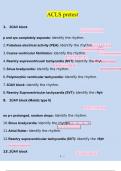
ACLS pretest
1. 3ÚAV block
p and qrs completely separate: Identify the rhythm.
2. Pulseless electrical activity (PEA): Identify the rhythm.
3. Coarse ventricular fibrillation: Identify the rhythm.
hm
4. Reentry supraventricualr tachycardia (SVT): Identify the rhyt
.
5. Sinus bradycardia: Identify the rhythm.
6. Polymorphic ventricular tachycardia: Identify the rhythm.
7. 3ÚAV block: Identify the rhythm.
hm
8. Reentry Supraventricular tachycardia (SVT): Identify the rhyt
.
9. 2ÚAV block (Mobitz type II)
no p-r prolonged, random drops: Identify the rhythm.
10.Sinus bradycardia: Identify the rhythm.
11.Atrial flutter: Identify the rhythm.
hm
12.Reentry supraventricular tachycardia (SVT): Identify the rhyt
.
13. 2ÚAV block
,(Mobitz type I Wenckebach): Identify the rhythm.
14.Normal sinus rhythm: Identify the rhythm.
15.Sinus tachycardia: Identify the rhythm.
16. Atrial fibrillation
irreg, irreg: Identify the rhythm.
17.Fine ventricular fibrillation: Identify the rhythm.
18. 2ÚAV block
(Mobitz type I Wenchkebach): Identify the rhythm.
19.Agonal rhythm/asystole: Identify the rhythm.
20.Coarse ventricular fibrillation: Identify the rhythm.
21.Monomorphic Ventricular tachycardia: Identify the rhythm.
22.2. Magnesium is indicated for VF/pulseless VT associated with torsades
de pointes.: Which of the following statements about the use of
magnesium in cardiac arrest is most accurate?
1. Magnesium is indicated for shock-refractory monomorphic VT.
2.Magnesium is indicated for VF/pulseless VT associated with torsades
de pointes.
, 3. Magnesium is contraindicated for VT associated with a normal QT
interval.
4. Magnesium is indicated for VF refractory to shock and amiodarone or
lidocaine.
1. 3ÚAV block
p and qrs completely separate: Identify the rhythm.
2. Pulseless electrical activity (PEA): Identify the rhythm.
3. Coarse ventricular fibrillation: Identify the rhythm.
hm
4. Reentry supraventricualr tachycardia (SVT): Identify the rhyt
.
5. Sinus bradycardia: Identify the rhythm.
6. Polymorphic ventricular tachycardia: Identify the rhythm.
7. 3ÚAV block: Identify the rhythm.
hm
8. Reentry Supraventricular tachycardia (SVT): Identify the rhyt
.
9. 2ÚAV block (Mobitz type II)
no p-r prolonged, random drops: Identify the rhythm.
10.Sinus bradycardia: Identify the rhythm.
11.Atrial flutter: Identify the rhythm.
hm
12.Reentry supraventricular tachycardia (SVT): Identify the rhyt
.
13. 2ÚAV block
,(Mobitz type I Wenckebach): Identify the rhythm.
14.Normal sinus rhythm: Identify the rhythm.
15.Sinus tachycardia: Identify the rhythm.
16. Atrial fibrillation
irreg, irreg: Identify the rhythm.
17.Fine ventricular fibrillation: Identify the rhythm.
18. 2ÚAV block
(Mobitz type I Wenchkebach): Identify the rhythm.
19.Agonal rhythm/asystole: Identify the rhythm.
20.Coarse ventricular fibrillation: Identify the rhythm.
21.Monomorphic Ventricular tachycardia: Identify the rhythm.
22.2. Magnesium is indicated for VF/pulseless VT associated with torsades
de pointes.: Which of the following statements about the use of
magnesium in cardiac arrest is most accurate?
1. Magnesium is indicated for shock-refractory monomorphic VT.
2.Magnesium is indicated for VF/pulseless VT associated with torsades
de pointes.
, 3. Magnesium is contraindicated for VT associated with a normal QT
interval.
4. Magnesium is indicated for VF refractory to shock and amiodarone or
lidocaine.