HACCP Principles Exam Questions with
Complete Solutions Latest Update
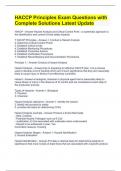
HAACP - Answer-Hazard Analysis and Critical Control Point - a systematic approach to
the identification and control of food safety hazards.
7 HACCP Principles - Answer-1. Conduct a Hazard Analysis
2. Determine Critical Control Points
3. Establish Critical Limits
4. Establish Monitoring Procedures
5. Establish Corrective Actions
6. Establish Verification Procedures
7. Establish Recordkeeping and Documentation Procedures
Principle 1: - Answer-Conduct a Hazard Analysis
Hazard Analysis - Answer-Key to preparing an effective HACCP plan. It is a process
used to develop a list of hazards which are of such significance that they are reasonably
likely to cause injury or illness if not effectively controlled.
Hazard - Answer-a biological, chemical or physical agent that is reasonably likely to
cause illness or injury in the absence of its control and are considered at each step of
the production process.
Types of Hazards - Answer-1. Biological
2. Physical
3. Chemical
Hazard Analysis objectives - Answer-1. Identify the hazard.
2. Modify the process for safety
3. provides the basis for determining CCPs
Hazard Analysis example - Answer-Produce a frozen Beef patty
- Step: Cooking
- Potential Hazard: Pathogen such as E-Coli
- Justification: E-Coli associated with outbreaks when undercooked
- Hazard to be addressed in plan: Yes
Controlled measure: Cooking
Hazard Analysis Stages - Answer-1. Hazard Identification
2. Hazard Evaluation
Hazard Identification - Answer-Provides a rational basis for determining hazards of
significance that must include at least those that are associated with a specific product.
Complete Solutions Latest Update
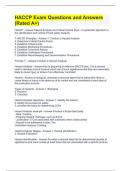
HAACP - Answer-Hazard Analysis and Critical Control Point - a systematic approach to
the identification and control of food safety hazards.
7 HACCP Principles - Answer-1. Conduct a Hazard Analysis
2. Determine Critical Control Points
3. Establish Critical Limits
4. Establish Monitoring Procedures
5. Establish Corrective Actions
6. Establish Verification Procedures
7. Establish Recordkeeping and Documentation Procedures
Principle 1: - Answer-Conduct a Hazard Analysis
Hazard Analysis - Answer-Key to preparing an effective HACCP plan. It is a process
used to develop a list of hazards which are of such significance that they are reasonably
likely to cause injury or illness if not effectively controlled.
Hazard - Answer-a biological, chemical or physical agent that is reasonably likely to
cause illness or injury in the absence of its control and are considered at each step of
the production process.
Types of Hazards - Answer-1. Biological
2. Physical
3. Chemical
Hazard Analysis objectives - Answer-1. Identify the hazard.
2. Modify the process for safety
3. provides the basis for determining CCPs
Hazard Analysis example - Answer-Produce a frozen Beef patty
- Step: Cooking
- Potential Hazard: Pathogen such as E-Coli
- Justification: E-Coli associated with outbreaks when undercooked
- Hazard to be addressed in plan: Yes
Controlled measure: Cooking
Hazard Analysis Stages - Answer-1. Hazard Identification
2. Hazard Evaluation
Hazard Identification - Answer-Provides a rational basis for determining hazards of
significance that must include at least those that are associated with a specific product.