Management Chapter 12 Organizational Change and Development
Organization – people working together towards a common purpose
Takeaway 1 : Organizational Cultures
Organizational culture - Shared beliefs and values that guide behavior in
organizations (a.k.a. corporate culture)
Socialization – how new members learn the culture of the organization
People in the organization must share most values in order for an
organizational culture to be strong more efficiency and effectiveness
This is why companies do assessments, to find out if you will fit into the
organizational culture
4 common organizational cultures:
1. Hierarchical cultures – tradition and clear roles (Japan, Russia)
2. Dependable cultures – process and slow change (UK)
3. Enterprising cultures – creativity and competition (USA)
4. Social cultures – collaboration and trust (NGO companies, volunteers, flat)
The best organizations have positive cultures. These cultures often encompass the
following:
Respect members
Are customer driven
Are performance-oriented
Encourage positive work behaviors
Discourage dysfunctional behaviors
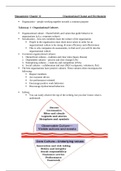
Iceberg
You can easily observe the top of the iceberg, but you don’t know what is
underneath
, Observable culture - What one sees and hears when walking around an organization
Elements of observable culture:
Heroes
Ceremonies, rites and rituals
Legends and stories
Metaphors and symbols
Core culture - consists of the core values, or underlying assumptions and beliefs that
shape and guide people’s behaviors in an organization.
Core values - beliefs and values shared by organization members
You can’t focus on every cultural value, important for management as you must
prioritize certain cultural values, make a choice
Value based management – Describes managers who actively help to develop,
communicate, and enact shared values. Comes down to; walk the talk, do what you
say
Workplace spirituality – Creates meaning and shared community among
organizational members, has nothing to do with religion (especially important for
NGO’s)
Examples of values include:
Meaningful purpose
Trust and respect
Honesty and openness
Personal growth and development
Worker friendly practices
Ethics and social responsibility
Takeaway 2 : Multicultural Organizations
Multiculturalism – involves inclusiveness, pluralism and respect for diversity
Multicultural organizations - have a culture with core values that respect diversity
and support multiculturalism
Characteristics of multicultural organizations:
Pluralism – minority and majority cultures influence policies and key
values
Structural integration – minorities are well represented in jobs at all levels
and authorities
Informal network integration – mentoring and support groups that help the
career development of the minority groups
Absence of prejudice and discrimination – elimination of culture group
biases
Minimum intergroup conflict – diversity does not lead to conflicts
Organizational subcultures - groups of people who share similar beliefs and values
based on their work or personal characteristics.
Ethnocentrism (bad, get rid of it) – belief that one culture is better than
another
Common subcultures include:
Gender and generations
Ethnicity or national cultures
Organization – people working together towards a common purpose
Takeaway 1 : Organizational Cultures
Organizational culture - Shared beliefs and values that guide behavior in
organizations (a.k.a. corporate culture)
Socialization – how new members learn the culture of the organization
People in the organization must share most values in order for an
organizational culture to be strong more efficiency and effectiveness
This is why companies do assessments, to find out if you will fit into the
organizational culture
4 common organizational cultures:
1. Hierarchical cultures – tradition and clear roles (Japan, Russia)
2. Dependable cultures – process and slow change (UK)
3. Enterprising cultures – creativity and competition (USA)
4. Social cultures – collaboration and trust (NGO companies, volunteers, flat)
The best organizations have positive cultures. These cultures often encompass the
following:
Respect members
Are customer driven
Are performance-oriented
Encourage positive work behaviors
Discourage dysfunctional behaviors
Iceberg
You can easily observe the top of the iceberg, but you don’t know what is
underneath
, Observable culture - What one sees and hears when walking around an organization
Elements of observable culture:
Heroes
Ceremonies, rites and rituals
Legends and stories
Metaphors and symbols
Core culture - consists of the core values, or underlying assumptions and beliefs that
shape and guide people’s behaviors in an organization.
Core values - beliefs and values shared by organization members
You can’t focus on every cultural value, important for management as you must
prioritize certain cultural values, make a choice
Value based management – Describes managers who actively help to develop,
communicate, and enact shared values. Comes down to; walk the talk, do what you
say
Workplace spirituality – Creates meaning and shared community among
organizational members, has nothing to do with religion (especially important for
NGO’s)
Examples of values include:
Meaningful purpose
Trust and respect
Honesty and openness
Personal growth and development
Worker friendly practices
Ethics and social responsibility
Takeaway 2 : Multicultural Organizations
Multiculturalism – involves inclusiveness, pluralism and respect for diversity
Multicultural organizations - have a culture with core values that respect diversity
and support multiculturalism
Characteristics of multicultural organizations:
Pluralism – minority and majority cultures influence policies and key
values
Structural integration – minorities are well represented in jobs at all levels
and authorities
Informal network integration – mentoring and support groups that help the
career development of the minority groups
Absence of prejudice and discrimination – elimination of culture group
biases
Minimum intergroup conflict – diversity does not lead to conflicts
Organizational subcultures - groups of people who share similar beliefs and values
based on their work or personal characteristics.
Ethnocentrism (bad, get rid of it) – belief that one culture is better than
another
Common subcultures include:
Gender and generations
Ethnicity or national cultures