7F Mosquito Control Study Guide Exam Questions And Answers
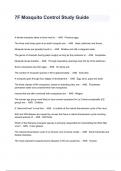
7F Mosquito Control Study Guide Exam Questions And Answers A female mosquito takes a blood meal to: - ANS Produce eggs. The three main body parts of an adult mosquito are: - ANS Head, abdomen and thorax. Mosquito larvae are typically found in: - ANS Shallow and still or stagnant water. The genus of mosquito having palps roughly as long as the proboscis is: - ANS Anopheles. Mosquito larvae breathe: - ANS Through respiratory openings near the tip of the abdomen. Some mosquitoes lay their eggs: - ANS On damp soil. The number of mosquito species in MI is approximately: - ANS Sixty (60). A mosquito goes through four stages of development: - ANS Egg, larva, pupa and adult. The three classes of MI mosquitoes, based on breeding sites, are: - ANS Floodwater, permanent water and container/tree hole mosquitoes. Insects that are often confused with mosquitoes are: - ANS Midges. The human age group most likely to have severe symptoms for La Crosse encephalitis (CE group) are: - ANS Children. A "dead end host" is one that: - ANS Is outside of the natural transmission cycle of the virus. SLE and WN disease are caused by viruses that have a natural transmission cycle involving several species of: - ANS Wild birds. Which of the following mosquito species is primarily responsible for transmitting the West Nile virus? - ANS Culex pipiens. The natural transmission cycle of La Crosse virus involves mostly: - ANS Small mammals and Aedes triseriatus. The most important mosquito-borne diseases in MI are caused by: - ANS Viruses. Heartworm infection in dogs in MI is vectored by: - ANS More than 25% of the mosquito species in MI.
Written for
- Institution
- NJ pesticide core
- Course
- NJ pesticide core
Document information
- Uploaded on
- January 24, 2024
- Number of pages
- 6
- Written in
- 2023/2024
- Type
- Exam (elaborations)
- Contains
- Questions & answers
Subjects
-
7f mosquito control study guide

Also available in package deal