1
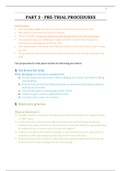
PART 2 - PRE-TRIAL PROCEDURES
Introduction
Once pleadings close, the issues in dispute between the parties are clear.
The matter is not however ready for trial yet.
There is usually a long wait which may last months before the trial takes place.
The attorney must now establish or rather further consider what evidence is
necessary to establish his case at the trial.
This may include evidentiary material and evidence and he must plan to get it ready
for trial.
The procedures which are discussed below are aimed at the smooth running of the
trial.
The preparation for trial phase include the following procedures:
1. Set down for trial
When pleadings are closed; so considered if:
a) If either party has joined issue without alleging new matter and without adding
new pleading;
b) If the last day allowed for filing replication or subsequent pleading has elapsed
and had not been filed.
c) If the parties agree in writing-agreement is filed
d) Unable to agree-court on application decides.
e) It is done with a notice of set down.
2. Discovery process
What is “discovery”?
Usually a portion of evidence-information-recorded documents, on computer disks,
or other ways.
In discovery you call upon your opponent to disclose all “books and documents
relating to the cause of action in his possession or that was under his possession that
he intends to use or can be used to resolve the matter”
Purpose is to allow each party knowledge of, and eventual access to, documents in
possession of the opposing party that may be relevant at the trial.
Each party then knows what the other party has and thus surprises and delays are
prevented at the trial; causing time and cost wastage.
, 2
Discovery procedures:
1. Notice to discover
Discovery is usually prompted by a NOTICE TO DISCOVER which is served on a
party by the opposing party.
The rules require that discovery should occur on oath and that it lists the evidence
discovered.
TWO GENERAL RULES:
1. A PARTY’S discovery affidavit must be delivered within 20 court days of the
receipt of the notice to discover from the opposing party.
2. Unless with leave of the court, discovery may not be requested before the close
of pleadings.
3. The implication of rule 37(1) is clear: each of the parties MUST discover even if
they have not specifically been requested to do so. This is automatic discovery
and strangely, there is no corresponding MC determination in this regard
WHAT MUST BE DISCOVERED?
1. All documents and tape recordings which relate to any matter in question in the
action
2. Which the other side have in their possession, or control which they have in any
time in the past had in their possession or control.
General rules:
a. “TAPE RECORDING” must be given a wide meaning and includes sound tracks,
films, magnetic tapes, or a record or any other material on which visual images,
sound or other information can be recorded. In other words, compact disks,
computer disks, computer hard drives, videotapes and photographs.
b. NOTE that it is not only the documents and tape recordings currently in a party’s
possession or control that must be discovered, but also those which have been
under that party’s control during ANY TIME IN THE PAST.
c. Further, a party cannot discover only those documents and tape recordings
which HE intends to use at the trial in support of his case.
DISCOVERY AFFIDAVIT: There are TWO so-called “SCHEDULES”
1. FIRST SCHEDULE-TWO PARTS;
1. First part-no objection to being discovered; each document listed should be
identified by a description, eg 2/1/2017 Letter of plaintiff to defendant-copy,
etc. Obligatory to list them in chronological order.
2. The second part of the first schedule-the evidence which party objects to
discover. The reason is because of PRIVELEGE-based on rules of evidence:
o Eg implicating a party-criminal offence-right against self-incrimination.
o Spouse to another which-protected marital privilege
o Written offer made without prejudice with the intention of settling the
matter
o A document covered by legal professional privilege.
PART 2 - PRE-TRIAL PROCEDURES
Introduction
Once pleadings close, the issues in dispute between the parties are clear.
The matter is not however ready for trial yet.
There is usually a long wait which may last months before the trial takes place.
The attorney must now establish or rather further consider what evidence is
necessary to establish his case at the trial.
This may include evidentiary material and evidence and he must plan to get it ready
for trial.
The procedures which are discussed below are aimed at the smooth running of the
trial.
The preparation for trial phase include the following procedures:
1. Set down for trial
When pleadings are closed; so considered if:
a) If either party has joined issue without alleging new matter and without adding
new pleading;
b) If the last day allowed for filing replication or subsequent pleading has elapsed
and had not been filed.
c) If the parties agree in writing-agreement is filed
d) Unable to agree-court on application decides.
e) It is done with a notice of set down.
2. Discovery process
What is “discovery”?
Usually a portion of evidence-information-recorded documents, on computer disks,
or other ways.
In discovery you call upon your opponent to disclose all “books and documents
relating to the cause of action in his possession or that was under his possession that
he intends to use or can be used to resolve the matter”
Purpose is to allow each party knowledge of, and eventual access to, documents in
possession of the opposing party that may be relevant at the trial.
Each party then knows what the other party has and thus surprises and delays are
prevented at the trial; causing time and cost wastage.
, 2
Discovery procedures:
1. Notice to discover
Discovery is usually prompted by a NOTICE TO DISCOVER which is served on a
party by the opposing party.
The rules require that discovery should occur on oath and that it lists the evidence
discovered.
TWO GENERAL RULES:
1. A PARTY’S discovery affidavit must be delivered within 20 court days of the
receipt of the notice to discover from the opposing party.
2. Unless with leave of the court, discovery may not be requested before the close
of pleadings.
3. The implication of rule 37(1) is clear: each of the parties MUST discover even if
they have not specifically been requested to do so. This is automatic discovery
and strangely, there is no corresponding MC determination in this regard
WHAT MUST BE DISCOVERED?
1. All documents and tape recordings which relate to any matter in question in the
action
2. Which the other side have in their possession, or control which they have in any
time in the past had in their possession or control.
General rules:
a. “TAPE RECORDING” must be given a wide meaning and includes sound tracks,
films, magnetic tapes, or a record or any other material on which visual images,
sound or other information can be recorded. In other words, compact disks,
computer disks, computer hard drives, videotapes and photographs.
b. NOTE that it is not only the documents and tape recordings currently in a party’s
possession or control that must be discovered, but also those which have been
under that party’s control during ANY TIME IN THE PAST.
c. Further, a party cannot discover only those documents and tape recordings
which HE intends to use at the trial in support of his case.
DISCOVERY AFFIDAVIT: There are TWO so-called “SCHEDULES”
1. FIRST SCHEDULE-TWO PARTS;
1. First part-no objection to being discovered; each document listed should be
identified by a description, eg 2/1/2017 Letter of plaintiff to defendant-copy,
etc. Obligatory to list them in chronological order.
2. The second part of the first schedule-the evidence which party objects to
discover. The reason is because of PRIVELEGE-based on rules of evidence:
o Eg implicating a party-criminal offence-right against self-incrimination.
o Spouse to another which-protected marital privilege
o Written offer made without prejudice with the intention of settling the
matter
o A document covered by legal professional privilege.