DIGESTIVE SYSTEM
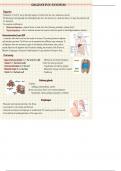
Digestion
Breakdown of food for use by the body (supply of nutrients) but also toxic substances removal
GI/alimentary tract physically and chemically breaks down the nutrient into a state that allows it to pass the intestinal wall
for absorption
Two separate modifications:
• Mechanical digestions - physical forces to break down food (chewing, peristalsis, crushing food)
• Chemical digestions - relies on chemical secreted via exocrine/endocrine glands to chemically breakdown nutrients
Gastrointestinal tract (GI)
- a muscular tube which runs from the mouth to the anus. The primary functions: digestion
and absorbing nutrients. The GI tract can be segmented into different organ structures. To
aid digestion, there are accessory organs in the abdomen which produce, store, and/or
secrete fluids into the digestive tract. Proximal to distally, the structure of the GI tract is:
Mouth > Oesophagus > Stomach > Small Intestine > Large Intestine > Rectum > Anus
Oral cavity
- Upper and lower dentition form the anterior walls - Mechanical and chemical digestion
- Cheeks form the lateral walls (teeth and salivary enzymes)
- Hard and soft palate form the roof - Lingual lipase and salivary amylase
- Muscular tongue forms the floor - Mastication (tongue and other muscles)
- Tonsils form the back wall - Swallowing
sublingual gland Salivary glands
y
3 glands:
• sublingual, submandibular, parotid
submendina Serous and mucous fluid to aid in chemical digestion:
-
parotid • lingual lipase, salivary amylase, lysozymes, antibodies
gland
Esophagus
- Muscular tube located posteriorly in the thorax
- Lies posterior to the trachea and the heart
- Descends and pierces the diaphragm at vertebral level T10, opening up into the stomach
- Innervated by the esophageal plexus of the vagus nerve
Digestion
Breakdown of food for use by the body (supply of nutrients) but also toxic substances removal
GI/alimentary tract physically and chemically breaks down the nutrient into a state that allows it to pass the intestinal wall
for absorption
Two separate modifications:
• Mechanical digestions - physical forces to break down food (chewing, peristalsis, crushing food)
• Chemical digestions - relies on chemical secreted via exocrine/endocrine glands to chemically breakdown nutrients
Gastrointestinal tract (GI)
- a muscular tube which runs from the mouth to the anus. The primary functions: digestion
and absorbing nutrients. The GI tract can be segmented into different organ structures. To
aid digestion, there are accessory organs in the abdomen which produce, store, and/or
secrete fluids into the digestive tract. Proximal to distally, the structure of the GI tract is:
Mouth > Oesophagus > Stomach > Small Intestine > Large Intestine > Rectum > Anus
Oral cavity
- Upper and lower dentition form the anterior walls - Mechanical and chemical digestion
- Cheeks form the lateral walls (teeth and salivary enzymes)
- Hard and soft palate form the roof - Lingual lipase and salivary amylase
- Muscular tongue forms the floor - Mastication (tongue and other muscles)
- Tonsils form the back wall - Swallowing
sublingual gland Salivary glands
y
3 glands:
• sublingual, submandibular, parotid
submendina Serous and mucous fluid to aid in chemical digestion:
-
parotid • lingual lipase, salivary amylase, lysozymes, antibodies
gland
Esophagus
- Muscular tube located posteriorly in the thorax
- Lies posterior to the trachea and the heart
- Descends and pierces the diaphragm at vertebral level T10, opening up into the stomach
- Innervated by the esophageal plexus of the vagus nerve