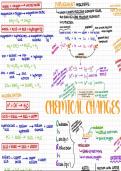
metal > metal oxide DISPLACEMENT reactions : More reactive m
+
oxygen-
element takes higher tenden
oxide ↳ when a more reactive
magnesium +
oxygen >
-
magnesium a positive
the place of a less reactive element
02
2Mg + +
2 MgO in a reaction.
ionic compound displaced iron is more reactive
metal + acid
salt+hydrogen (g)
>
-
-
iron
L w
iron sulfate
than copper.
coppersulfate + >
-
Copper +
magnesium + hydrochloric -
>
magnesium + hydrogen CusOx + Fe (u
↑
becomes ionic b
acid Chloride 19&
>
- +
FeSOx
.
compound also
Mg
+ 2H() >
-
MgC(z +
Hz ionic t cut -
S84 +
2-
+ Fe >
- (u + Fe +-
S04
2-
extract
can
- th
iron
equation & spectatorious -
> remove
from
iron sulfuric >
-
hydrogen
+
+
acid sulfate
d carbon
incl
Fe +
H2SO4 -
> FeSOp + He
two
Cu2 + Fe >
- Cu + Fe
2t
Copper was
co-
Ccut) Reduction
reduced as it
ain
forma
- -
- -
zinc + nitric zinc a 2e-
copperion
>
- gained
+
hydrogen to (u2 2
(u)
-
> -
acid
atom
+
.
-
elections
nitrate
ket copper(Cu) Fe >
-
Fe2t ze- JORIDATION
C
+
He cost
22n + 2HNO
-
> 2ZnNO, + Fe)
atom to
elections
iron
ironion This reaction is an example iron oxidised
(Fe2t)
was
two
NEUTRALISATION
of:a displacement reaction and
(2e+ an as it lost two ze
form a REDOX reaction
CHEMICAL CHANGES
-
+
OH
-
H +
Hz0
acid + alkali-
> salt-water
ne
Oxidation
Oxidattman
whereb
3
Sodium
hydrochloric + sodium + water a M
Oxidation
acid chloride
Is -
hydroxide ↳ LOSS of electrons
H2) + NaOH >
- NaCl + H20 Loss (oget
REDOX ↳ gain of oxygen neg
-
↓
attracts
non-m
:
cons
M
reduction
acid + base -
> salt-water
Reduction
↳ GAIN of electrons ↳
sulfuric
Is ↳ or lossof
t copper - copper orygen
acid Oxide sulfatetwater Gain (get
METAL reaction with WATER
, CHEMICAL CHANGES
Soluble Salts
CHEM M4 - RPA. 1
to prepare a pure, dry sample of a soluble salt from an insoluble oxide or carbonate using a Bunsen burner
Add 10cm of 0.1M dilute hydrochloric acid into a conical flask.
Add 1 drop of phenolphthalein indicator to the flask - ensure contents are now pink in colour Add 1
spatula of 0.1M sodium hydroxide to the conical flask at a time, until the solution goes colourless
Filter the solution and pour contents into an evaporating dish
Set up Bunsen burner equipment and heat evaporating dish until liquid evaporates and the dish is lined
with salt crystals on the edges.
wear eye protection + stand for experiment
risk of spillage
→ Phenolphthalein
→ HCl (+ corrosive and damages skin/clothes)
→ NaOH (+ corrosive ”)
risk of burns from Bunsen burner
risk of cuts from broken glass
→ evaporating dish (+ spitting salt solution burns)
→ conical flask
→ white ceramic tile
+
oxygen-
element takes higher tenden
oxide ↳ when a more reactive
magnesium +
oxygen >
-
magnesium a positive
the place of a less reactive element
02
2Mg + +
2 MgO in a reaction.
ionic compound displaced iron is more reactive
metal + acid
salt+hydrogen (g)
>
-
-
iron
L w
iron sulfate
than copper.
coppersulfate + >
-
Copper +
magnesium + hydrochloric -
>
magnesium + hydrogen CusOx + Fe (u
↑
becomes ionic b
acid Chloride 19&
>
- +
FeSOx
.
compound also
Mg
+ 2H() >
-
MgC(z +
Hz ionic t cut -
S84 +
2-
+ Fe >
- (u + Fe +-
S04
2-
extract
can
- th
iron
equation & spectatorious -
> remove
from
iron sulfuric >
-
hydrogen
+
+
acid sulfate
d carbon
incl
Fe +
H2SO4 -
> FeSOp + He
two
Cu2 + Fe >
- Cu + Fe
2t
Copper was
co-
Ccut) Reduction
reduced as it
ain
forma
- -
- -
zinc + nitric zinc a 2e-
copperion
>
- gained
+
hydrogen to (u2 2
(u)
-
> -
acid
atom
+
.
-
elections
nitrate
ket copper(Cu) Fe >
-
Fe2t ze- JORIDATION
C
+
He cost
22n + 2HNO
-
> 2ZnNO, + Fe)
atom to
elections
iron
ironion This reaction is an example iron oxidised
(Fe2t)
was
two
NEUTRALISATION
of:a displacement reaction and
(2e+ an as it lost two ze
form a REDOX reaction
CHEMICAL CHANGES
-
+
OH
-
H +
Hz0
acid + alkali-
> salt-water
ne
Oxidation
Oxidattman
whereb
3
Sodium
hydrochloric + sodium + water a M
Oxidation
acid chloride
Is -
hydroxide ↳ LOSS of electrons
H2) + NaOH >
- NaCl + H20 Loss (oget
REDOX ↳ gain of oxygen neg
-
↓
attracts
non-m
:
cons
M
reduction
acid + base -
> salt-water
Reduction
↳ GAIN of electrons ↳
sulfuric
Is ↳ or lossof
t copper - copper orygen
acid Oxide sulfatetwater Gain (get
METAL reaction with WATER
, CHEMICAL CHANGES
Soluble Salts
CHEM M4 - RPA. 1
to prepare a pure, dry sample of a soluble salt from an insoluble oxide or carbonate using a Bunsen burner
Add 10cm of 0.1M dilute hydrochloric acid into a conical flask.
Add 1 drop of phenolphthalein indicator to the flask - ensure contents are now pink in colour Add 1
spatula of 0.1M sodium hydroxide to the conical flask at a time, until the solution goes colourless
Filter the solution and pour contents into an evaporating dish
Set up Bunsen burner equipment and heat evaporating dish until liquid evaporates and the dish is lined
with salt crystals on the edges.
wear eye protection + stand for experiment
risk of spillage
→ Phenolphthalein
→ HCl (+ corrosive and damages skin/clothes)
→ NaOH (+ corrosive ”)
risk of burns from Bunsen burner
risk of cuts from broken glass
→ evaporating dish (+ spitting salt solution burns)
→ conical flask
→ white ceramic tile