NR 509 Bates / Midterm Latest Update 100% Correct
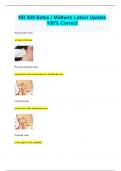
NR 509 Bates / Midterm Latest Update 100% Correct Preauricular nodes in front of the ear Posterior auricular node superficial to the mastoid process (behind the ear) Occipital node at the base of the skull posteriorly Tonsillar node at the angle of the mandible Submandibular node midway between the angle and the tip of the mandible. These nodes are usually smaller and smoother than the lobulated subman-dibular gland against which they lie Submental nodes in the midline a few centi-meters behind the tip of the mandible Superficial cervical nodes superficial to the sternocleidomastoid. Posterior cervical nodes along the anterior edge of the trapezius. Deep cervical chain lymph nodes deep to the ster-nocleidomastoid and often inaccessible to examination. Hook your thumb and fingers around either side of the sterno-cleidomastoid muscle to find them. Supraclavicular nodes deep in the angle formed by the clavicle and the sterno-cleidomastoid. shotty Small, mobile, discrete, nontender nodes, are frequently found in normal people physical assessment techniques Inspection - visual examination; Palpation - tactile examination; Percussion - tactile and auditory examination; Auscultation - auditory examination head and neck Begin the physical assessment by inspecting general appearance of head/neck facial expression, contours, asymmetry comprehensive assessment Seeing patient for first time; Includes all the elements of the health history and the complete physical examination; fundamental and personalized knowledge about the patient that strengthens the clinician-patient relationship; provides a complete basis for assessing these concerns and answering patient questions focused assessment chief complaint such as cough, abdominal pain, sore throat, etc. or a follow-up for a chronic illness; Your history and physical will be much more focused on the chief complaint as you begin diagnosis and management basic maximize patient's comfort, avoid unnecessary changes in position, enhance clinical efficiency, move head to toe, examine the patient from their right side active listening closely attending to what the patient is communicating, connecting to the patient's emotional state, and using verbal and nonverbal skills to encourage
Written for
- Institution
- NR 509 Bates /
- Course
- NR 509 Bates /
Document information
- Uploaded on
- January 15, 2024
- Number of pages
- 83
- Written in
- 2023/2024
- Type
- Exam (elaborations)
- Contains
- Questions & answers
Subjects
-
nr 509 bates midterm latest update 100 correct

Also available in package deal