NR 507 Final Exam Questions and Answers Already Passed
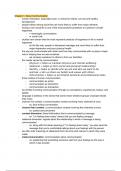
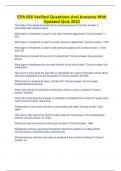
NR 507 Final Exam Questions and Answers Already Passed Which of the following is true regarding a complicated urinary tract infection? Can be caused by a structural urinary tract disorder Which of the following is a risk factor for the development of a urinary tract infection (UTI)? Pregnancy A symptom of a lower urinary tract infection includes: urgency Women are at a higher risk for the development of a UTI because of having a shorter urethra. true Which of the following can help to prevent a UTI? Increase water consumption Uncomplicated UTI Occurs in the normal urinary tract Responds well to short course of antibiotic therapy Simple cystitis in non-pregnant women without any urologic abnormalities Complicated UTI UTI extends beyond the bladder Caused by structural or functional urinary tract abnormalities or untreated UTI Infants and older adults affected Associated with: indwelling catheters, renal calculi, diabetes, pregnancy A 25 year- old female presents to the primary care office with urinary burning and frequency for the last 3 days. She denies any fever, chills, back pain. Her gynecological history is negative and reports no vaginal discharge. The only new information reported is that she recently had sexual intercourse with a new male partner. The NP obtains a urinalysis and determines that the urine contains leukocytes, RBCs, nitrites, and WBCs. No casts are identified. Based on symptom presentation and UA results, the patient can be diagnosed with: cystitis J.S. is an 80 -year-old patient who resides in a local nursing home. He recently became confused and then fell while ambulating to the bathroom three days ago. Because of his confusion and fall, he was transferred to the acute care facility for evaluation and treatment. Lab work revealed that the patient was very dehydrated with hypernatremia identified and appropriate intravenous fluids started. Cystitis was also identified from the urinalysis. He was also noted to have red and excoriated skin between the buttocks and inner thighs due to urinary frequency and dribbling. To help with skin healing and to prevent further urine leakage, an indwelling catheter was inserted. Two days after the catheter was placed, the patient spiked a fever of 102 degrees Fahrenheit associated with shaking chills. An intense, foul odor was noted in the urine. On examination of the flank area, the patient yelled out when touched. A urine c pyelonephritis Identify the major risk factor J.S. has that is associated with pyelonephritis: indwelling foley catheter The urinalysis of a patient with a complicated UTI will show WBCs and casts true Upon examination of a urinalysis, the NP can highly suspect that the causative bacteria are gram negative because of the presence of: nitrites A 21-year-old patient reports to the primary care clinic complaining of urinary urgency, frequency and burning. She also reports a small amount of vaginal discharge that contains an odor. It is likely that the NP will perform a vaginal exam at this visit. true The NP would know that the patient most likely has an uncomplicated UTI because: The UTI responds well to a short course of antibiotic therapy. A
Written for
- Institution
- NR 507 ADVANCED PATHOPHYSIOLOGY
- Course
- NR 507 ADVANCED PATHOPHYSIOLOGY
Document information
- Uploaded on
- January 15, 2024
- Number of pages
- 28
- Written in
- 2023/2024
- Type
- Exam (elaborations)
- Contains
- Questions & answers
Subjects
-
nr 507 final exam questions and answers already pa

Also available in package deal