Psychodynamic Approach
Monday, 7 January 2019 09:57
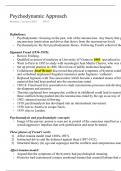
Definitions:
- Psychodynamic: focusing on the past, role of the unconscious. Any theory that p
unconscious (motivation and drives that derive from the unconscious level)
- Psychoanalysis: the first psychodynamic theory. Following Freud's school of tho
Sigmund Freud (1856-1939):
- Born in Freiberg.
- Qualified as doctor of medicine at University of Vienna in 1881- specialised in n
- Went to Paris in 1885 to study with neurologist Jean Martin Charcot, who was r
- Set up private practise in 1886. Moved out of public medicines/hospitals.
- Collaborator Josef Breuer discovered that physical symptoms of hysteria could
and verbalised unpleasant forgotten memories under hypnosis- 'catharsis'.
- Replaced hypnosis with 'free association' which became a standard means of bri
material that had been pushed into the unconscious mind.
- 1892-8: Freud used free association to study unconscious processes and develop
development and neurosis.
- Theories explained how intrapsychic conflicts in childhood could lead to neuroti
these conflicts being pushed into the unconscious mind by the ego as aa way of
- 1902: attracted serious following.
- 1910: psychoanalysis has developed into an international movement.
- 1938: leaves Austria to escape Nazis.
- 1939: dies in London.
Psychoanalysis and psychoanalytic concepts:
- Image of the person: person is seen not in control of the conscious mind but as d
sexual/aggressive impulses that seek gratification and must be tamed.
Three phases of Freud's work:
1) Affect trauma model (mid 1880's-1897).
2) Instinctual drives and the defences against them (1897-1923).
3) Structural theory (id, ego and superego) and the conflicts and compromises amo
Affect-trauma model:
- Argued that the symptoms of the hysteric had psychological meaning.
- Hysterics had experienced a major emotional trauma that created feelings that co
repressed.
- Affects (emotions) continued to press for discharge into consciousness.
,poses a lot of emphasis on the
ought.
neuropathology.
researching hypnosis and hysteria.
d be alleviated as the person recalled
inging into conscious awareness
ped his theories of psychosexual
ic symptoms in adult life through
dealing with the anxiety generated.
driven by unconscious
ongst them.
ouldn't be explained and had been
Monday, 7 January 2019 09:57
Definitions:
- Psychodynamic: focusing on the past, role of the unconscious. Any theory that p
unconscious (motivation and drives that derive from the unconscious level)
- Psychoanalysis: the first psychodynamic theory. Following Freud's school of tho
Sigmund Freud (1856-1939):
- Born in Freiberg.
- Qualified as doctor of medicine at University of Vienna in 1881- specialised in n
- Went to Paris in 1885 to study with neurologist Jean Martin Charcot, who was r
- Set up private practise in 1886. Moved out of public medicines/hospitals.
- Collaborator Josef Breuer discovered that physical symptoms of hysteria could
and verbalised unpleasant forgotten memories under hypnosis- 'catharsis'.
- Replaced hypnosis with 'free association' which became a standard means of bri
material that had been pushed into the unconscious mind.
- 1892-8: Freud used free association to study unconscious processes and develop
development and neurosis.
- Theories explained how intrapsychic conflicts in childhood could lead to neuroti
these conflicts being pushed into the unconscious mind by the ego as aa way of
- 1902: attracted serious following.
- 1910: psychoanalysis has developed into an international movement.
- 1938: leaves Austria to escape Nazis.
- 1939: dies in London.
Psychoanalysis and psychoanalytic concepts:
- Image of the person: person is seen not in control of the conscious mind but as d
sexual/aggressive impulses that seek gratification and must be tamed.
Three phases of Freud's work:
1) Affect trauma model (mid 1880's-1897).
2) Instinctual drives and the defences against them (1897-1923).
3) Structural theory (id, ego and superego) and the conflicts and compromises amo
Affect-trauma model:
- Argued that the symptoms of the hysteric had psychological meaning.
- Hysterics had experienced a major emotional trauma that created feelings that co
repressed.
- Affects (emotions) continued to press for discharge into consciousness.
,poses a lot of emphasis on the
ought.
neuropathology.
researching hypnosis and hysteria.
d be alleviated as the person recalled
inging into conscious awareness
ped his theories of psychosexual
ic symptoms in adult life through
dealing with the anxiety generated.
driven by unconscious
ongst them.
ouldn't be explained and had been